
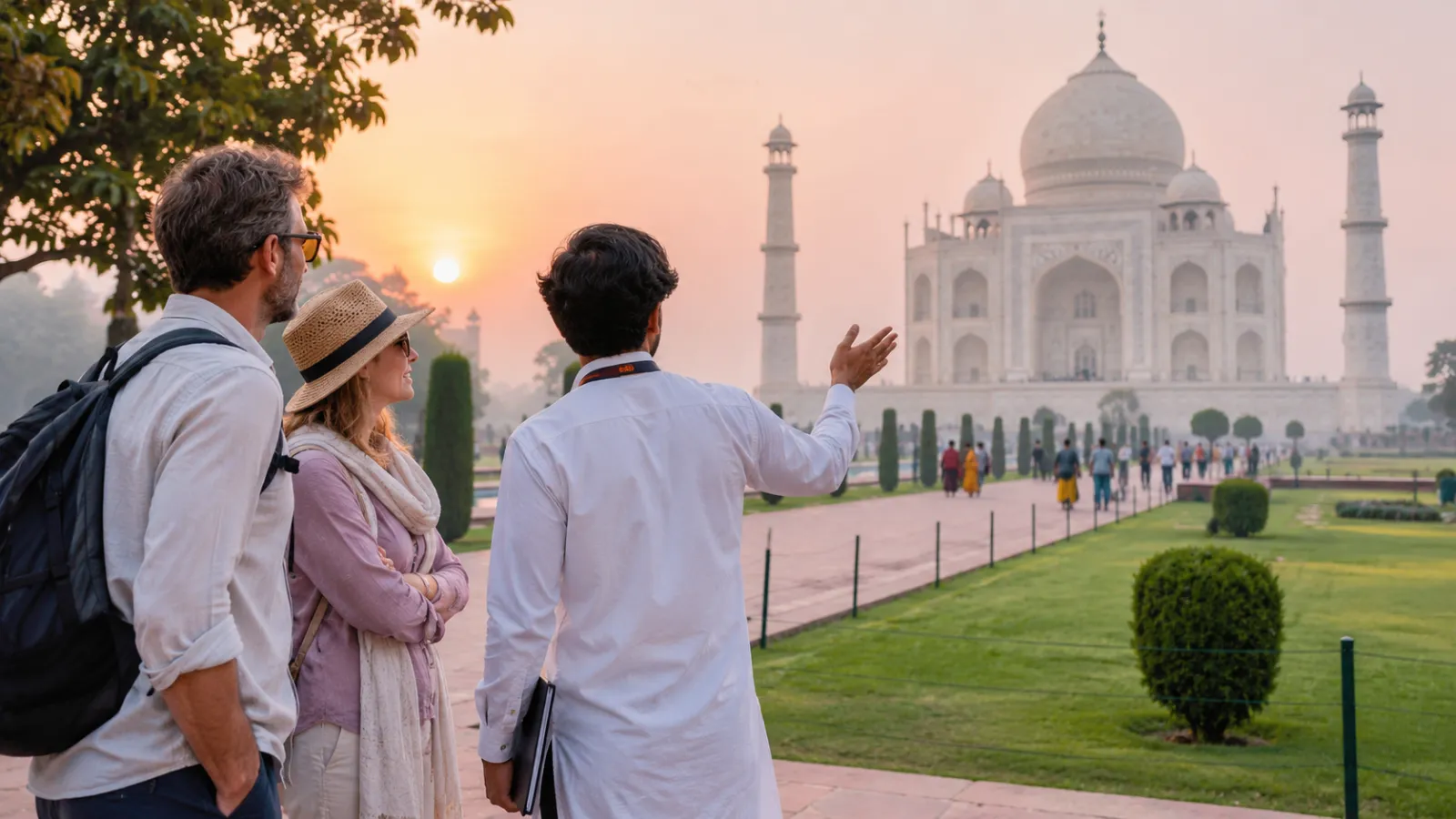
Do You Actually Need a Guide in India?
I'll start with the honest answer, because I am a guide and you should hear it from me first: no, you don't need one. Thousands of travellers see the Taj Mahal every day on their own. Tickets are sold online, the paths are signposted, and nobody will stop you at the gate for walking in without a guide.
But "need" is the wrong question. The better question is what you lose without one. In India, the difference is rarely about getting in. It is about understanding what you are standing in front of, using your few hours in each city well, and not spending half your energy saying "no, thank you" to people who want something from you.
What a Good Guide Actually Changes
- The story. Without context, the Taj Mahal is beautiful marble. With it, you are reading a building: the calligraphy, the symmetry, the inlaid stones, the man who built it and the fort where he ended his days.
- The timing. Which gate to use, what hour the light is best, which day a monument is closed. Small decisions that save you hours.
- The people at the gate. Touts, fake ticket sellers and "free" guides are part of every famous site. With a guide beside you, most of them simply walk past.
- The shops. A good guide takes you shopping only if you ask. A bad one builds the day around commission stops.
- The small things. Where to leave your shoes, which bag is allowed in, where to eat safely, how to dress for a mosque or temple.
- The questions. You can ask anything: about religion, food, caste, weddings, daily life. That conversation is often what people remember most.
What "Government Licensed" Means in India
A government-licensed guide is trained and certified under the Ministry of Tourism, Government of India, through its Incredible India Tourist Guide programme, and carries an official photo ID card. I hold this licence, and mine is valid across the whole country, not just one city.
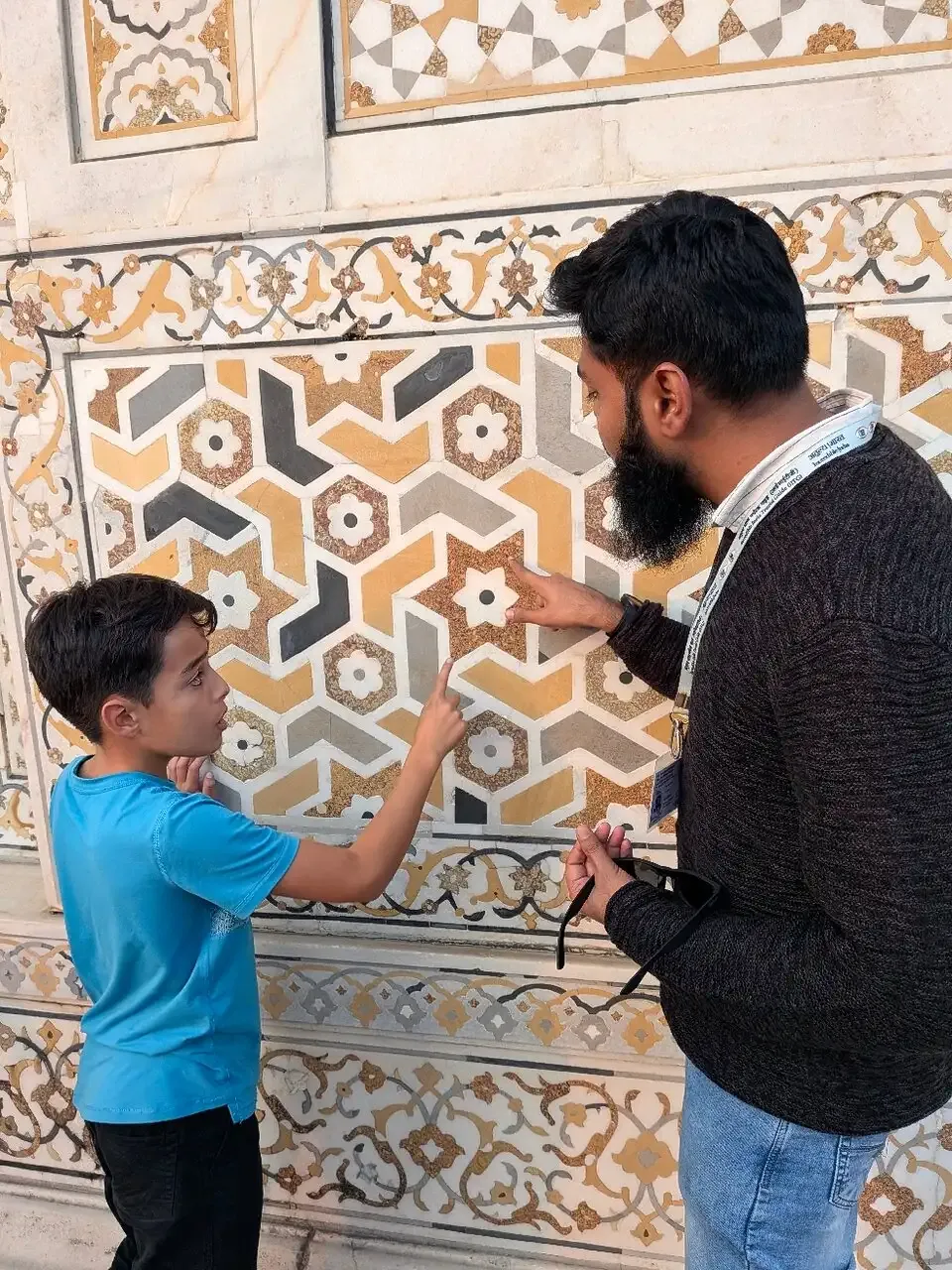
It matters for a legal reason too. India's Ancient Monuments Rules of 1959 (Rule 8(d)) say that inside a protected monument, nobody may show a visitor round for payment unless they are authorised or licensed by the Archaeological Survey of India. In January 2025 the Orissa High Court upheld exactly this, ruling that guides at ASI-protected sites must hold an ASI licence. The man who offers to "show you round" at the gate without one is working outside those rules.
I explain the difference in more detail in government licensed guide vs local guide.
A Guide in Agra: the Taj Mahal and Beyond
Agra is my home. I was born beside the Taj Mahal, and it is the city where a guide makes the biggest difference, because it is also the city with the most pressure at its gates.
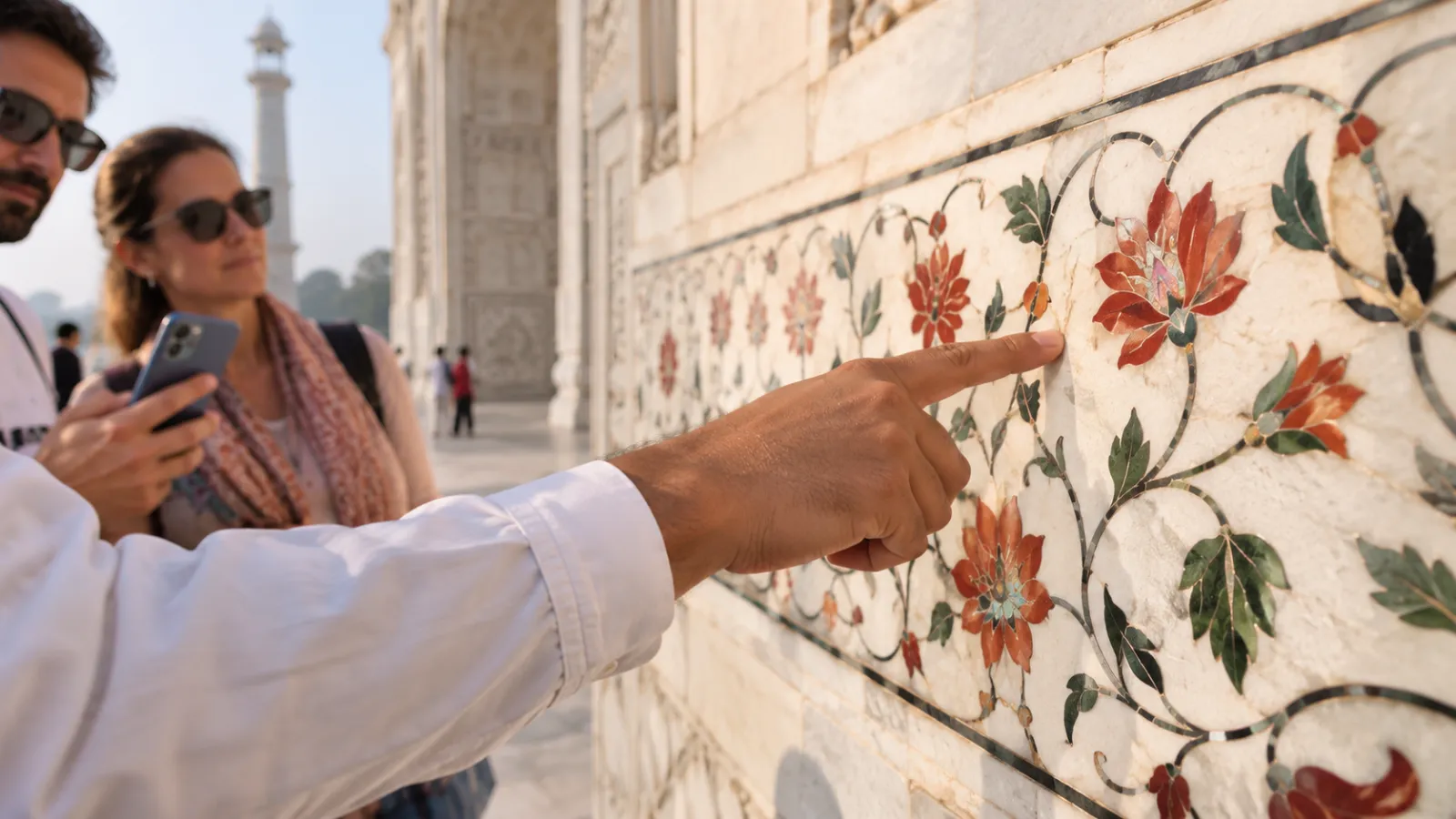
- The Taj Mahal is closed every Friday. A guide plans around it, so your one day in Agra doesn't land on a locked gate.
- Gate and hour matter. Sunrise, with the right entry gate, can mean a garden that feels almost empty. Mid-morning can mean thousands of people.
- The main mausoleum needs its own add-on ticket. Many visitors only find this out at the platform steps.
- The story continues at Agra Fort, where Shah Jahan spent his last years looking across the river at the tomb he built. Seeing both with one guide joins the two halves of the story.
See my Taj Mahal sunrise and Agra Fort tour or the licensed guide service in Agra.
A Guide in Delhi: Two Cities in One
Delhi is really two cities: the wide avenues and Mughal tombs of New Delhi, and the dense, loud, wonderful lanes of Old Delhi. On your own, the first is easy and the second can be overwhelming.
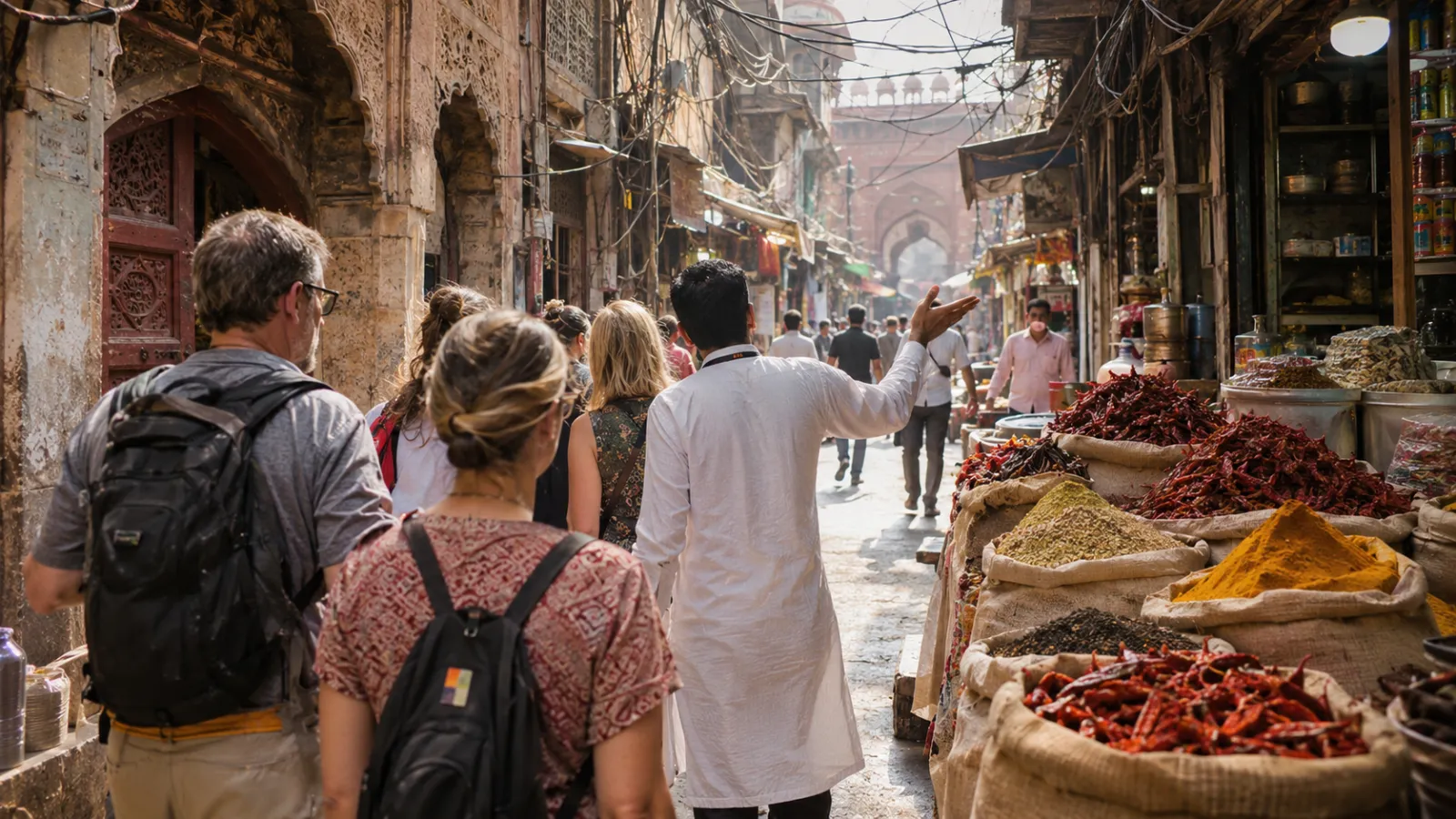
- Old Delhi is where a guide earns their place: the spice market, the lanes behind Chandni Chowk, knowing which food stall to trust.
- The Red Fort is closed on Mondays, and Jama Masjid closes to visitors at prayer times. A guide builds the day around both.
- Humayun's Tomb and Qutub Minar make far more sense when someone connects them to the Taj Mahal you are about to see in Agra.
See the Delhi full-day tour and the Old Delhi food walk.
A Guide in Jaipur: Forts, Palaces and Bazaars
Jaipur is the most photogenic city on the Golden Triangle, and the one where shopping pressure is strongest.
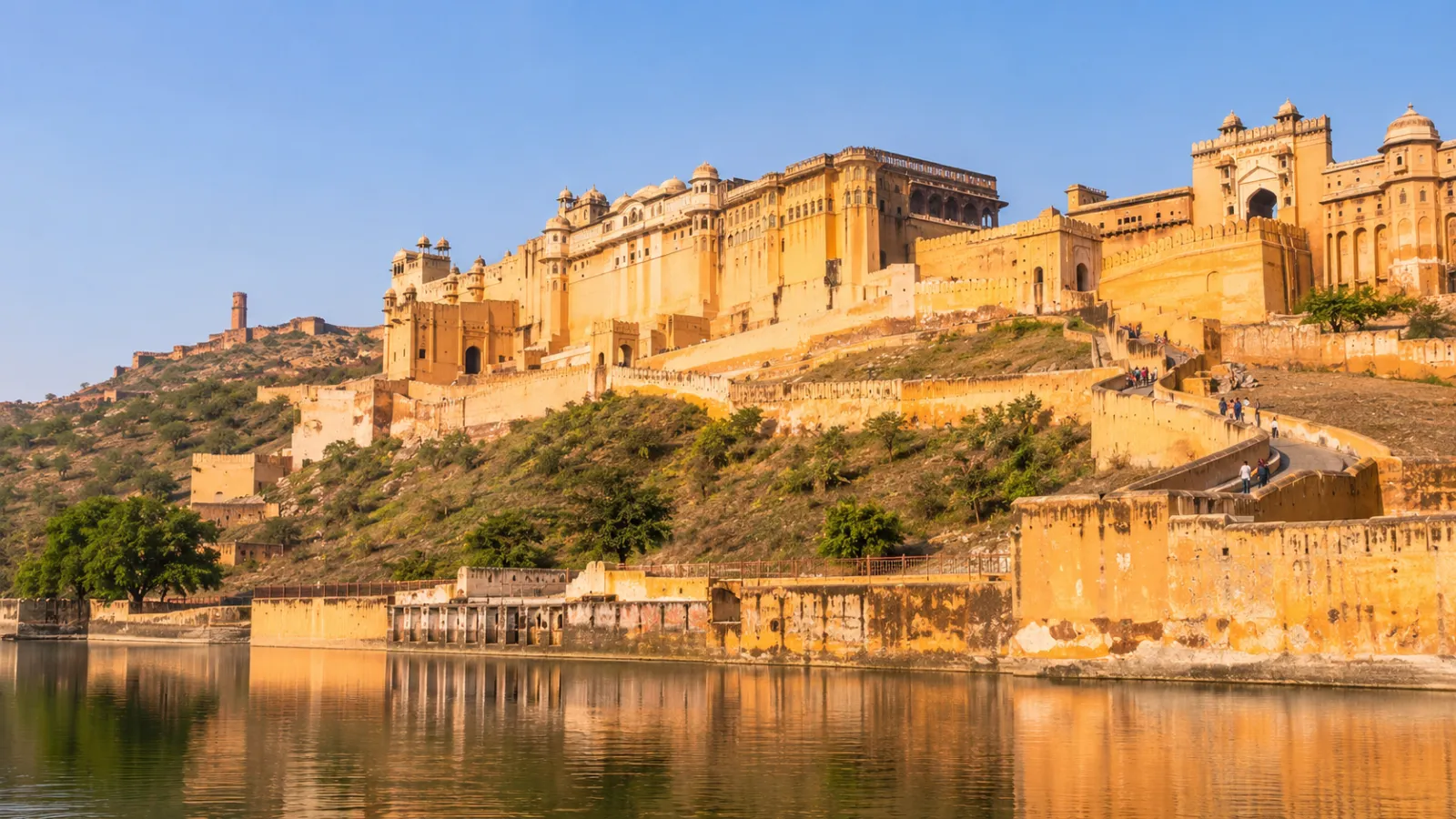
- Amber Fort is best early, before the heat and the crowds. A guide also tells you whose palace this was and why it sits on that hill.
- Jantar Mantar is a field of stone instruments that tell time and track the stars. Without an explanation it is a puzzle; with one it is astonishing.
- Gem and textile shops are where many visitors lose money. A licensed guide tells you honestly when a "special price" is not special.
See the Jaipur tour.
A Guide in Varanasi: the City You Need Explained
Varanasi is not a monument. It is a living, sacred city, and it is the place where I most often hear travellers say they could not have understood it alone.
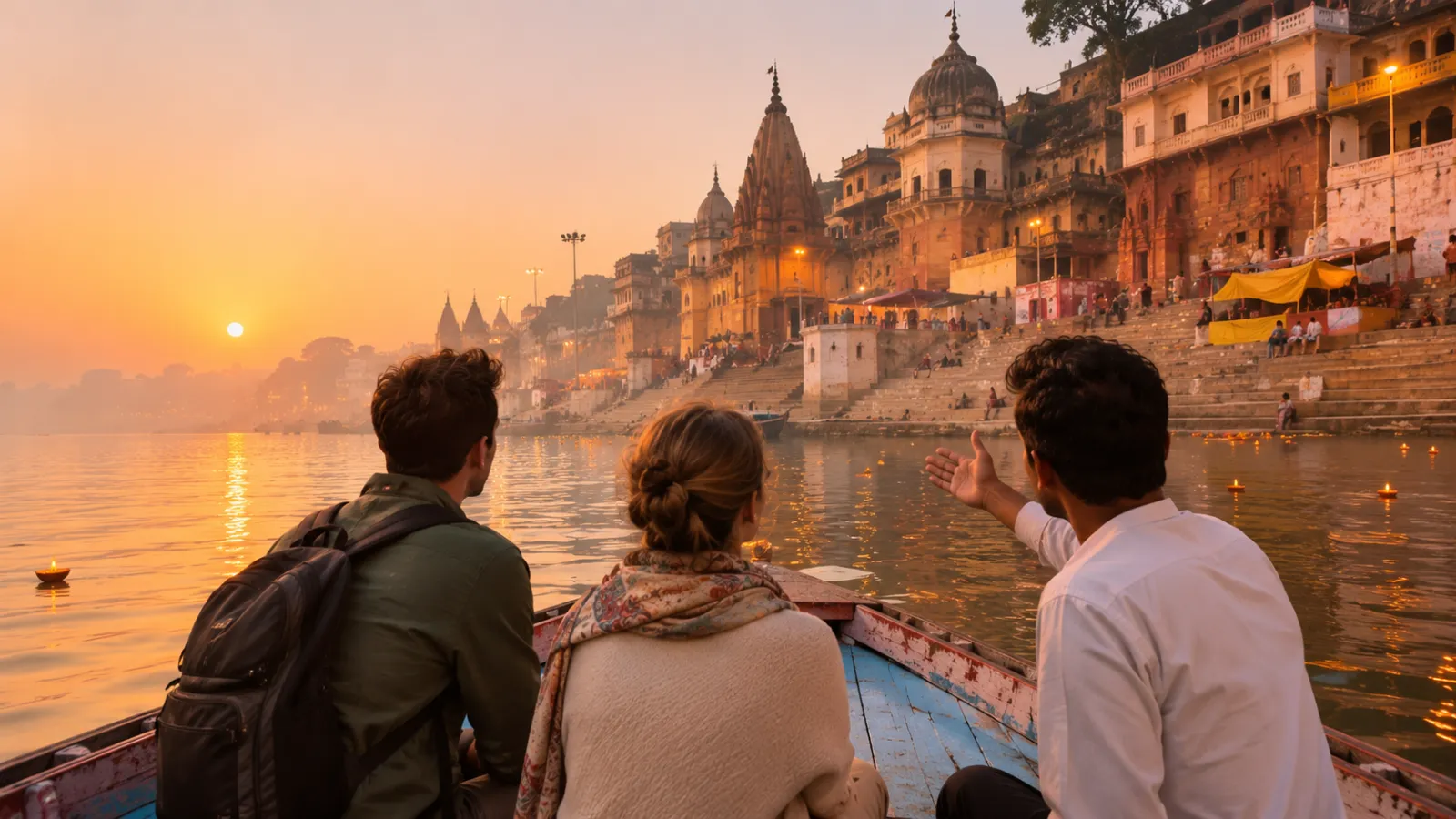
- The ghats at dawn from a boat, with someone explaining what each ritual means as it happens in front of you.
- The cremation ghats need respect. Photographing cremations is deeply offensive to families, and a guide helps you watch without intruding.
- The evening Ganga aarti is crowded. A guide gets you a good place to sit, and back out of the crowd afterwards.
- The lanes and temples have their own rules on phones, bags and who may enter, and those rules change. A guide knows the current ones.
See the Varanasi spiritual tour.
City by City at a Glance
| City | Where a guide helps most | Best time to start |
|---|---|---|
| Agra | Taj Mahal gates, timing and story; Agra Fort | Sunrise (never a Friday) |
| Delhi | Old Delhi lanes and food; Mughal context | Early morning |
| Jaipur | Amber Fort, Jantar Mantar, honest shopping | Early morning |
| Varanasi | Ghats, rituals, etiquette, the evening aarti | Dawn, then again at dusk |
Want a Licensed Guide for Your Trip?
I'm Kamran Khan, a government-licensed guide with a pan-India licence. I guide in English, Spanish and Hindi, and I can travel with you through all four cities. Tell me your dates and I'll reply myself.
How to Hire the Right Guide
- Ask to see the government-issued guide ID card before you start.
- Agree the price and what it includes in writing, on WhatsApp or email.
- Say clearly whether you want shopping stops. A good guide respects "no".
- Check the language. If you want Spanish, ask for a guide who actually speaks it.
- Book ahead through a contact you can verify, with reviews that mention the guide by name, not someone found at the gate.
Quick Facts
- Is a guide compulsory?
- No, but only licensed guides may guide for payment inside protected monuments
- Who licenses guides
- Ministry of Tourism (Incredible India); ASI at protected monuments
- How to check
- Ask to see the official photo ID card
- Taj Mahal
- Closed every Friday
- Red Fort, Delhi
- Closed on Mondays
Frequently Asked Questions
For the big historical sites and old cities, yes. A guide gives you the story behind what you see, saves time at gates and queues, and keeps touts and commission shops away. For beaches or slow travel, you may not need one.
No, you can visit on your own. If you do hire a guide inside the monument, it should be a licensed one, because only guides authorised by the Archaeological Survey of India may guide for payment inside protected monuments.
Ask to see the official photo ID card issued to licensed guides. A genuine guide shows it without hesitation. Booking in advance through a contact with real reviews is safer than choosing someone at the gate.
Yes, if the guide holds a pan-India licence and travels with you. Many guides are licensed for one city or region only, so ask before you book.
Yes, but there are few of them. I guide in Spanish, English and Hindi, and many of my guests come from Spain and Latin America.