Sunrise Tour · Private · All Inclusive
Tour al Amanecer · Privado · Todo Incluido

Taj Mahal
Sunrise
& Agra Fort

Taj Mahal
Amanecer
y Fuerte de Agra

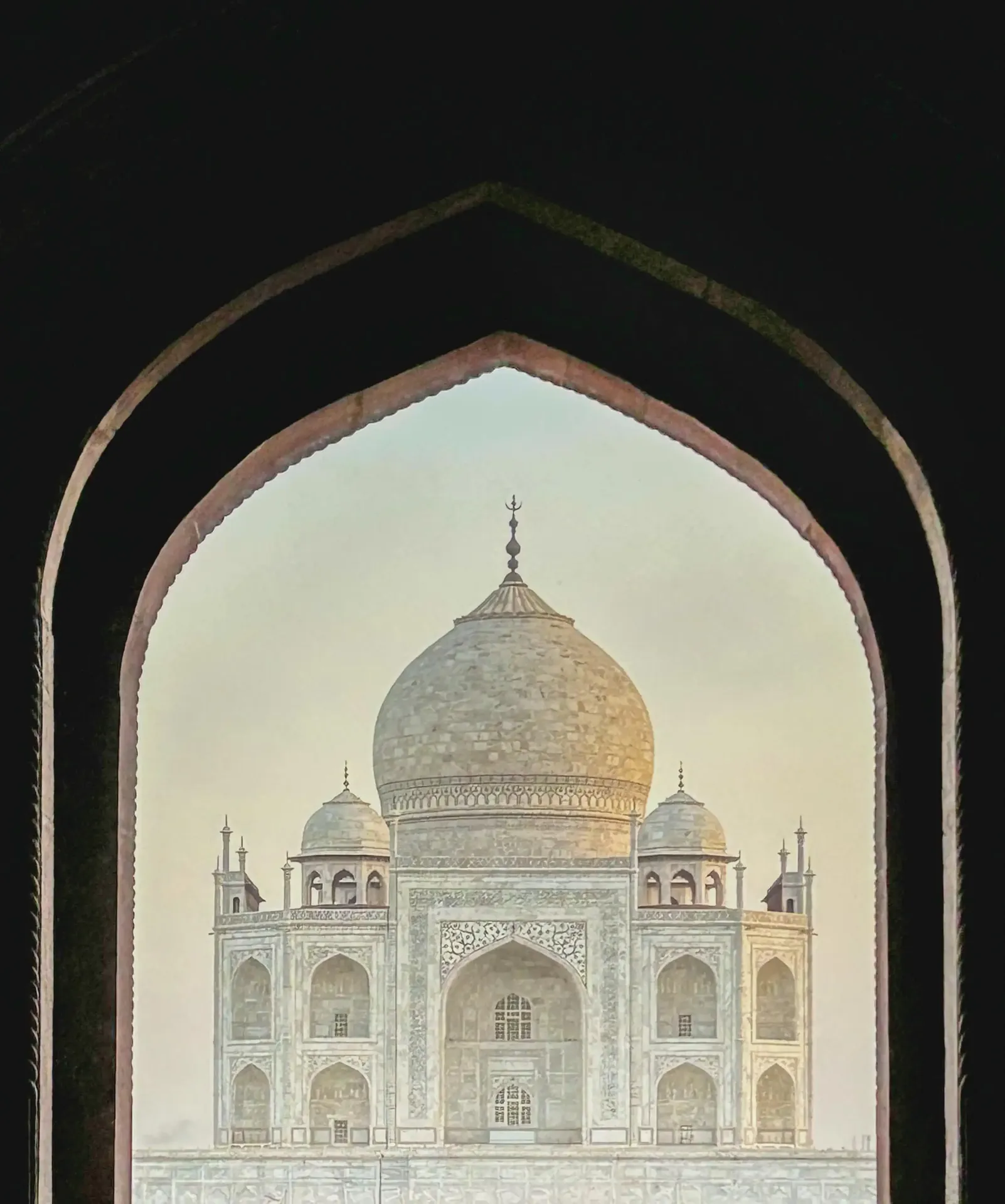
There is only one way to see the Taj Mahal — at first light, before the crowds, when the Makrana marble shifts from rose to liquid gold and the mausoleum appears to float above its own reflection. This private sunrise tour enters the East Gate as it opens, gives you the garden in the most luminous hour of the day, then tells you the full story behind the most famous building on earth. Agra Fort and the optional Baby Taj complete one of the great days in Indian travel.

Solo hay una manera de ver el Taj Mahal — con las primeras luces, antes de las multitudes, cuando el mármol de Makrana pasa del rosa al oro líquido y el mausoleo parece flotar sobre su propio reflejo. Este tour privado al amanecer entra por la Puerta Este en cuanto abre, te regala el jardín durante la hora más luminosa del día y después te cuenta la historia completa detrás del edificio más famoso de la Tierra. El Fuerte de Agra y el opcional Pequeño Taj completan uno de los grandes días del viaje por la India.

Book via WhatsApp Reservar por WhatsApp

Instant reply · Private tour · Delhi or Agra hotel pickup · All entry tickets included
Respuesta inmediata · Tour privado · Recogida en Delhi o Agra · Todas las entradas incluidas

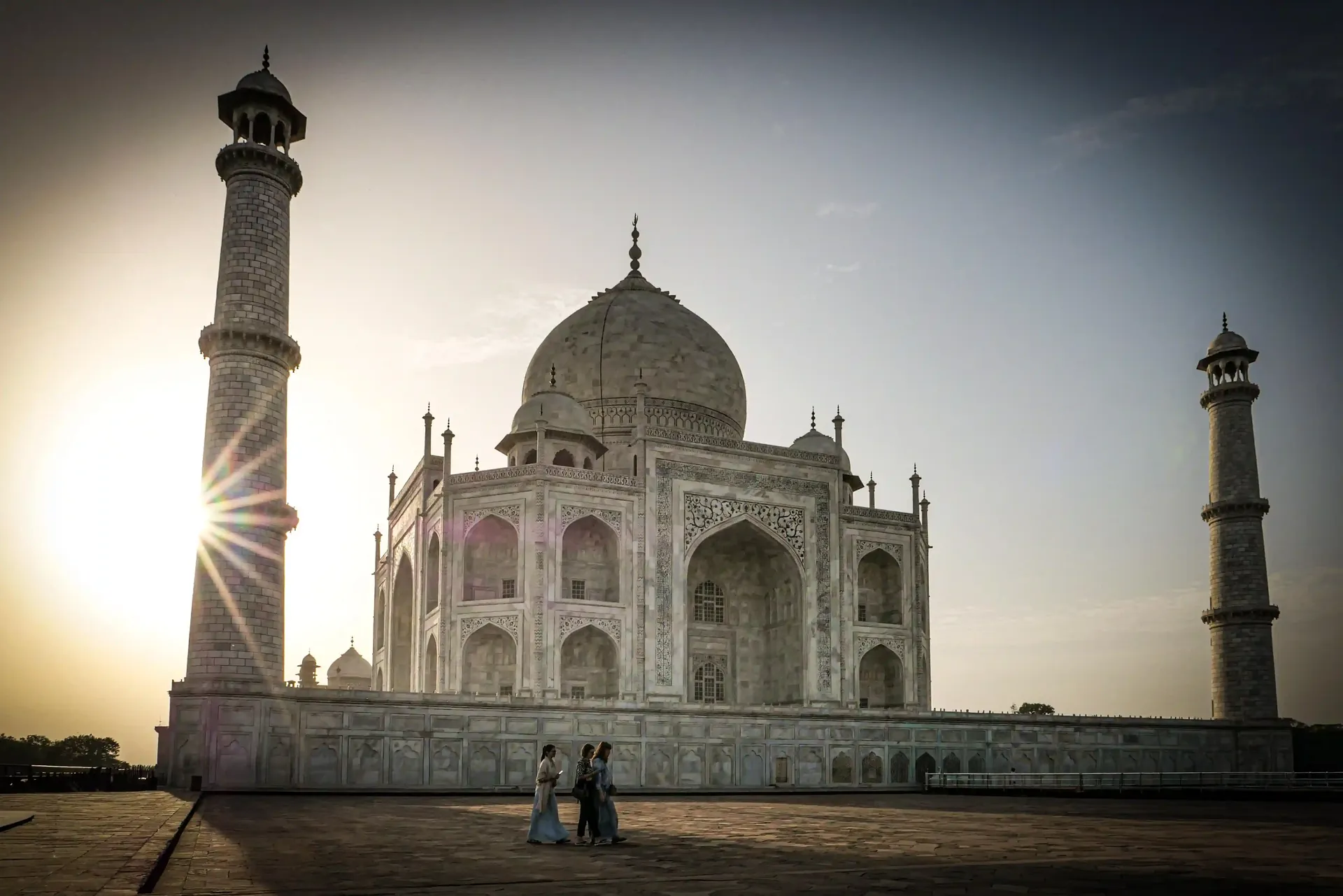
Taj Mahal at sunrise — marble glowing rose-gold in the first light of morning with Kamran Khan
All Inclusive
Todo Incluido
  • Taj Mahal East Gate First EntryPrimera entrada Puerta Este del Taj
  • Agra Fort Full VisitVisita Completa al Fuerte de Agra
  • Baby Taj — Optional Add-onPequeño Taj — Opcional
  • Private AC Vehicle All DayVehículo AC Privado Todo el Día
🌟
Taj SunriseEast Gate first entry
Amanecer en el TajPrimera entrada Puerta Este
🏛
Agra FortUNESCO World Heritage
Fuerte de AgraPatrimonio Mundial UNESCO
🚗
Private AC VehicleDelhi or Agra pickup
Vehículo AC PrivadoRecogida en Delhi o Agra
🧭
Licensed GuidePan-India IITG certified
Guía CertificadoIITG oficial

Before the World Wakes Up

Antes de que Despierte el Mundo

The Taj Mahal is open from sunrise to sunset — but that gap is not equal. The first ninety minutes after gate opening, before the tour buses arrive, while the marble still holds the chill of the night and the light changes by the minute, is categorically different from every other hour of the day. This itinerary is built entirely around that window.

El Taj Mahal abre desde el amanecer hasta el atardecer — pero ese intervalo no es igual. Los primeros noventa minutos tras la apertura de la puerta, antes de que lleguen los autobuses turísticos, mientras el mármol aún conserva el frío de la noche y la luz cambia por minutos, es categóricamente diferente a cualquier otra hora del día. Este itinerario está construido íntegramente alrededor de esa ventana.

01
Pre-Dawn · 5:00 AM (Agra) / 2:00 AM (Delhi)
Madrugada · 5:00 h (Agra) / 2:00 h (Delhi)
Hotel Pickup — Agra or Delhi
Recogida en Hotel — Agra o Delhi
Your private, air-conditioned vehicle arrives at your hotel before the city stirs. Guests staying in Agra depart at 5:00 AM — early enough to reach the Taj East Gate comfortably before it opens at first light. Guests travelling from Delhi depart at 2:00–2:30 AM for the approximately 3.5-hour drive down the Yamuna Expressway, arriving in Agra well before sunrise. This is not an arbitrary hardship: position in the East Gate queue directly determines how empty the garden is when you first walk through the Great Gate. Arriving near the front means your first view of the Taj Mahal is unobstructed by other visitors. Kamran uses the drive to brief you on everything you are about to see — the full story of Shah Jahan and Mumtaz Mahal, the 22 years of construction, the 20,000 craftsmen, the pietra dura inlay technique, and exactly how to read the monument’s architecture once you are inside it.
Tu vehículo privado con aire acondicionado llega a tu hotel antes de que la ciudad despierte. Los huéspedes alojados en Agra salen a las 5:00 h. Los de Delhi salen a las 2:00–2:30 h para el trayecto de aproximadamente 3,5 horas por la Autopista Yamuna, llegando a Agra bien antes del amanecer. Kamran utiliza el trayecto para informaros sobre la historia completa de Shah Jahan y Mumtaz Mahal, los 22 años de construcción, los 20.000 artesanos y la técnica de incrustación pietra dura.
Private Pickup · Agra Hotel or Delhi Hotel Recogida Privada · Hotel en Agra o Delhi
02
Sunrise · 6:00 AM (seasonal — confirms at booking)
Amanecer · 6:00 h (estacional — confirma al reservar)
Taj Mahal East Gate — First Entry
Puerta Este del Taj Mahal — Primera Entrada
We approach through the East Gate — deliberately chosen over the South Gate for the angle of approach. The road runs parallel to the eastern wall, and the transition from street level through the forecourt to the Great Gate (Darwaza-i-Rauza) is a masterclass in architectural anticipation: each threshold is designed to frame and then withhold the view of the mausoleum until the precise moment of maximum impact. As you pass through the Great Gate and the Taj Mahal appears in full for the first time — white, symmetrical, and infinitely larger than any photograph prepared you for — Kamran will stop the group and hold silence. This is a moment that deserves silence. The Taj Mahal is 73 metres tall. It took 22 years to build. The marble was quarried 300 kilometres away and transported by a fleet of 1,000 elephants. The inlaid gemstones were sourced from Persia, China, Sri Lanka, Afghanistan, and the Arabian Peninsula. None of these facts are what makes it extraordinary. What makes it extraordinary is that one man built it because he missed one woman. That is what you are standing in front of.
Nos acercamos a través de la Puerta Este — elegida deliberadamente por el ángulo de aproximación. Al pasar por la Gran Puerta y aparecer el Taj Mahal en su totalidad por primera vez — blanco, simétrico e infinitamente más grande de lo que ninguna fotografía te preparó — Kamran detendrá al grupo y mantendrá el silencio. El Taj mide 73 metros de alto. Tardó 22 años en construirse. Lo que lo hace extraordinario es que un hombre lo construyó porque extrañaba a una mujer. Eso es ante lo que estás de pie.
Ticket Included · UNESCO World Heritage · East Gate Priority Entrada Incluida · Patrimonio UNESCO · Prioridad Puerta Este
03
Golden Hour · 6:15 – 8:00 AM
Hora Dorada · 6:15 – 8:00 AM
The Taj Gardens — Photography & Narration
Los Jardines del Taj — Fotografía y Narración
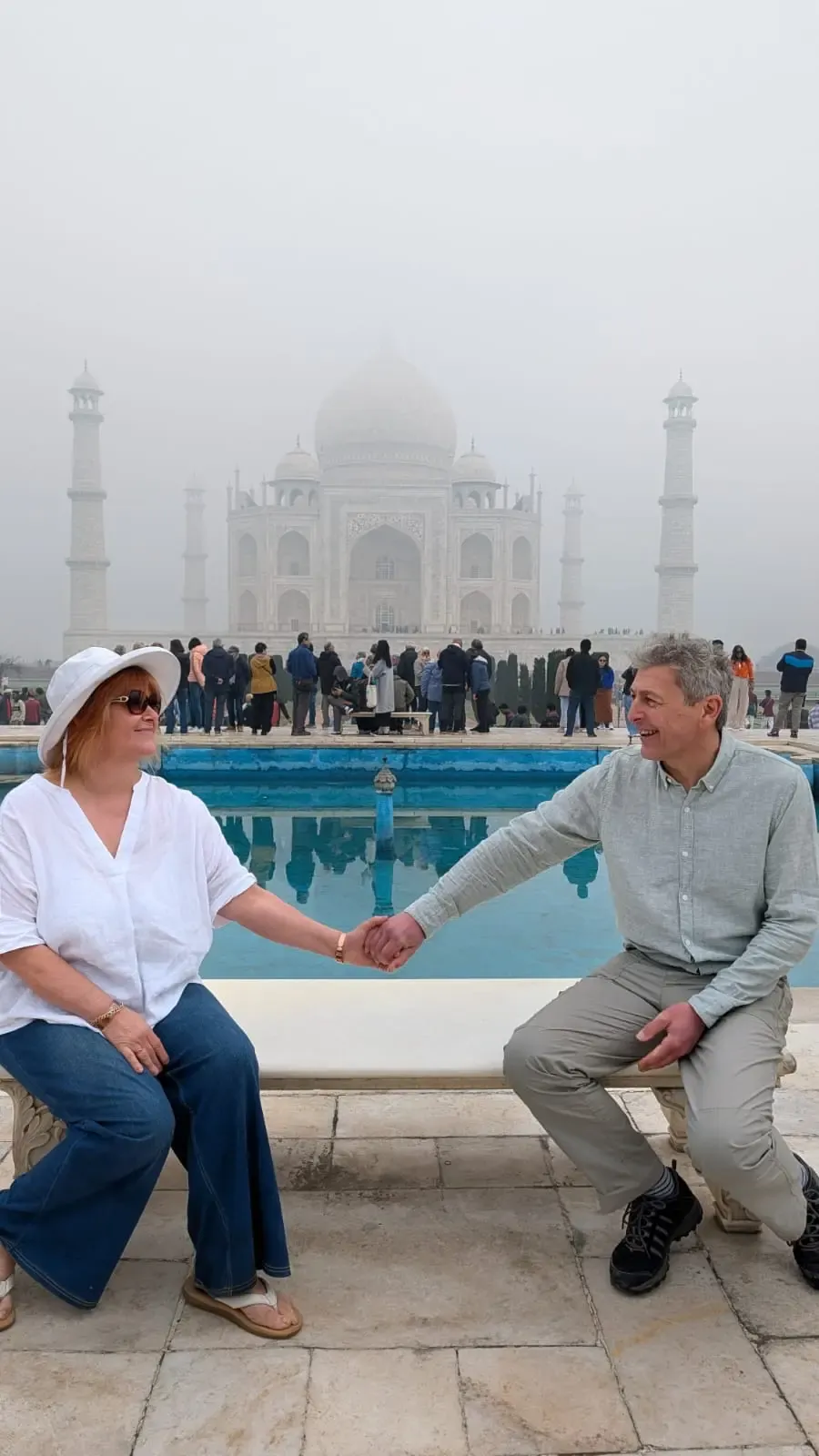
The next ninety minutes are the heart of the tour. The Charbagh — the formal Mughal garden divided into four quadrants by raised water channels — is not a setting for the building. In Mughal cosmology it is an argument about paradise: the earthly representation of Jannat, and the Taj Mahal at its northern end is the throne of God from which the garden is surveyed. Kamran takes you through every key position: the central reflecting pool where the Taj doubles in the water on calm mornings, the marble platform at the mausoleum base with its four minarets leaning imperceptibly outward (designed to fall away from the main structure in an earthquake), the famous Princess Diana bench on the eastern pathway, and the perspective from the western mosque that most visitors never use. The light during this ninety-minute window shifts continuously: marble moves from pale rose through luminous warm gold to brilliant white, each phase producing a completely different quality of photograph. Kamran tells you when each phase peaks and positions you accordingly.
Los siguientes noventa minutos son el corazón del tour. El Charbagh no es un escenario para el edificio. En la cosmología mogola es un argumento sobre el paraíso: la representación terrenal del Jannat. Kamran te lleva por cada posición clave: el estanque central reflectante, el banco de la Princesa Diana, la perspectiva desde la mezquita occidental. La luz durante esta ventana de noventa minutos se desplaza continuamente del rosa pálido al oro luminoso y al blanco brillante.
Golden Hour Photography · Charbagh Garden · Reflecting Pool Fotografía Hora Dorada · Jardín Charbagh · Estanque Reflectante
04
Morning · 8:00 AM
Mañana · 8:00 AM
Inside the Mausoleum — The Inner Chamber
Dentro del Mausoleo — La Cámara Interior
We remove our shoes at the marble plinth steps and enter the mausoleum. The interior is octagonal, the walls inlaid with pietra dura floral panels of such detail that individual stones less than a millimetre across form the veins of leaves and the petals of flowers. Natural light enters through the jali (latticed marble screens) and gives the white marble a quality of light that has no equivalent anywhere in the world. At the centre, behind the ornamental marble screen, lie the cenotaphs of Mumtaz Mahal and Shah Jahan. The real graves are directly below in the lower chamber. Mumtaz Mahal’s cenotaph is placed exactly at the geometric centre of the entire building — proof the Taj was designed entirely around the location of her tomb. Shah Jahan’s cenotaph, slightly larger and offset to the left, was added after his death in 1666 — the only element of asymmetry in an otherwise perfectly symmetrical building. Kamran will stand in the inner chamber and tell you the end of the story that began on the drive from Delhi.
Nos quitamos los zapatos en los escalones del zócalo de mármol y entramos al mausoleo. El interior es octogonal, las paredes incrustadas con paneles florales de pietra dura de tal detalle que piedras individuales de menos de un milímetro forman las venas de las hojas. Al centro, detrás de la pantalla de jali, descansan los cenotafios de Mumtaz Mahal y Shah Jahan. El cenotafio de Mumtaz está situado exactamente en el centro geométrico de todo el edificio. Kamran estará en la cámara interior y os contará el final de la historia.
Inner Chamber · Pietra Dura Detail · Shah Jahan & Mumtaz Cenotaphs Cámara Interior · Detalle Pietra Dura · Cenotafios Shah Jahan y Mumtaz
05
Morning · 9:30 AM
Mañana · 9:30 AM
Agra Fort — The Red Throne of the Mughals
Fuerte de Agra — El Trono Rojo de los Mogoles
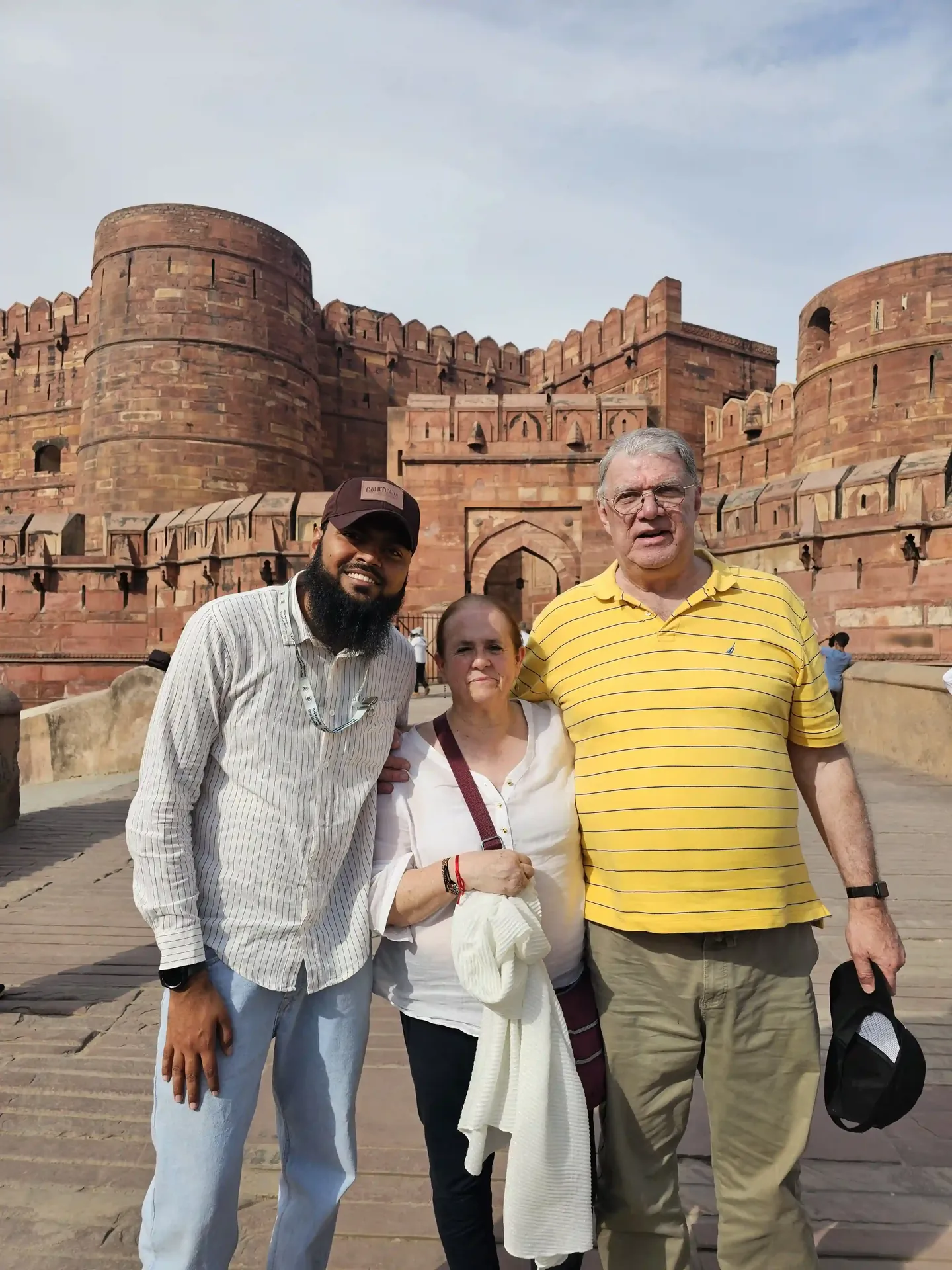
The Taj Mahal is where the Mughal story ended — but Agra Fort is where it was lived. This immense red sandstone citadel stretches 2.5 kilometres along the western bank of the Yamuna, enclosing palaces, audience halls, mosques, and gardens that accumulated across three imperial reigns. Emperor Akbar began the current fort in 1565 on the site of an older Rajput fortification. His son Jahangir and grandson Shah Jahan added progressively more refined structures in white marble — so the fort is a visible timeline of Mughal taste. Kamran walks you through the Diwan-i-Am (Hall of Public Audience), the Diwan-i-Khas with its Peacock Throne alcove, the Khas Mahal, and the Pearl Mosque (Moti Masjid) — considered the most perfect small mosque in Mughal architecture. The emotional apex is always the same: the Musamman Burj, the octagonal tower from whose upper balcony the imprisoned Shah Jahan spent the last eight years of his life looking across the Yamuna at the Taj Mahal he had built for Mumtaz. From this balcony, on a clear day, the Taj is visible exactly as he saw it. Kamran will put you on that balcony and tell you what he saw.
El Taj Mahal es donde terminó la historia mogola — pero el Fuerte de Agra es donde se vivió. Esta ciudadela de arenisca roja se extiende 2,5 kilómetros a lo largo del Yamuna. Kamran te guía por el Diwan-i-Am, el Diwan-i-Khas, el Khas Mahal y la Mezquita de Perla. El punto álgido emocional es siempre el mismo: el Musamman Burj, desde cuyo balcón el encarcelado Shah Jahan pasó sus últimos ocho años mirando el Taj. Desde ese balcón, el Taj es visible exactamente como él lo vio. Kamran os pondrá en ese balcón y os contará lo que él vio.
Ticket Included · UNESCO Heritage · Shah Jahan’s Prison Window Entrada Incluida · Patrimonio UNESCO · Ventana de la Prisión de Shah Jahan
06
Late Morning · 11:00 AM
Mañana Avanzada · 11:00 AM
Breakfast in Agra — Mughlai Cuisine
Desayuno en Agra — Cocina Mughal
Following your early morning golden hour, enjoy a well-earned premium pause designed specifically for couples. We offer two incredible options depending on your preference: a grand, lavish buffet breakfast at a magnificent 5-star luxury hotel, or a private table at an exclusive local restaurant featuring a breathtaking, panoramic view of the Taj Mahal. ​This is the perfect, relaxed moment to sit back in comfort, enjoy hot coffee or tea, and scroll through the stunning morning photographs we just captured of both of you. Kamran will help guide you to the absolute best spot based on your style to ensure your morning remains completely magical. ​Note: Breakfast costs are not included in the package price and are paid directly at the chosen venue.
Después de su sesión durante de la hora dorada, disfruten de una merecida pausa premium diseñada especialmente para parejas. Ofrecemos dos opciones increíbles según sus preferencias: un gran y espléndido desayuno buffet en un magnífico hotel de lujo de 5 estrellas, o una mesa privada en un exclusivo restaurante local con una impresionante vista panorámica del Taj Mahal. ​Este es el momento perfecto y relajado para descansar con total comodidad, disfrutar de un café o té caliente y revisar las hermosas fotografías que acabamos de capturar de ustedes dos por la mañana. Kamran los guiará hacia el lugar ideal según su estilo para asegurar que su mañana siga siendo completamente mágica. ​Nota: Los costos del desayuno no están incluidos en el precio del paquete y se pagan directamente en el lugar elegido.
Lunch Not Included · Premium Mughlai Restaurant Almuerzo No Incluido · Restaurante Mughal Premium
07
Afternoon · 12:00 PM · Optional
Tarde · 12:00 PM · Opcional
Itmad-ud-Daulah — The Baby Taj (Optional)
Itmad-ud-Daulah — El Pequeño Taj (Opcional)
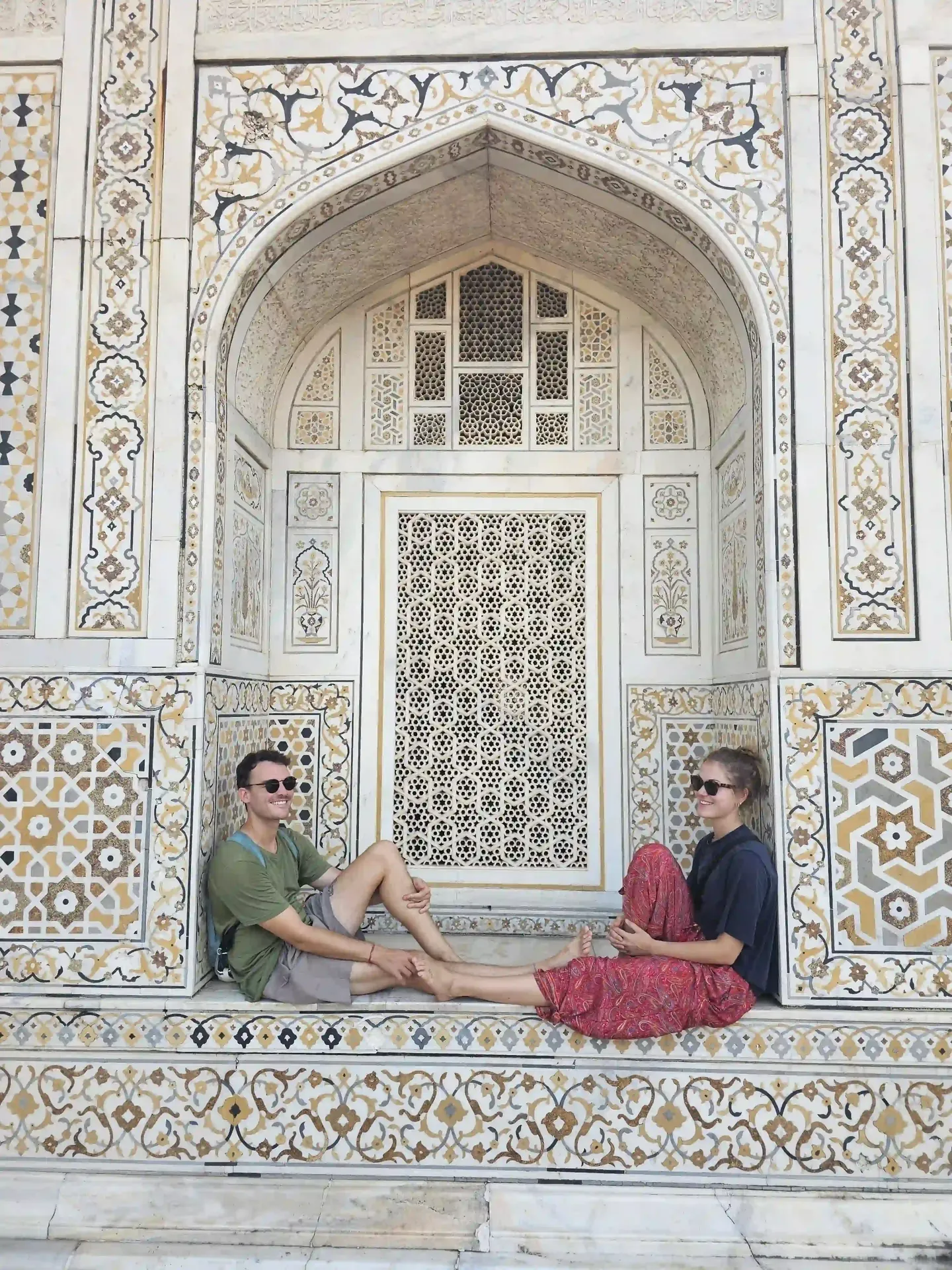
The Itmad-ud-Daulah — known universally as the Baby Taj — is the tomb of Mirza Ghiyas Beg, built between 1622 and 1628 by Empress Nur Jahan. It is the first Mughal funerary monument built entirely of white marble, and the first to use pietra dura inlay in Agra — making it technically the prototype from which the Taj Mahal’s decorative vocabulary was developed. The scale is intimate rather than imperial: the inlay work can be appreciated at close range, and the quality of the gemstone work is in some panels even finer than the Taj itself. The latticed marble windows (jali) are carved from single slabs into geometric patterns of such complexity that they appear to be textile rather than stone. Most Agra itineraries skip the Baby Taj because it requires explanation to be meaningful — without context, it is simply a smaller building. With Kamran’s narration connecting it to the Taj Mahal as cause and effect, it becomes one of the most important buildings you will see in India. Entry ticket included if taken.
El Itmad-ud-Daulah — conocido como el Pequeño Taj — es la primera tumba mogola construida íntegramente en mármol blanco y la primera en usar la incrustación pietra dura en Agra, convirtiéndola en el prototipo del que se desarrolló el vocabulario decorativo del Taj Mahal. Sin el Pequeño Taj, no hay Taj Mahal. Con la narración de Kamran conectándolo al Taj como causa y efecto, se convierte en uno de los edificios más importantes que verás en la India. Entrada incluida si se realiza.
Optional · Ticket Included if Taken · Prototype of the Taj Mahal Opcional · Entrada Incluida si se Realiza · Prototipo del Taj Mahal
08
Afternoon · 12:30 PM
Tarde · 12:30 PM
Agra Marble Craft Workshop
Taller de Artesanía de Mármol de Agra
Agra is the centre of India’s marble inlay tradition — the same craft that decorates the Taj Mahal’s walls, practised continuously since the seventeenth century. Many workshops in the old city still operate using identical techniques: designs traced onto marble, grooves cut by hand, pieces of semi-precious stone (lapis lazuli, malachite, turquoise, carnelian, mother-of-pearl) shaped to fit the groove precisely and set with traditional adhesive. A visit to a genuine family workshop is one of Agra’s most authentic experiences, and seeing the craft being made immediately deepens everything Kamran explained inside the Taj earlier in the day. This visit is free and there is no obligation to purchase. Kamran will take you to a fourth- or fifth-generation marble workshop he knows personally. If you do choose to buy, he will advise on quality and fair pricing.
Agra es el centro de la tradición de incrustación de mármol de la India — la misma artesanía que decora las paredes del Taj. Muchos talleres de la ciudad vieja aún funcionan con técnicas idénticas. Una visita a un taller genuino es una de las experiencias más auténticas de Agra, y ver el oficio siendo creado profundiza inmediatamente todo lo que Kamran explicó dentro del Taj. Esta visita es gratuita y sin obligación de compra.
Authentic Workshop · No Obligation to Purchase · Pietra Dura Craft Taller Auténtico · Sin Obligación de Compra · Artesanía Pietra Dura
09
Afternoon · 1:30 PM
Tarde · 1:30 PM
Drop-off & Return
Regreso y Despedida
Your private AC vehicle returns you to your Agra hotel, or begins the approximately 3.5-hour drive back to Delhi, arriving at your hotel or airport at approximately 5:00–5:30 PM. Guests with early Delhi flights the following day should confirm departure timing with Kamran at booking. For guests who wish to overnight in Agra — strongly recommended for a more relaxed experience and the option of a Taj by Night visit on full-moon nights (a separate ticket, bookable via Kamran) — drop-off is to your Agra hotel. The Taj Mahal was built to be remembered forever. That is precisely what today has ensured.
Tu vehículo AC privado te devuelve a tu hotel de Agra, o comienza el trayecto de regreso de aproximadamente 3,5 horas a Delhi, llegando aproximadamente a las 21:00–21:30 h. Para los huéspedes que desean pasar la noche en Agra — muy recomendable y con opción de visita nocturna al Taj en noches de luna llena — el regreso es a su hotel de Agra.
Agra Hotel or Delhi Drop-off · Taj by Night Option Available Regreso a Hotel Agra o Delhi · Opción Taj de Noche Disponible

Inclusions & Exclusions

Inclusiones y Exclusiones

✅ Package Inclusions✅ El Paquete Incluye

  • Taj Mahal Entry Ticket:Entrada al Taj Mahal: Full entry to the Taj Mahal complex including the mausoleum platform and inner chamber for all group members.Entrada completa al complejo del Taj Mahal incluyendo la plataforma del mausoleo y cámara interior para todos los miembros del grupo.
  • Agra Fort Entry Ticket:Entrada al Fuerte de Agra: Full entry to Agra Fort UNESCO World Heritage Site including Musamman Burj, Diwan-i-Khas, Diwan-i-Am, Khas Mahal, and Moti Masjid for all group members.Entrada completa al Fuerte de Agra Patrimonio UNESCO incluyendo el Musamman Burj, Diwan-i-Khas, Diwan-i-Am, Khas Mahal y Moti Masjid para todos los miembros del grupo.
  • Itmad-ud-Daulah Entry (if taken):Entrada al Itmad-ud-Daulah (si se realiza): Entry to the Baby Taj is included in the tour price if the optional stop is chosen. No additional cost.La entrada al Pequeño Taj está incluida en el precio del tour si se elige la parada opcional. Sin coste adicional.
  • Private AC Vehicle — Full Day:Vehículo AC Privado — Día Completo: Full-day private air-conditioned vehicle for all transfers including Delhi–Agra–Delhi or Agra-only itinerary with a professional driver throughout.Vehículo privado con AC durante todo el día para todos los traslados incluyendo Delhi–Agra–Delhi o itinerario solo Agra con conductor profesional.
  • Hotel Pickup & Drop-off:Recogida y Regreso en Hotel: Door-to-door pickup and drop-off from your Delhi or Agra hotel. Airport and railway station pickup available on request.Recogida y regreso puerta a puerta desde tu hotel de Delhi o Agra. Recogida en aeropuerto y estación de tren disponible bajo petición.
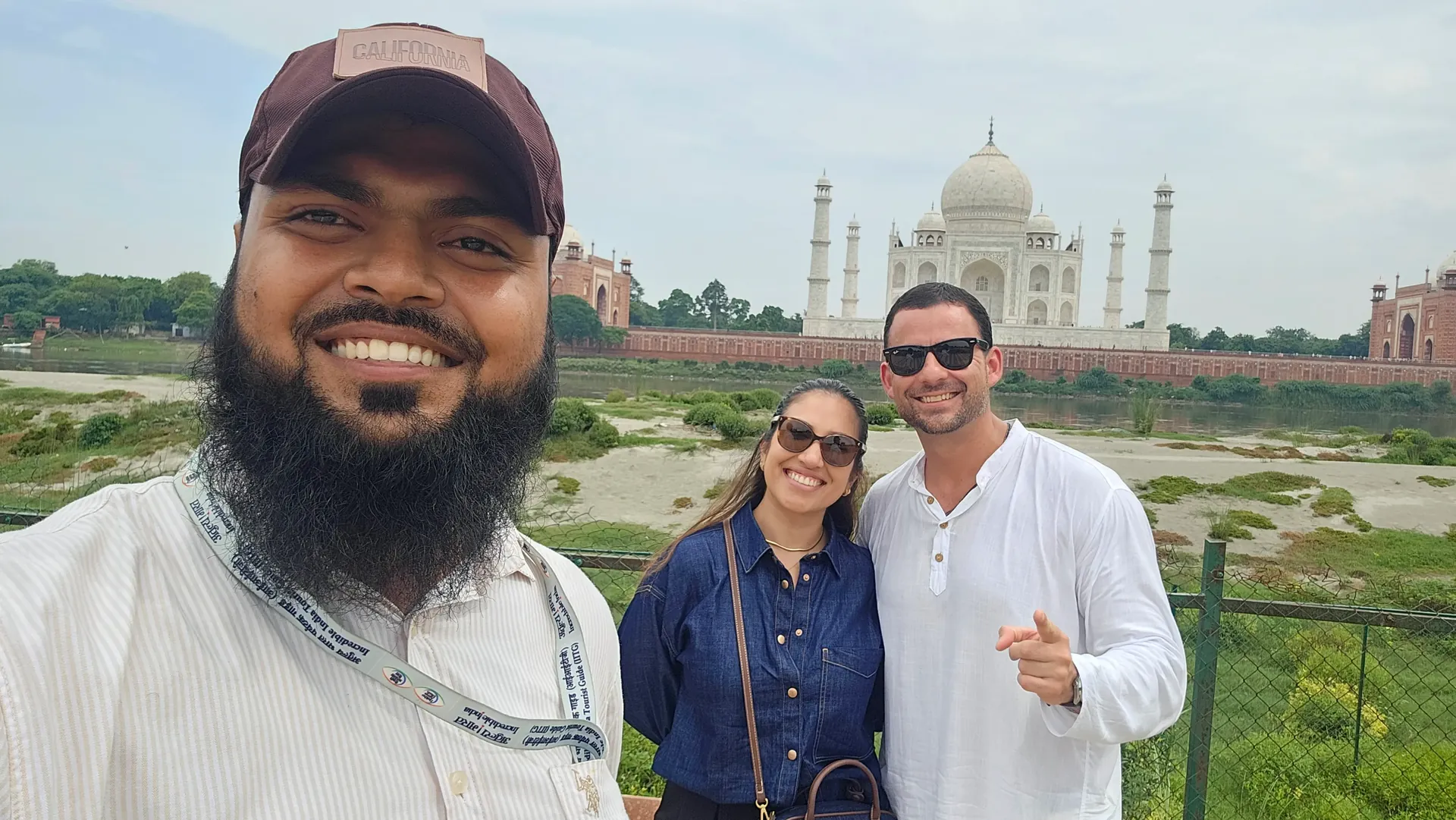
  • Government Licensed Tour Guide:Guía Oficial Certificado: Full-day service by Kamran Khan in English and Spanish. Pan-India IITG licence. Architectural narration, Mughal history, and photography guidance throughout.Servicio de día completo de Kamran Khan en inglés y español. Licencia IITG panindiana. Narración arquitectónica, historia mughal y orientación fotográfica durante todo el día.
  • Water Throughout the Day:Agua Durante Todo el Día: Bottled water provided throughout the tour.Agua embotellada proporcionada durante todo el tour.

✕ Package Exclusions✕ El Paquete Excluye

  • Lunch & All Meals:Almuerzo y Todas las Comidas: Meal costs are not included. Kamran will take you to a premium local restaurant in Agra; you pay directly.El coste de las comidas no está incluido. Kamran te llevará a un restaurante local premium en Agra; pagas directamente.
  • Taj by Night Ticket (Optional):Entrada Taj de Noche (Opcional): The moonlight viewing is a separate government ticket available on full-moon nights and five surrounding nights only. Bookable via Kamran at an additional cost for guests staying overnight in Agra.La visita nocturna bajo la luna llena es una entrada gubernamental separada disponible solo en noches de luna llena y las cinco noches circundantes. Reservable a través de Kamran a coste adicional.
  • Gratuities & Tips:Propinas: Optional and entirely at your discretion for the driver and guide.Opcionales y totalmente a tu criterio para el conductor y el guía.
  • Personal Expenses:Gastos Personales: Marble inlay purchases, souvenirs, petha sweets, leather goods, or any activities not listed in the itinerary.Compras de incrustación de mármol, recuerdos, dulces petha, artículos de cuero o actividades no incluidas en el itinerario.
  • Accommodation in Agra:Alojamiento en Agra: If you choose to overnight in Agra, hotel accommodation is not included. Kamran can recommend properties at every price point.Si decides pasar la noche en Agra, el alojamiento no está incluido. Kamran puede recomendar propiedades en todos los rangos de precio.
  • Alcoholic Beverages:Bebidas Alcohólicas: Any drinks ordered beyond water and standard non-alcoholic beverages.Cualquier bebida pedida más allá del agua y las bebidas no alcohólicas estándar.

What Makes This Different

Qué lo Hace Diferente

01
Sunrise Is Not a Detail — It Is the Point
El Amanecer No Es un Detalle — Es el Objetivo
The Taj Mahal at 10:00 AM is a beautiful building surrounded by thousands of people. At 6:30 AM the marble shifts colour in real time, the garden is largely empty, and the photographic light is incomparably better. This tour is built exclusively around that first entry window.
El Taj Mahal a las 10:00 h es un hermoso edificio rodeado de miles de personas. A las 6:30 h el mármol cambia de color en tiempo real, el jardín está prácticamente vacío y la luz fotográfica es incomparablemente mejor. Este tour está construido exclusivamente alrededor de esa ventana.
02
The Musamman Burj Window
La Ventana del Musamman Burj
The Agra Fort visit culminates at the Musamman Burj — the tower where Shah Jahan was imprisoned and from whose windows he watched the Taj for the last eight years of his life. Kamran will stand with you at that window. The view is still there. That is the story.
La visita al Fuerte de Agra culmina en el Musamman Burj — la torre donde Shah Jahan fue encarcelado y desde cuyas ventanas observó el Taj durante sus últimos ocho años. Kamran estará con vosotros en esa ventana.
03
The Baby Taj in Context
El Pequeño Taj en Contexto
The Itmad-ud-Daulah is the architectural predecessor of the Taj — the first white marble Mughal tomb and the first use of pietra dura in Agra. Without the Baby Taj there is no Taj Mahal. With Kamran’s narration connecting the two, a building most guides skip becomes the key to understanding everything else you saw that day.
El Itmad-ud-Daulah es el predecesor arquitectónico del Taj — la primera tumba mughal de mármol blanco. Sin el Pequeño Taj no hay Taj Mahal. Con la narración de Kamran, un edificio que la mayoría de los guías omiten se convierte en la clave para entender todo lo demás.
04
Bilingual Guide
Guía Bilingüe
Kamran speaks fluent English and Spanish — a rare combination in Agra. Spanish-speaking travellers experience the full architectural, historical, and emotional depth of the Taj Mahal’s story entirely in their own language, without losing a single detail.
Kamran habla inglés y español con fluidez — una combinación poco frecuente en Agra. Los hispanohablantes viven la profundidad total de la historia del Taj íntegramente en su propio idioma.
05
500+ Five-Star Reviews
Más de 500 Reseñas de 5 Estrellas
Verified reviews on Viator, GetYourGuide, and Airbnb from travellers across 40+ nationalities — all five stars. Read them before you book.
Reseñas verificadas en Viator, GetYourGuide y Airbnb de viajeros de más de 40 nacionalidades — todas de cinco estrellas. Léelas antes de reservar.

Practical Details

Información Práctica

Duration
Duración
Full Day — Approx. 10–14 Hours
Día Completo — Aprox. 10–14 Horas
From Agra: 5:00 AM – 6:00 PM. From Delhi: 2:00 AM – 9:30 PM. Times are approximate and seasonal. Exact sunrise gate-opening time confirmed with Kamran at booking.
Desde Agra: 5:00 – 18:00 h. Desde Delhi: 2:00 – 21:30 h. Los horarios son aproximados y estacionales. La hora exacta de apertura al amanecer se confirma con Kamran al reservar.
Group Size
Tamaño del Grupo
1 to 8 Persons
1 a 8 Personas
Entirely private. Larger groups on request.
Completamente privado. Grupos más grandes bajo petición.
Languages
Idiomas
English & Spanish
Inglés y Español
Hindi and Preferred Language also available.
Hindi y urdu también disponibles.
Availability
Disponibilidad
All Year · 6 Days a Week
Todo el Año · 6 Días a la Semana
The Taj Mahal is closed every Friday. The tour runs all other days including public holidays. Last-minute bookings welcome — contact Kamran via WhatsApp to confirm availability.
El Taj Mahal cierra todos los viernes. El tour funciona todos los demás días incluyendo festivos. Las reservas de última hora son bienvenidas — contacta a Kamran por WhatsApp para confirmar disponibilidad.
Meeting Point
Punto de Encuentro
Hotel Pickup — Delhi or Agra
Recogida en Hotel — Delhi o Agra
Share your hotel address via WhatsApp — we arrange the rest. Delhi IGI Airport, New Delhi Railway Station, and Agra Cantt. Railway Station pickups also available on request.
Comparte tu dirección de hotel por WhatsApp — nosotros organizamos el resto. Recogida en Aeropuerto IGI Delhi, Estación New Delhi y Agra Cantt. también disponibles bajo petición.
What to Wear
Cómo Vestirse
Modest clothing, comfortable flat shoes & socks
Ropa discreta, zapatos planos cómodos y calcetines
Shoulders and knees must be covered inside the Taj Mahal complex and Agra Fort mosque areas — this is a mandatory ASI regulation, not a suggestion. Shoes are removed before ascending the marble platform of the Taj Mahal and socks are mandatory on the platform and inside the mausoleum. The marble platform in summer (May–September) can be extremely hot — thick socks protect your feet. A warm layer is essential for the pre-dawn drive and early morning garden entry between November and March when temperatures in Agra can drop to 4–8°C.
Los hombros y las rodillas deben estar cubiertos dentro del complejo del Taj Mahal y las áreas de la mezquita del Fuerte de Agra — es una regulación obligatoria de la ASI, no una sugerencia. Los zapatos se retiran antes de subir a la plataforma de mármol y los calcetines son obligatorios. En verano la plataforma puede estar extremadamente caliente — los calcetines gruesos protegen los pies. Una capa cálida es esencial para la madrugada entre noviembre y marzo.
What to Bring
Qué Llevar
Essential Items for the Day
Artículos Esenciales para el Día
Passport or Photo ID (Mandatory — No Exceptions): A valid passport or government-issued photo ID is required for ALL foreign nationals at the Taj Mahal entry gate without exception — it is an Archaeological Survey of India security regulation. The ticket counter requires ID for each adult in the group. Keep your passport accessible from the moment you arrive. Without ID, entry will be refused regardless of pre-purchased tickets.

Camera & Wide-Angle Lens: The Taj garden, mausoleum platform, and Agra Fort courtyards all reward wide-angle lenses (16–35mm equivalent). The mausoleum interior is low-light — a fast prime lens (f/1.8 or f/2.8) delivers significantly better results than a zoom at f/5.6. Tripods are permitted in the garden and at Mehtab Bagh but not inside the mausoleum. Video cameras attract a separate fee at the Taj gate. Fully charged batteries and at least one spare memory card are essential — golden hour produces images at a rate that fills a card quickly.

Multiple Pairs of Clean Socks: You will remove your shoes at the Taj marble platform and again at the Agra Fort Moti Masjid. The ASI rules require respectful foot covering. Bring two pairs — one for the Taj and one fresh pair for the Fort mosque. Shoe covers provided by the ASI at the gate are an alternative but tear easily.

Sun Protection (March–October): Agra’s sun is intense, particularly March–October when temperatures reach 35–45°C. SPF 50+ sunscreen, UV-protective sunglasses, and a light hat or cap are essential for the open garden sections and Mehtab Bagh visit. Apply before leaving the hotel — the pre-dawn drive to the gate leaves no time on arrival. The marble platform reflects heat significantly — protection is as important there as anywhere outdoors.

Warm Layer (November–February): Agra at 5:00–6:30 AM in winter is genuinely cold — temperatures regularly drop to 4–8°C before dawn. A fleece, light down jacket, or warm shawl is essential for the early morning entry. It will not be needed by 9:00 AM, but the first two hours are when the light is best and inadequate preparation spoils the experience.

Comfortable Flat Shoes That Slip Off Easily: You will walk several kilometres across marble, red sandstone, garden paths, and ancient fort floors. None of these surfaces are forgiving to heels, dressy footwear, or thin-soled sandals. The Taj platform involves a climb up several flights of exterior stairs. Agra Fort involves uneven stone surfaces and narrow ramps. Closed, flat shoes that slide on and off effortlessly are the ideal choice.

Cash (INR): Small amounts of Indian Rupees for the Mehtab Bagh camera fee (approx. INR 25–50), lunch (paid at the restaurant), personal purchases at the marble workshop, Agra petha sweets, and tips for the driver and guide. Card payment is limited in Agra’s older market areas. Withdraw cash at Delhi ATMs before departure if travelling from Delhi, as Agra ATM queues near tourist sites can be long.

Light Day Bag: A small backpack or shoulder bag for water, sunscreen, camera accessories, ID documents, and purchases. Note: large bags above a specific dimension set by the ASI are not permitted inside the Taj Mahal complex and must be left at the free cloakroom near the gate. A compact day bag that fits within the permitted dimensions avoids this queue entirely.
Pasaporte o Documento de Identidad (Obligatorio — Sin Excepciones): Se requiere un pasaporte válido o documento oficial con foto para TODOS los ciudadanos extranjeros en la puerta del Taj Mahal — es una regulación de seguridad de la ASI. Mantén el pasaporte accesible desde el momento de llegar. Sin documentación, se denegará la entrada independientemente de las entradas prepagadas.

Cámara y Objetivo Gran Angular: El jardín, la plataforma del mausoleo y los patios del Fuerte de Agra recompensan los objetivos gran angulares (equivalente 16–35mm). El interior del mausoleo tiene poca luz — un objetivo primario rápido (f/1,8 o f/2,8) ofrece mejores resultados. Los trípodes están permitidos en el jardín y en el Mehtab Bagh pero no dentro del mausoleo. Baterías completamente cargadas y al menos una tarjeta de memoria de repuesto son esenciales.

Varios Pares de Calcetines Limpios: Quitarás los zapatos en la plataforma de mármol del Taj y de nuevo en la Mezquita de Perla del Fuerte de Agra. Lleva dos pares — uno para el Taj y otro par fresco para la mezquita del Fuerte.

Protección Solar (Marzo–Octubre): El sol de Agra es intenso, especialmente de marzo a octubre cuando las temperaturas alcanzan 35–45°C. Crema solar SPF 50+, gafas de sol con protección UV y sombrero ligero son esenciales. Aplicá antes de salir del hotel.

Capa Cálida (Noviembre–Febrero): Agra a las 5:00–6:30 h en invierno es genuinamente fría — las temperaturas bajan regularmente a 4–8°C antes del amanecer. Un polar, chaqueta ligera de plumón o chal cálido es esencial para la entrada matutina temprana.

Calzado Plano Cómodo que se Quite Fácilmente: Caminarás varios kilómetros sobre mármol, arenisca roja, caminos del jardín y suelos del fuerte. Los zapatos planos y cómodos que se ponen y quitan fácilmente son la elección ideal.

Efectivo (INR): Pequeñas cantidades de rupias indias para la tarifa de cámara del Mehtab Bagh, almuerzo, compras en el taller de mármol, dulces petha y propinas. El pago con tarjeta es limitado en las áreas más antiguas de Agra. Retira efectivo en cajeros de Delhi antes de salir.

Bolsa de Día Ligera: Una mochila pequeña o bolso de hombro para agua, crema solar, accesorios de cámara, documentos de identidad y compras. Las bolsas grandes no están permitidas dentro del complejo del Taj y deben dejarse en la consigna gratuita junto a la puerta.
Reserve Your Spot
Reserva tu Plaza
Taj Mahal Sunrise Tour · Agra Fort & Baby Taj
Tour Amanecer Taj Mahal · Fuerte de Agra y Pequeño Taj
  • Taj Mahal sunrise entry — East Gate first
  • Agra Fort full guided visit
  • Baby Taj optional — ticket included
  • Marble craft workshop visit
  • Private AC vehicle — Delhi or Agra pickup
  • All monument entry tickets included
  • Government-licensed bilingual guide
  • Entrada al amanecer al Taj — primera Puerta Este
  • Visita guiada completa al Fuerte de Agra
  • Pequeño Taj opcional — entrada incluida
  • Visita al taller de artesanía de mármol
  • Vehículo AC privado — recogida en Delhi o Agra
  • Todas las entradas a monumentos incluidas
  • Guía bilingüe con licencia oficial
Book via WhatsApp Reservar por WhatsApp ← Back to Main Website ← Volver al Sitio Principal
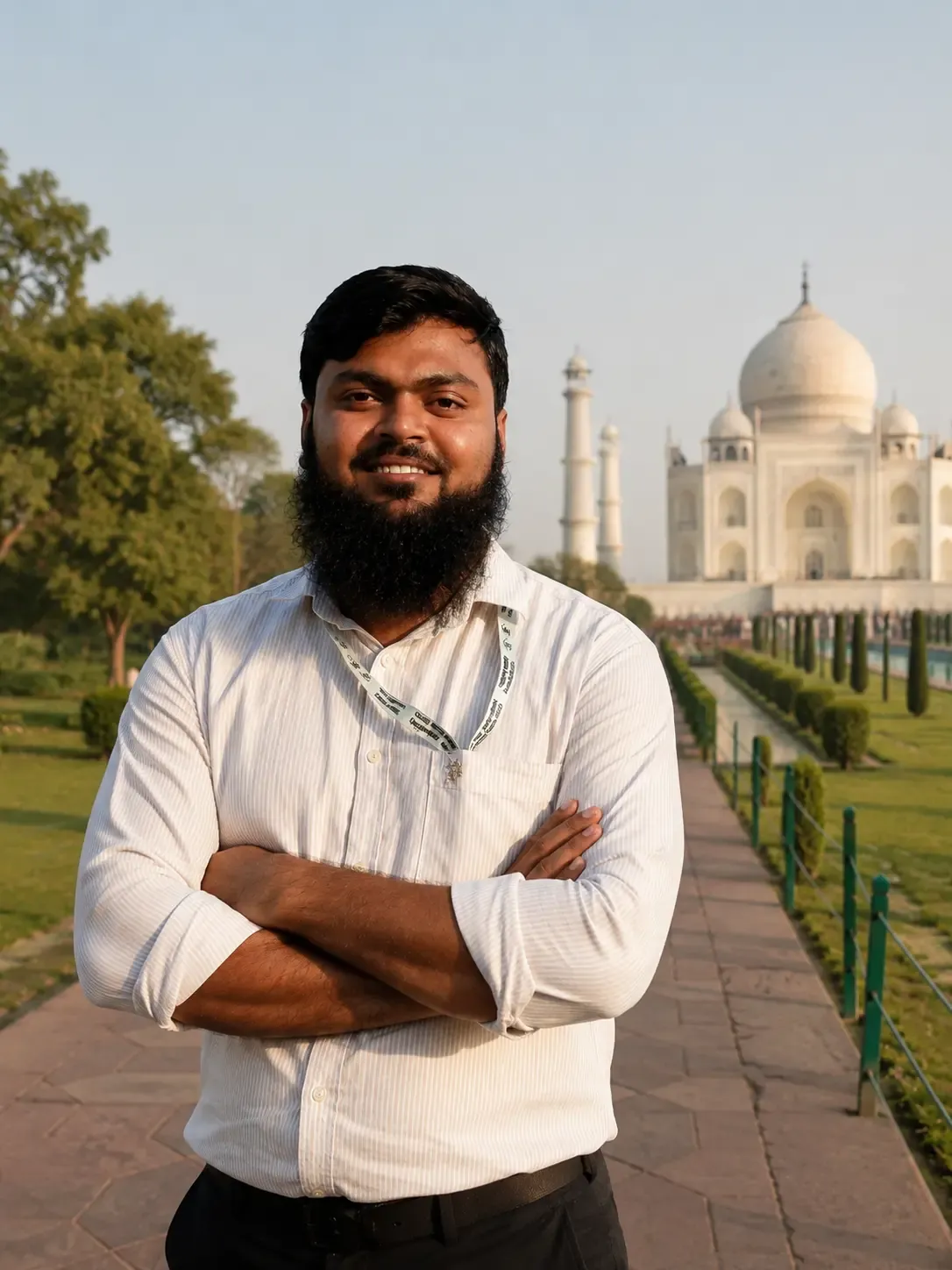
Kamran Khan — Licensed Tour Guide Taj Mahal Agra
IITG Govt. Licensed Lic. Oficial

Kamran Khan

I have stood at the East Gate of the Taj Mahal at sunrise more times than I can count. The gate opens, the crowd pushes forward — and then everyone stops. Even people who have been here before stop. It is not the building that stops them. It is the light on the building, and the story they suddenly remember is real. Shah Jahan built the Taj Mahal because his wife died delivering their fourteenth child, and he spent the next 22 years building her the most perfect thing he could imagine. Then his son imprisoned him and he spent his final years looking at it from across the river. That story is not decoration. It is the building.

He estado en la Puerta Este del Taj Mahal al amanecer más veces de las que puedo contar. La puerta se abre, la multitud empuja hacia adelante — y entonces todos se detienen. Incluso las personas que ya han estado aquí antes se detienen. No es el edificio lo que los detiene. Es la luz sobre el edificio y la historia que de repente recuerdan que es real. Shah Jahan construyó el Taj Mahal porque su esposa murió dando a luz a su decimocuarto hijo, y pasó los siguientes 22 años construyéndole la cosa más perfecta que podía imaginar. Luego su hijo lo encarceló y pasó sus últimos años mirándolo desde el otro lado del río. Esa historia no es decoración. Es el edificio.

I hold a Government Pan-India IITG licence — the highest certification in Indian tourism. I have been based in Agra for over five years and have guided more than 500 tours through the Taj Mahal and its sister monuments from more than 40 nationalities. The Taj Mahal is not a difficult building to stand in front of. It is a difficult building to understand without someone who has spent years learning what it is saying. I am that person, in English and in Spanish.

Poseo la licencia nacional IITG del Gobierno — la certificación más alta del turismo indio. Llevo más de cinco años basado en Agra y he guiado más de 500 tours por el Taj Mahal y sus monumentos hermanos a viajeros de más de 40 nacionalidades. El Taj Mahal no es un edificio difícil ante el que estar. Es un edificio difícil de entender sin alguien que haya pasado años aprendiendo lo que dice.

English Español MORE