Full Day · Private · All Inclusive · 10 Premium Photos
Día Completo · Privado · Todo Incluido · 10 Fotos Premium

Amritsar
& The
Golden Temple

Amritsar
y el
Templo Dorado

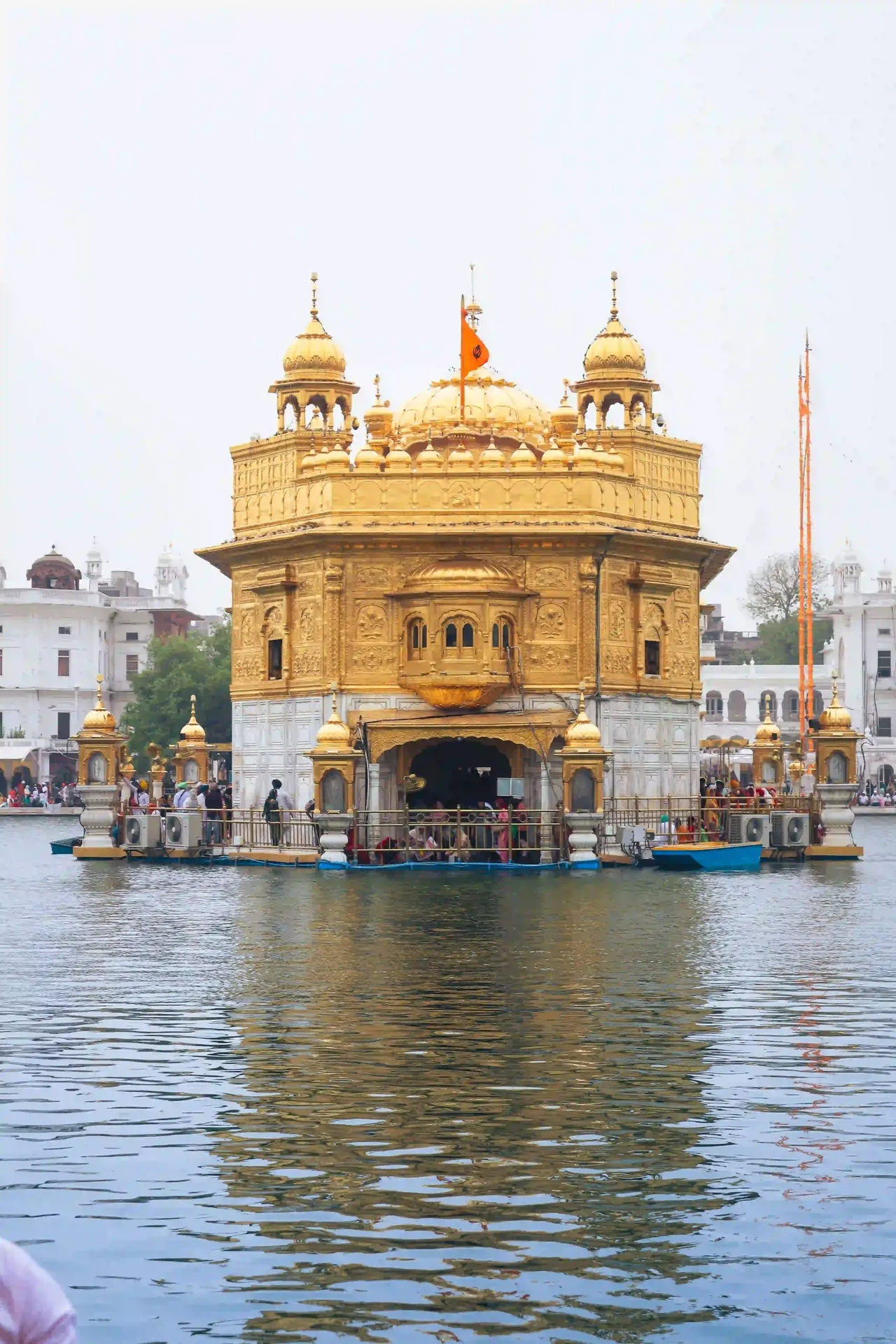
In the heart of the Punjab stands a structure that stops the breath every single time — the Harmandir Sahib, the Golden Temple, sheathed in 750 kilograms of pure gold and rising from a sacred pool whose water has been considered holy for five centuries. Amritsar is not only a pilgrimage; it is a living city of extraordinary food, painful history, and one of the most theatrical border ceremonies on earth. One private day with a licensed bilingual expert reveals every layer. Includes 10 complimentary premium edited photographs.

En el corazón del Punjab se alza una estructura que detiene el aliento cada vez — el Harmandir Sahib, el Templo Dorado, revestido de 750 kilogramos de oro puro y emergiendo de una piscina sagrada cuyas aguas han sido consideradas santas durante cinco siglos. Amritsar no es solo una peregrinación; es una ciudad viva de comida extraordinaria, historia dolorosa y una de las ceremonias fronterizas más teatrales del mundo. Un día privado con un experto bilingüe oficial revela cada capa. Incluye 10 fotografías premium editadas de cortésía.

📞 Book via WhatsApp 📞 Reservar por WhatsApp

Instant reply · Fully private tour · Hotel or airport pickup
Respuesta inmediata · Tour completamente privado · Recogida en hotel o aeropuerto

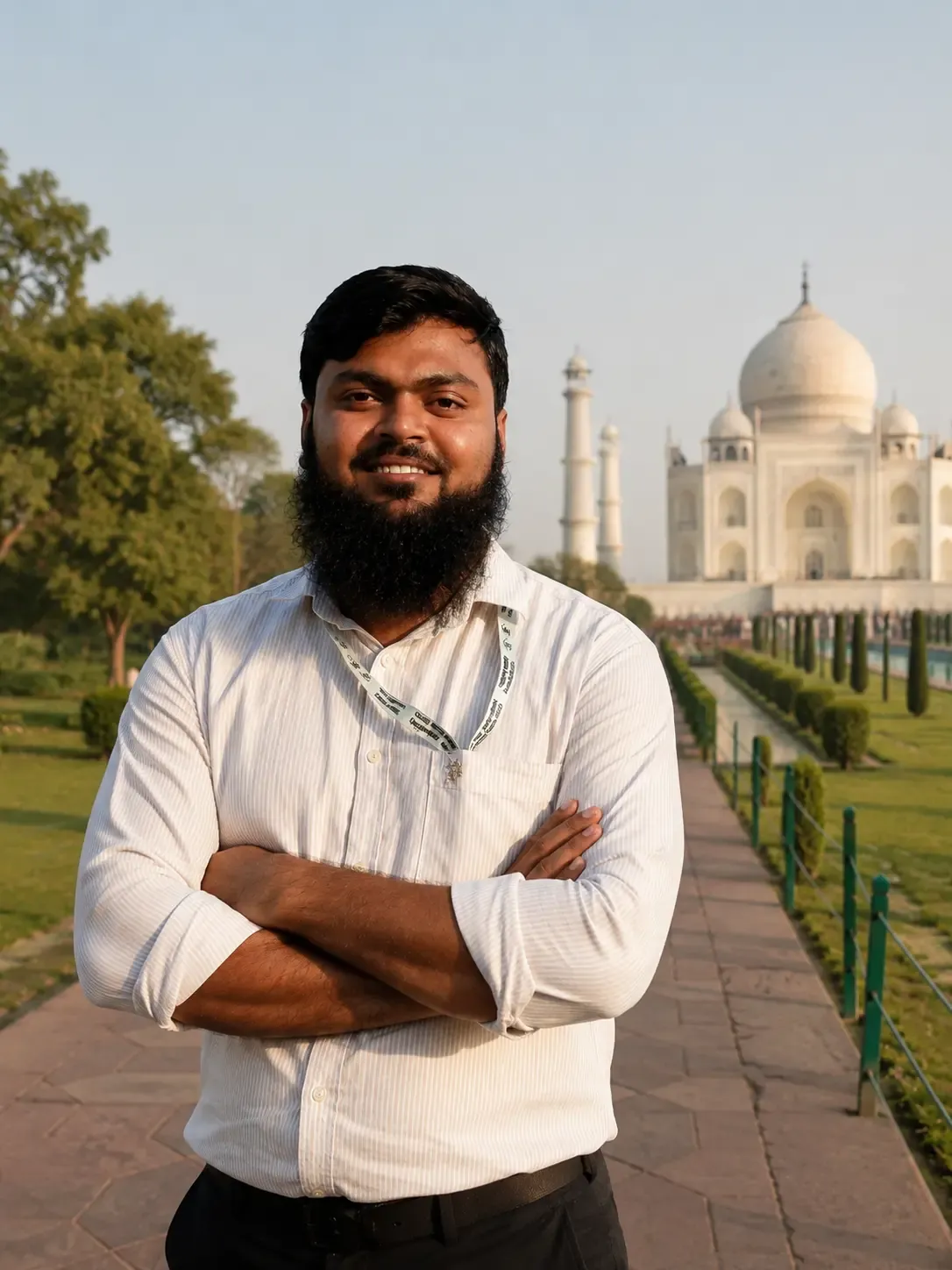
Amritsar & The Golden Temple Tour — Harmandir Sahib at dawn with Kamran Khan
All Inclusive
Todo Incluido
  • Golden Temple VisitVisita al Templo Dorado
  • Wagah Border CeremonyCeremonia Frontera Wagah
  • Private AC VehicleVehículo AC Privado
  • 10 Edited Photographs10 Fotos Editadas
🏛
Golden TempleHarmandir Sahib entry & guided tour
Templo DoradoEntrada y tour guiado al Harmandir Sahib
🏳
Wagah BorderEvening flag-lowering ceremony
Frontera WagahCeremonia vespertina del arrío de bandera
🚗
Private AC VehicleFull day with professional driver
Vehículo AC PrivadoDía completo con conductor profesional
📷
10 Edited PhotosComplimentary premium quality
10 Fotos EditadasDe cortésía, calidad premium
🧭
Licensed GuidePan-India IITG certified
Guía CertificadoIITG oficial

One Day Inside Five Centuries

Un Día Dentro de Cinco Siglos

From the pre-dawn silence of the Sarovar to the roaring spectacle of Wagah, this itinerary traces Amritsar’s full emotional and historical range — faith, sacrifice, food, and the remarkable theatre of two nations performing their rivalry in front of ten thousand cheering spectators every evening at sunset.

Desde el silencio de antes del amanecer en el Sarovar hasta el espectáculo rugiente de Wagah, este itinerario recorre el rango emocional e histórico completo de Amritsar — fe, sacrificio, comida y el notable teatro de dos naciones que representan su rivalidad ante diez mil espectadores que vitorean cada tarde al atardecer.

01
Early Morning · 4:30 AM
Madrugada · 4:30 AM
Dawn at the Golden Temple — Harmandir Sahib
Amanecer en el Templo Dorado — Harmandir Sahib
The Golden Temple at dawn is a different world from the Golden Temple at noon. The Sarovar — the sacred Pool of Nectar from which the temple takes its full name, Amrit Sarovar — is still and mirror-flat in the early hours, the marble causeway catching the temple’s gold reflection in the water. The air carries the sound of kirtan, the continuous Sikh scripture-singing that has not ceased since 1604. There are pilgrims bathing, priests chanting, and the first light beginning to break above the parkarma — the white marble circumambulation walkway. Kamran places this moment in its full religious and political context: the founding of the Sikh faith by Guru Nanak in 1469, the ten human Gurus who shaped its theology, and the transformation of the temple from spiritual centre to fortress of resistance during the Mughal and British periods. The pre-dawn visit is the most sacred and most beautiful version of this experience — and the one that no standard tour attempts.
El Templo Dorado al amanecer es un mundo diferente al del mediodía. El Sarovar — la sagrada Piscina del Néctar de la que el templo toma su nombre completo, Amrit Sarovar — está tranquilo y plano como un espejo en las primeras horas, con la calzada de mármol captando el reflejo dorado del templo en el agua. El aire lleva el sonido del kirtan, el canto continuo de las escrituras sij que no ha cesado desde 1604. Kamran sitúa este momento en su pleno contexto religioso y político: la fundación de la fe sij por el Guru Nanak en 1469, los diez Gurus humanos que dieron forma a su teología, y la transformación del templo de centro espiritual a fortaleza de resistencia durante los períodos mogol y británico. La visita antes del amanecer es la versión más sagrada y más hermosa de esta experiencia — y la que ningún tour estándar intenta.
Pre-Dawn Photography Session · Kirtan Listening · Free Entry Sesión Fotográfica al Amanecer · Escucha de Kirtan · Entrada Gratuita
02
Morning · 6:30 AM
Mañana · 6:30 AM
Langar — The World’s Largest Free Kitchen
Langar — La Cocina Gratuita Más Grande del Mundo
The Langar at Harmandir Sahib is the institution that most distinguishes Sikhism from every other major world religion in practice rather than in principle. Every single person who enters the Golden Temple precincts — regardless of religion, caste, nationality, or status — is invited to sit together on the floor and eat the same free vegetarian meal. The kitchen serves between 50,000 and 100,000 meals every single day, prepared entirely by volunteers. Kamran leads the group through the langar hall, explains the theology of seva (selfless service) that underlies it, and ensures the group participates rather than merely observes. Sitting on the floor of the world’s largest free kitchen, eating dal and chapatti alongside strangers from every background on earth, is one of the most democratically radical experiences available to a traveller anywhere in the world.
El Langar del Harmandir Sahib es la institución que más distingue al sikhismo de todas las demás grandes religiones del mundo en la práctica, y no solo en principio. Cada persona que entra en el recinto del Templo Dorado — independientemente de su religión, casta, nacionalidad o estatus — está invitada a sentarse juntos en el suelo y comer la misma comida vegetariana gratuita. La cocina sirve entre 50.000 y 100.000 comidas cada día, preparadas íntegramente por voluntarios. Kamran lleva al grupo por el comedor del langar, explica la teología del seva (servicio desinteresado) que lo sustenta y se asegura de que el grupo participe en lugar de solo observar. Sentarse en el suelo de la cocina gratuita más grande del mundo, comiendo dal y chapatti junto a extraños de todas las culturas de la Tierra, es una de las experiencias más radicalmente democráticas disponibles para un viajero en cualquier lugar del mundo.
Participate in Langar · Free Meal · Seva Explained Participar en el Langar · Comida Gratuita · Seva Explicado
03
Morning · 8:00 AM
Mañana · 8:00 AM
Akal Takht — The Throne of the Timeless
Akal Takht — El Trono del Eterno
Directly opposite the Harmandir Sahib across the Sarovar stands the Akal Takht — the ‘Throne of the Timeless One’ — the supreme seat of temporal and spiritual authority in Sikhism, established by the sixth Guru, Guru Hargobind, in 1606. It is here that the Jathedar, the chief ecclesiastical authority of the Sikhs, issues edicts on matters of faith and community. It is also here that Operation Blue Star in June 1984 — the Indian Army’s assault on the Golden Temple complex ordered by Prime Minister Indira Gandhi to remove armed militants led by Jarnail Singh Bhindranwale — caused the most devastating damage, destroying parts of the Akal Takht and killing hundreds inside the complex. Kamran handles this history with the gravity it deserves: its political causes, its human consequences, and its enduring significance in the relationship between the Sikh community and the Indian state. One of the most important and most carefully narrated conversations of the day.
Directamente enfrente del Harmandir Sahib al otro lado del Sarovar se alza el Akal Takht — el ‘Trono del Eterno’ — el máximo asiento de autoridad temporal y espiritual en el sikhismo, establecido por el sexto Guru, Guru Hargobind, en 1606. Aquí fue donde la Operación Estrella Azul en junio de 1984 — el asalto del Ejército indio al complejo del Templo Dorado ordenado por la primera ministra Indira Gandhi para expulsar a los militantes armados liderados por Jarnail Singh Bhindranwale — causó el daño más devastador, destruyendo partes del Akal Takht y matando a cientos dentro del complejo. Kamran aborda esta historia con la gravedad que merece: sus causas políticas, sus consecuencias humanas y su significado perenne en la relación entre la comunidad sij y el Estado indio.
Political History · Operation Blue Star Context · Sacred Architecture Historia Política · Contexto Operación Estrella Azul · Arquitectura Sagrada
04
Mid-Morning · 9:30 AM
Media Mañana · 9:30 AM
Jallianwala Bagh — The Garden of Memory
Jallianwala Bagh — El Jardín de la Memoria
A five-minute walk from the Golden Temple through the lanes of Amritsar’s old city brings you to one of the most consequential sites in modern Indian history. On 13 April 1919 — the day of Baisakhi, the Sikh harvest festival — a peaceful gathering of between 15,000 and 20,000 unarmed civilians was enclosed inside this walled garden when Brigadier-General Reginald Dyer ordered his troops to open fire without warning. Official British figures recorded 379 dead; Indian National Congress investigations put the number above 1,000. The massacre, and the absence of any official apology from the British government for over a century, transformed Indian public opinion against colonial rule and accelerated the independence movement. The bullet holes are still visible in the garden walls. The Martyr’s Well — into which civilians jumped to escape the bullets, many drowning — is preserved at the centre. Kamran narrates the sequence of events, the political aftermath, and the reason this particular patch of dusty ground changed the course of an empire. One of the most sombre and most necessary conversations of the day.
A cinco minutos a pie del Templo Dorado por los callejones de la ciudad vieja de Amritsar se llega a uno de los lugares más trascendentales de la historia moderna de la India. El 13 de abril de 1919 — el día de Baisakhi, el festival sij de la cosecha — una reunión pacífica de entre 15.000 y 20.000 civiles desarmados estaba encerrada dentro de este jardín amurallado cuando el general de brigada Reginald Dyer ordenó a sus tropas que abrieran fuego sin previo aviso. Las cifras oficiales británicas registraron 379 muertos; las investigaciones del Congreso Nacional Indio situaron el número por encima de 1.000. Las marcas de balas siguen siendo visibles en los muros del jardín. El Pozo de los Mártires — al que saltaron los civiles para escapar de las balas, ahogándose muchos — está preservado en el centro. Kamran narra la secuencia de eventos y la razón por la que este pequeño trozo de tierra polvorient a cambió el curso de un imperio.
Free Entry · Bullet Holes Still Visible · Historical Narration Entrada Gratuita · Marcas de Balas Visibles · Narración Histórica
05
Late Morning · 11:00 AM
Media Mañana Tarde · 11:00 AM
Partition Museum — The Human Cost of a Line
Museo de la Partición — El Coste Humano de una Línea
Amritsar sits 28 kilometres from the border that was drawn by Cyril Radcliffe in August 1947 — a boundary that divided Punjab overnight and triggered the largest forced migration in human history. Between 10 and 20 million people crossed in both directions. Between 200,000 and 2 million were killed in communal violence. Families were separated. Villages split in half. The Partition Museum, opened in 2017 in the historic Town Hall of Amritsar, is the first museum in the world dedicated entirely to the human experience of Partition — built not from the perspective of governments or armies but from the testimonies of survivors and their descendants. Kamran walks the group through its galleries: the oral histories, the objects people carried across the border, the letters that were never delivered. For anyone of South Asian descent travelling with the group, this section of the day is often the most personal. For everyone else, it reframes the entire subcontinent.
Amritsar está a 28 kilómetros de la frontera trazada por Cyril Radcliffe en agosto de 1947 — un límite que dividió Punjab de la noche a la mañana y desencadenó la mayor migración forzada de la historia de la humanidad. Entre 10 y 20 millones de personas cruzaron en ambas direcciones. Entre 200.000 y 2 millones murieron en violencia comunal. El Museo de la Partición, inaugurado en 2017 en el histórico Ayuntamiento de Amritsar, es el primer museo del mundo dedicado íntegramente a la experiencia humana de la Partición — construido no desde la perspectiva de los gobiernos o los ejércitos sino desde los testimonios de los supervivientes y sus descendientes. Kamran lleva al grupo por sus galerías: las historias orales, los objetos que la gente llevó al cruzar la frontera, las cartas que nunca fueron entregadas.
Entry Included · Survivor Testimonies · World-First Museum Entrada Incluida · Testimonios de Supervivientes · Primer Museo Mundial
06
Afternoon · 1:00 PM
Tarde · 1:00 PM
Amritsari Lunch — The Food Capital of Punjab
Almuerzo Amritsari — La Capital Gastronómica del Punjab
Amritsar is, without qualification, one of the great food cities of India — and it is largely unknown to travellers who have not been here. The culinary identity of the city is inseparable from its Sikh culture: robust, generous, unapologetically rich, and built on tandoor, dairy, and slow cooking. Kamran leads the group to a carefully selected restaurant in the old city for a proper sit-down Amritsari lunch: kulcha — the stuffed tandoor bread unique to this city, served with chole (spiced chickpeas) and a smear of white butter that has no equivalent — and the legendary Amritsari fish, marinated and deep-fried in a batter of gram flour with carom seeds, one of the most copied and least successfully replicated dishes in Indian cuisine. If the group prefers purely vegetarian, Kamran has an equally outstanding selection. This is a meal worth travelling for in its own right.
Amritsar es, sin calificación, una de las grandes ciudades gastronómicas de la India — y es en gran medida desconocida para los viajeros que no han estado aquí. Kamran lleva al grupo a un restaurante cuidadosamente seleccionado en la ciudad antigua para un almuerzo amritsari de verdad: kulcha — el pan de tandoor relleno único de esta ciudad, servido con chole (garbanzos especiados) y una capita de mantequilla blanca que no tiene equivalente — y el legendario pescado amritsari, marinado y frito en rebozado de harina de garbanzo con semillas de ajwain, uno de los platos más copiados y menos replicados con éxito de la cocina india. Una comida por la que vale la pena viajar por sí sola.
Lunch Included · Authentic Amritsari Cuisine · Old City Restaurant Almuerzo Incluido · Cocina Amritsari Auténtica · Restaurante Ciudad Antigua
07
Afternoon · 2:30 PM
Tarde · 2:30 PM
Gobindgarh Fort — Three Hundred Years of Power
Fuerte Gobindgarh — Trescientos Años de Poder
Gobindgarh Fort — built in the 18th century by the Bhangi Misl, one of the twelve Sikh confederate clans of the Sikh Empire, and later taken by Maharaja Ranjit Singh, the founder of the Sikh Empire — is one of the most historically dense sites in northern India. Its walls have been controlled by the Sikhs, the Afghans, the British East India Company, and the Indian Army in succession. The Koh-i-Noor diamond, now set in the British Crown Jewels and officially disputed between India and the United Kingdom, was stored here. Today the fort has been returned to civilian administration and is open to the public as a heritage complex. Kamran traces the full arc of the Sikh Empire: Ranjit Singh’s extraordinary one-eyed sovereignty over a territory stretching from Afghanistan to Tibet, the role of European mercenaries in building his army, and the manner in which the British annexed it following his death. A story of empire that most of the Western world has never heard.
El Fuerte Gobindgarh — construido en el siglo XVIII por el Bhangi Misl, uno de los doce clanes confederados sij del Imperio Sij, y posteriormente tomado por el Maharajá Ranjit Singh, el fundador del Imperio Sij — es uno de los sitios históricamente más densos del norte de la India. El diamante Koh-i-Noor, ahora engastado en las Joyas de la Corona británica y oficialmente disputado entre la India y el Reino Unido, fue almacenado aquí. Kamran traza el arco completo del Imperio Sij: la extraordinaria soberanía del tuerto Ranjit Singh sobre un territorio que se extiendía desde Afganistán hasta el Tíbet, el papel de los mercenarios europeos en la construcción de su ejército, y la manera en que los británicos lo anexionaron tras su muerte.
Entry Included · Koh-i-Noor History · Sikh Empire Narrative Entrada Incluida · Historia del Koh-i-Noor · Narrativa del Imperio Sij
08
Late Afternoon · 4:00 PM
Última Tarde · 4:00 PM
Hall Bazaar & Old City Walk
Hall Bazaar y Paseo por la Ciudad Antigua
Before the drive to Wagah, the group spends an hour in Amritsar’s main commercial artery — the Hall Bazaar and the lanes surrounding the Golden Temple complex. Amritsar is famous for its Phulaari — the embroidered fabric tradition of Phulkari — its hand-stitched juttis (mojari shoes), its dried fruit and nut shops, and the copper and brassware that lines the lanes around the temple. Kamran points out the historically significant buildings along the route, including the old haveli architecture that the city is slowly losing to commercial development. This is also the primary photography session of the afternoon — the lanes around the Golden Temple in the pre-sunset light, with pilgrims, traders, and the architectural details of the old city all in one frame. Several of the 10 premium edited photographs are made here.
Antes de conducir a Wagah, el grupo pasa una hora en la principal arteria comercial de Amritsar — el Hall Bazaar y los callejones que rodean el complejo del Templo Dorado. Amritsar es famosa por su tradición de bordado Phulkari, sus juttis (zapatos mojari) cosidas a mano, sus tiendas de frutos secos y los utensilios de cobre y latón que bordean los callejones alrededor del templo. Esta es también la principal sesión fotográfica de la tarde — los callejones alrededor del Templo Dorado con la luz previa al atardecer, con peregrinos, comerciantes y los detalles arquitectónicos de la ciudad antigua en un solo encuadre.
Photography Session · Old City Architecture · Phulkari Textiles Sesión Fotográfica · Arquitectura Ciudad Antigua · Textiles Phulkari
09
Evening · 5:30 PM
Tarde-Noche · 5:30 PM
Wagah Border Ceremony — The Grand Theatrical Confrontation
Ceremonia de la Frontera de Wagah — La Gran Confrontación Teatral
Nothing else in India quite resembles Wagah. Every evening at sunset, at the single road crossing between India and Pakistan on the Grand Trunk Road, the Border Security Force of India and the Pakistan Rangers perform the Beating Retreat — a choreographed ceremony of flag-lowering that has been conducted every single day since 1959, regardless of the diplomatic temperature between the two nations. The ceremony is simultaneously a military ritual, a nationalist performance, and a piece of extraordinary popular theatre. Ten thousand Indian spectators on one side, several thousand Pakistani spectators on the other, separated by a gate that is opened once a day, with soldiers on both sides performing synchronized marching, high kicks, and an operatically aggressive sequence of gestures that have become increasingly elaborate over the decades. The Indian crowd cheers, chants, and waves flags with a fervour that is entirely genuine. Kamran provides the geopolitical context — the Radcliffe Line, the history of the Grand Trunk Road from the Mauryan Empire to the present, and the particular psychological significance of this ceremony for both nations — both before and after, so that the spectacle can be experienced as pure sensation in the moment and understood fully on the drive home.
Nada más en la India se parece a Wagah. Cada tarde al atardecer, en el único cruce de carretera entre la India y Pakistán en la Grand Trunk Road, la Fuerza de Seguridad Fronteriza de la India y los Rangers de Pakistán realizan el Beating Retreat — una ceremonia coreografiada de arrió de bandera que se celebra todos los días desde 1959, independientemente de la temperatura diplomática entre las dos naciones. La ceremonia es simultáneamente un ritual militar, una actuación nacionalista y una pieza de extraordinario teatro popular. Diez mil espectadores indios a un lado, varios miles de espectadores pakistaníes al otro, separados por una puerta que se abre una vez al día. Kamran proporciona el contexto geopolítico — la Línea Radcliffe, la historia de la Grand Trunk Road y el significado psicológico particular de esta ceremonia para ambas naciones.
Free Entry · Geopolitical Briefing · Photography Session Entrada Gratuita · Informe Geopolítico · Sesión Fotográfica
10
Evening · 7:30 PM
Tarde-Noche · 7:30 PM
Return & Farewell
Regreso y Despedida
Your private AC vehicle returns you to your Amritsar hotel, railway station, or Sri Guru Ram Dass Jee International Airport, arriving in good time for onward journeys. Kamran accompanies the group to the departure point. Within 72 hours, your 10 complimentary premium edited photographs are delivered digitally in high resolution — the pre-dawn Sarovar, the Langar, Jallianwala Bagh, the old city lanes, and Wagah at sunset. A day that begins in silence before the sun rises and ends in ten thousand voices as two nations lower their flags together. Amritsar is not a day trip. It is a complete world.
Su vehículo AC privado le devuelve a su hotel de Amritsar, estación de tren o Aeropuerto Internacional Sri Guru Ram Dass Jee, llegando a tiempo para los viajes de conexión. En un plazo de 72 horas, sus 10 fotografías premium editadas de cortésía se entregan digitalmente en alta resolución. Un día que comienza en silencio antes de que salga el sol y termina con diez mil voces mientras dos naciones arrían sus banderas juntas. Amritsar no es una excursión de un día. Es un mundo completo.
Hotel / Airport Drop-off · Photos Delivered Within 72 hrs Regreso al Hotel / Aeropuerto · Fotos Entregadas en 72 Horas

Inclusions & Exclusions

Inclusiones y Exclusiones

✅ Package Inclusions✅ El Paquete Incluye

  • Private AC Vehicle — Full Day:Vehículo AC Privado — Día Completo: Full-day private air-conditioned vehicle exclusively for your group, with a professional driver, from pre-dawn Golden Temple arrival through to the Wagah ceremony return and final drop-off.Vehículo con aire acondicionado privado durante todo el día exclusivamente para su grupo, con conductor profesional, desde la llegada al Templo Dorado antes del amanecer hasta el regreso de la ceremonia de Wagah y el traslado final.
  • Hotel, Airport & Railway Station Pickup & Drop-off:Recogida y Regreso en Hotel, Aeropuerto y Estación de Tren: Door-to-door private transfers to and from your Amritsar accommodation, Sri Guru Ram Dass Jee International Airport, or Amritsar Junction railway station.Traslados privados puerta a puerta hacia y desde su alojamiento en Amritsar, el Aeropuerto Internacional Sri Guru Ram Dass Jee o la estación de tren de Amritsar Junction.
  • Partition Museum Entry:Entrada al Museo de la Partición: Entry ticket for the Partition Museum fully covered for all group members.Entrada al Museo de la Partición completamente cubierta para todos los miembros del grupo.
  • Gobindgarh Fort Entry:Entrada al Fuerte Gobindgarh: Entry ticket for Gobindgarh Fort fully covered for all group members.Entrada al Fuerte Gobindgarh completamente cubierta para todos los miembros del grupo.
  • Authentic Amritsari Lunch:Almuerzo Amritsari Auténtico: A proper sit-down lunch at a curated old-city restaurant — Amritsari kulcha with chole, Amritsari fish (or vegetarian equivalent), lassi, and accompaniments. A genuine local meal at full table service, not a rushed break.Un almuerzo sentados en un restaurante de la ciudad antigua cuidadosamente elegido — kulcha amritsari con chole, pescado amritsari (o equivalente vegetariano), lassi y acompañamientos. Una comida local genuina con servicio completo de mesa, no una pausa rápida.
  • 10 Complimentary Premium Edited Photographs:10 Fotografías Premium Editadas de Cortésía: Professional photography sessions woven into the tour at the pre-dawn Golden Temple, Jallianwala Bagh, the Hall Bazaar old city lanes, and Wagah at sunset. All 10 images professionally edited and delivered digitally in high resolution within 72 hours.Sesiones fotográficas profesionales integradas en el tour en el Templo Dorado antes del amanecer, Jallianwala Bagh, los callejones del Hall Bazaar y Wagah al atardecer. Las 10 imágenes se editan profesionalmente y se entregan digitalmente en alta resolución en 72 horas.
  • Government-Licensed Expert Guide — Full Day:Guía Experto con Licencia Oficial — Día Completo: Kamran Khan, Pan-India IITG licence holder, guiding all sessions in English and Spanish with deep specialist knowledge of Sikh history, theology, Punjabi culture, the 1984 Operation Blue Star, and the Partition of 1947.Kamran Khan, titular de la licencia IITG panindiana, guiando todas las sesiones en inglés y español con profundo conocimiento especializado de la historia sij, la teología, la cultura punjabí, la Operación Estrella Azul de 1984 y la Partición de 1947.
  • Chilled Water & Snacks In-Vehicle:Agua Fría y Aperitivos en el Vehículo: Mineral water and light snacks provided in the vehicle throughout the day for all group members.Agua mineral y aperitivos ligeros proporcionados en el vehículo durante todo el día para todos los miembros del grupo.
  • Temple Head Coverings & Shoe Storage:Cubrecabezas y Guarda de Calzado en el Templo: Sikh sacred sites require covered heads and removal of shoes. Kamran provides head coverings (or guides where to collect complimentary ones at the temple), and manages shoe storage for the group at the Golden Temple.Los lugares sagrados sij requieren la cabeza cubierta y descalzarse. Kamran proporciona cubrecabezas (o indica dónde recoger los gratuitos en el templo), y gestiona el guarda de calzado del grupo en el Templo Dorado.

✕ Package Exclusions✕ El Paquete Excluye

  • Flights or Trains to & from Amritsar:Vuelos o Trenes a y desde Amritsar: Travel to and from Amritsar is not included. The city is served by Sri Guru Ram Dass Jee International Airport and Amritsar Junction railway station, both well-connected to Delhi and other major cities.El viaje hacia y desde Amritsar no está incluido. La ciudad cuenta con el Aeropuerto Internacional Sri Guru Ram Dass Jee y la estación de tren de Amritsar Junction, ambos bien conectados con Delhi y otras ciudades principales.
  • Hotel Accommodation in Amritsar:Alojamiento en Hotel en Amritsar: Overnight accommodation is not included. Kamran recommends premium guest houses and heritage hotels in and around Amritsar on request.El alojamiento nocturno no está incluido. Kamran recomienda casas de huéspedes premium y hoteles de patrimonio en y alrededor de Amritsar bajo petición.
  • Personal Shopping & Souvenirs:Compras Personales y Recuerdos: Phulkari textiles, juttis, spices, or any items purchased in bazaars or at heritage sites are the personal expense of each participant. Kamran advises on fair pricing and authentic quality.Los textiles Phulkari, juttis, especias o cualquier artículo adquirido en bazares o sitios patrimoniales son gasto personal de cada participante. Kamran asesora sobre precios justos y calidad auténtica.
  • Gratuities for Driver & Additional Staff:Propinas para el Conductor y Personal Adicional: Tips for the driver and any local specialists are entirely optional and at the group’s discretion.Las propinas para el conductor y cualquier especialista local son totalmente opcionales y a criterio del grupo.
  • Alcoholic Beverages:Bebidas Alcohólicas: Note: Amritsar is a city of deep religious significance and the area around the Golden Temple complex is formally alcohol-free. Alcoholic beverages are not available in the immediate vicinity of the temple, and are not included anywhere in the package.Nota: Amritsar es una ciudad de profunda significación religiosa y el área alrededor del complejo del Templo Dorado es formalmente libre de alcohol. Las bebidas alcohólicas no están disponibles en las inmediaciones del templo y no están incluidas en ningún punto del paquete.
  • Personal Travel Insurance:Seguro de Viaje Personal: Travel and medical insurance is the personal responsibility of each participant, as is standard for all travel.El seguro de viaje y médico es responsabilidad personal de cada participante, como es estándar en todos los viajes.

What Makes This Different

Qué lo Hace Diferente

01
Pre-Dawn at the Sarovar
Antes del Amanecer en el Sarovar
The Golden Temple at 4:30 AM — before the crowds arrive, when the reflection is perfect, the kirtan is audible from the perimeter, and the white marble glows in the temple’s gold light — is an entirely different experience from the busy midday visit. This tour begins there deliberately. Most tours do not.
El Templo Dorado a las 4:30 AM — antes de que lleguen las multitudes, cuando el reflejo es perfecto, el kirtan es audible desde el perímetro y el mármol blanco brilla con la luz dorada del templo — es una experiencia completamente diferente a la concurrida visita del mediodía. Este tour comienza allí deliberadamente. La mayoría no lo hace.
02
History Without Simplification
Historia Sin Simplificación
Jallianwala Bagh, Operation Blue Star, the Partition of 1947, the Koh-i-Noor — Amritsar carries some of the most contested and emotionally loaded history in modern South Asia. Kamran engages with all of it in full depth and without political evasion — in both English and Spanish — giving travellers the context to form their own informed understanding.
Jallianwala Bagh, la Operación Estrella Azul, la Partición de 1947, el Koh-i-Noor — Amritsar lleva parte de la historia más disputada y emocionalmente cargada del Asia Meridional moderna. Kamran se involucra con todo ello en plena profundidad y sin evasión política — en inglés y en español — dando a los viajeros el contexto para formar su propia comprensión informada.
03
The Langar — Participation, Not Observation
El Langar — Participación, No Observación
The world’s largest free kitchen serving up to 100,000 meals a day, run entirely by volunteers, open to all people regardless of faith or background — this is one of the most radical social institutions on earth. Kamran ensures the group does not merely walk past it but sits on the floor, eats the meal, and understands what they are participating in.
La cocina gratuita más grande del mundo que sirve hasta 100.000 comidas al día, gestionada íntegramente por voluntarios, abierta a todas las personas independientemente de su fe o procedencia — esta es una de las instituciones sociales más radicales del mundo. Kamran se asegura de que el grupo no se limite a pasar por delante, sino que se siente en el suelo, coma la comida y entienda en qué está participando.
04
Wagah — With Full Context
Wagah — Con Pleno Contexto
Wagah without context is theatre. Wagah with context — the Radcliffe Line drawn in five weeks in 1947, the Grand Trunk Road that runs from Bangladesh to Afghanistan, the psychologies of two nuclear-armed nations performing their enmity to each other every single evening — is something considerably more interesting. Kamran provides the briefing before; the spectacle speaks for itself during.
Wagah sin contexto es teatro. Wagah con contexto — la Línea Radcliffe trazada en cinco semanas en 1947, la Grand Trunk Road que va de Bangladesh a Afganistán, las psicologías de dos naciones con armas nucleares que representan su enemistad la una a la otra cada tarde — es algo considerablemente más interesante. Kamran proporciona el informe antes; el espectáculo habla por sí mismo durante.
05
Authentic Amritsari Lunch Included
Almuerzo Amritsari Auténtico Incluido
Amritsari kulcha, Amritsari fish, sweet lassi, and the white butter that defines Punjabi cooking at its most regional — this is a lunch that most visitors to Amritsar miss entirely because they do not know where to go. It is included in the package and it is one of the genuine highlights of the day.
Kulcha amritsari, pescado amritsari, lassi dulce y la mantequilla blanca que define la cocina punjabí en su expresión más regional — este es un almuerzo que la mayoría de los visitantes de Amritsar se pierden por completo porque no saben adónde ir. Está incluido en el paquete y es uno de los puntos culminantes genuinos del día.
06
10 Premium Photos Delivered in 72 Hours
10 Fotos Premium Entregadas en 72 Horas
Amritsar produces extraordinary photographs. The pre-dawn temple reflection, the kirtan musicians, the langar volunteers at scale, the bullet-marked walls of Jallianwala Bagh, the Wagah sunset. All 10 complimentary premium edited images are professionally retouched and delivered digitally in high resolution within 72 hours of the tour.
Amritsar produce fotografías extraordinarias. El reflejo del templo antes del amanecer, los músicos de kirtan, los voluntarios del langar a escala, los muros marcados por las balas de Jallianwala Bagh, el atardecer de Wagah. Las 10 imágenes premium editadas de cortésía se retocan profesionalmente y se entregan digitalmente en alta resolución en 72 horas.

Practical Details

Información Práctica

Duration
Duración
Full Day — Approx. 15 Hours
Día Completo — Aprox. 15 Horas
4:30 AM pre-dawn start at the Golden Temple – approx. 7:30 PM return after Wagah. This is a long, deeply full day. The early start is strongly recommended — the pre-dawn Golden Temple experience is the most extraordinary of the entire tour and cannot be replicated at any other time.
Inicio antes del amanecer a las 4:30 AM en el Templo Dorado – regreso aprox. a las 7:30 PM después de Wagah. Este es un día largo y profundamente completo. El inicio temprano es muy recomendable — la experiencia del Templo Dorado antes del amanecer es la más extraordinaria de todo el tour y no se puede replicar en ningún otro momento.
Group Size
Tamaño del Grupo
1 to 8 Persons
1 a 8 Personas
Entirely private. Larger groups accommodated with additional vehicles on request. Solo travellers warmly welcomed.
Completamente privado. Grupos más grandes con vehículos adicionales bajo petición. Viajeros individuales bienvenidos calurosamente.
Languages
Idiomas
English & Spanish
Inglés y Español
Full bilingual narration throughout. Hindi, Urdu, and Punjabi phrases provided in context. Kamran’s narration of Sikh theology, Punjabi history, and the Partition is available in full depth in both languages.
Narración bilingüe completa durante todo el tour. Frases de hindi, urdu y punjabí proporcionadas en contexto. La narración de Kamran sobre teología sij, historia punjabí y la Partición está disponible en plena profundidad en ambos idiomas.
Availability
Disponibilidad
All Year · 7 Days a Week
Todo el Año · 7 Días a la Semana
Available all year. Note that major Sikh festivals — Baisakhi (April 13–14), Guru Nanak Jayanti (October/November), and Diwali — bring very large crowds to the Golden Temple and create an extraordinary but more intense atmosphere. Confirm with Kamran for festival-day logistics.
Disponible todo el año. Tenga en cuenta que los grandes festivales sij — Baisakhi (13–14 de abril), Guru Nanak Jayanti (octubre/noviembre) y Diwali — atraen multitudes muy grandes al Templo Dorado y crean una atmósfera extraordinaria pero más intensa. Confirme con Kamran la logística del día de festival.
Meeting Point
Punto de Encuentro
Hotel, Airport or Railway Station — Amritsar
Hotel, Aeropuerto o Estación de Tren — Amritsar
Share your hotel name and address, flight details, or train number via WhatsApp. Your private vehicle and Kamran will be at your door or arrivals gate. Zero coordination required on your part.
Comparta el nombre y dirección de su hotel, los datos del vuelo o el número del tren por WhatsApp. Su vehículo privado y Kamran estarán en su puerta o en la puerta de llegadas. Cero coordinación requerida por su parte.
Photography Delivery
Entrega de Fotografías
10 Edited Images · Within 72 Hours
10 Imágenes Editadas · En 72 Horas
Delivered via private download link in high-resolution JPEG format, suitable for large-format print and digital publication.
Entregadas mediante enlace de descarga privado en formato JPEG de alta resolución, adecuadas para impresión en gran formato y publicación digital.
What to Wear
Cómo Vestirse
Modest clothing is mandatory throughout
Ropa discreta obligatoria en todo momento
The Golden Temple and all Sikh sacred sites require: covered head (head covering provided by Kamran or available free at the temple entrance), removal of shoes before entering (shoe storage facilities are available; Kamran manages this for the group), and modest dress with shoulders and knees covered. Avoid sleeveless tops, shorts, or any clothing that exposes the legs above the knee. This applies to all group members regardless of gender. There are no exceptions at any Sikh gurdwara. Comfortable, closed-toe walking shoes are strongly recommended — the marble parkarma around the Golden Temple is barefoot walking and can be very warm in summer.
El Templo Dorado y todos los lugares sagrados sij requieren: cabeza cubierta (cubreca bezas proporcionados por Kamran o disponibles gratuitamente en la entrada del templo), descalzarse antes de entrar (instalaciones de guarda de calzado disponibles; Kamran gestiona esto para el grupo), y ropa discreta con hombros y rodillas cubiertos. Evite las camisetas sin mangas, los pantalones cortos o cualquier ropa que exponga las piernas por encima de la rodilla. Esto se aplica a todos los miembros del grupo independientemente del género. No hay excepciones en ningún gurdwara sij. Se recomienda encarecidamente calzado cómodo de punta cerrada — el parkarma de mármol alrededor del Templo Dorado se recorre descalzo y puede estar muy caliente en verano.
What to Bring — Items to Carry
Qué Llevar — Artículos a Portar
Amritsar-Specific Packing Essentials
Esenciales de Equipaje Específicos para Amritsar
🏛 Sacred Site Requirements (Non-Negotiable): A lightweight scarf, bandana, or thin cotton square to cover the head — though Kamran provides these, having your own is more comfortable for a full day · Socks (the marble parkarma at the Golden Temple is walked barefoot; clean socks to wear after are appreciated) · Modest clothing covering shoulders and knees — no sleeveless tops, no shorts, no skirts or dresses above the knee · Closed-toe shoes or sandals with straps that can be easily removed and re-worn multiple times throughout the day. ☀ Weather & Comfort: Amritsar experiences extreme temperatures: summers (May–August) can reach 45°C; winters (December–January) drop below 5°C. Pack accordingly · High SPF sunscreen (SPF 50+) and lip balm — the white marble of the temple complex reflects UV intensely in summer · Sunglasses · A light layer or shawl for early morning temple visits even in summer — 4:30 AM is cooler than midday · Small personal hand towel for the pre-dawn visit (the Sarovar perimeter can be wet from pilgrims bathing). ✎ Documents & Personal: Valid passport or government-issued photo ID · Travel insurance documents · Cash in Indian Rupees for any personal shopping in the bazaar (most old-city stalls are cash-only; Kamran advises on amounts) · Any personal prescription medications with pharmacy labels. 📷 Photography & Electronics: Personal camera or smartphone with ample storage · Note: photography is permitted throughout the Golden Temple complex including inside the Harmandir Sahib, but must be done respectfully and without flash during religious ceremonies · Photography is not permitted inside the Partition Museum — Kamran will advise at the entrance · Portable power bank (the day runs from 4:30 AM to 7:30 PM; device charging is limited) · Universal travel adaptor (India uses Type C, D, and M sockets). ✓ Provided — Do Not Pack: Mineral water and snacks — in vehicle throughout the day · Head coverings for temple visits — provided by Kamran · Shoe storage at the Golden Temple — managed by Kamran · Partition Museum entry — pre-covered · Gobindgarh Fort entry — pre-covered · Authentic Amritsari lunch — included.
🏛 Requisitos de Lugares Sagrados (Innegociables): Un pañuelo ligero, bandana o cuadrado de algón fino para cubrirse la cabeza — aunque Kamran los proporciona, tener el propio es más cómodo para un día completo · Calcetines (el parkarma de mármol del Templo Dorado se recorre descalzo; llevar calcetines limpios para después es muy práctico) · Ropa discreta que cubra hombros y rodillas — sin camisetas sin mangas, sin pantalones cortos, sin faldas o vestidos por encima de la rodilla · Zapatos de punta cerrada o sandalias con correas que se puedan quitar y volver a poner fácilmente múltiples veces a lo largo del día. ☀ Clima y Comodidad: Amritsar experimenta temperaturas extremas: los veranos (mayo–agosto) pueden alcanzar los 45°C; los inviernos (diciembre–enero) bajan de 5°C. Haga el equipaje en consecuencia · Protector solar de alto FPS (FPS 50+) y bálsamo labial — el mármol blanco del complejo del templo refleja la radiación UV intensamente en verano · Gafas de sol · Una capa ligera o chal para las visitas al templo en la madrugada incluso en verano — las 4:30 AM son más frescas que el mediodía · Pequeña toalla personal para la visita antes del amanecer (el perímetro del Sarovar puede estar mojado por los peregrinos que se bañan). ✎ Documentos y Personal: Pasaporte válido o documento de identidad con foto expedido por el gobierno · Documentos del seguro de viaje · Efectivo en rupias indias para compras personales en el bazar (la mayoría de los puestos de la ciudad antigua solo aceptan efectivo; Kamran asesora sobre los importes) · Cualquier medicamento personal con receta y etiquetas de farmacia. 📷 Fotografía y Electrónica: Cámara personal o smartphone con suficiente almacenamiento · Nota: se permite fotografiar en todo el complejo del Templo Dorado incluyendo el interior del Harmandir Sahib, pero debe hacerse con respeto y sin flash durante las ceremonias religiosas · No se permite fotografiar dentro del Museo de la Partición — Kamran avisará en la entrada · Batería portátil (el día va de las 4:30 AM a las 7:30 PM; la carga de dispositivos es limitada) · Adaptador de viaje universal (India usa enchufes tipo C, D y M). ✓ Proporcionado — No Empacar: Agua mineral y aperitivos — en el vehículo durante todo el día · Cubrecabezas para visitas al templo — proporcionados por Kamran · Guarda de calzado en el Templo Dorado — gestionado por Kamran · Entrada al Museo de la Partición — precubierta · Entrada al Fuerte Gobindgarh — precubierta · Almuerzo amritsari auténtico — incluido.
Reserve Your Tour
Reserva Tu Tour
Amritsar & The Golden Temple
Amritsar y el Templo Dorado
  • Private AC vehicle — full day
  • Hotel, airport & railway station transfers
  • Partition Museum & Gobindgarh Fort entry
  • Authentic Amritsari lunch included
  • 10 complimentary premium edited photos
  • Head coverings & shoe storage managed
  • IITG-licensed bilingual guide (EN & ES)
  • Chilled water & snacks in-vehicle
  • Vehículo AC privado — día completo
  • Traslados a hotel, aeropuerto y estación de tren
  • Entrada al Museo Partición y Fuerte Gobindgarh
  • Almuerzo amritsari auténtico incluido
  • 10 fotografías premium editadas de cortésía
  • Cubrecabezas y guarda de calzado gestionados
  • Guía bilingüe IITG (EN y ES)
  • Agua fría y aperitivos en el vehículo
📞 Book via WhatsApp 📞 Reservar por WhatsApp ← Back to Main Website ← Volver al Sitio Principal
Kamran Khan — Licensed Tour Guide Amritsar Golden Temple Punjab Heritage
IITG Govt. Licensed Lic. Oficial

Kamran Khan

Amritsar is the city I return to and am never finished with. Its layers — theological, political, culinary, deeply human — replenish rather than exhaust. I have guided over 500 tours through India and I approach Amritsar with more preparation than almost anywhere else, because the conversations it demands are among the most serious available to a traveller in South Asia: the founding of a religion, a colonial massacre, the largest forced migration in human history, and a border ceremony that encapsulates the psychology of two nuclear states in fifteen minutes of theatre every evening.

Amritsar es la ciudad a la que regreso y con la que nunca termino. Sus capas — teológicas, políticas, gastronómicas, profundamente humanas — se reponen en lugar de agotarse. He guiado más de 500 tours por la India y me acerco a Amritsar con más preparación que a casi cualquier otro lugar, porque las conversaciones que exige están entre las más serias disponibles para un viajero en Asia Meridional: la fundación de una religión, una masacre colonial, la mayor migración forzada de la historia de la humanidad, y una ceremonia fronteriza que encapsula la psicología de dos estados nucleares en quince minutos de teatro cada tarde.

I hold a Government Pan-India IITG licence — the highest certification in Indian tourism — and guide entirely in English and Spanish. My specialist knowledge of Sikh theology, the history of the Sikh Empire under Maharaja Ranjit Singh, the events of 1919 and 1984, and the human geography of the 1947 Partition means that Amritsar is not a collection of stops on a map for the groups I guide. It is a conversation with one of the most extraordinary cities in Asia, conducted in two languages, at the right depth, without evasion.

Poseo la licencia nacional IITG del Gobierno — la certificación más alta del turismo indio — y guío íntegramente en inglés y español. Mi conocimiento especializado de la teología sij, la historia del Imperio Sij bajo el Maharajá Ranjit Singh, los eventos de 1919 y 1984, y la geografía humana de la Partición de 1947 significa que Amritsar no es una colección de paradas en un mapa para los grupos que guío. Es una conversación con una de las ciudades más extraordinarias de Asia, conducida en dos idiomas, con la profundidad adecuada, sin evasiones.

The pre-dawn Golden Temple is what I am most often asked about. It is the only time of day when you can stand on the parkarma in near-silence with the kirtan carrying across the water, and understand completely why this place has been considered sacred for five hundred years. The photograph of it will last. The experience of it lasts longer.

El Templo Dorado antes del amanecer es lo que me preguntan con más frecuencia. Es el único momento del día en que puedes estar en el parkarma casi en silencio, con el kirtan llevándose sobre el agua, y entender completamente por qué este lugar ha sido considerado sagrado durante quinientos años. La fotografía de ello dura. La experiencia de ello dura más.

English Español हिन्दी اردو