7 Days · Private · High Altitude · All Inclusive

Above 3,500 metres, where the air is thin and the silence is absolute, Ladakh reveals a world that has no parallel on earth. Ancient Buddhist monasteries cling to cliffs older than memory. Pangong Lake shifts through fifteen shades of blue in a single afternoon. The Nubra Valley blooms with Bactrian camels and apricot orchards at the foot of the world’s highest motorable passes. Seven private days with a licensed bilingual expert — and 10 complimentary premium edited photographs to carry the landscape home with you.

📞 Book via WhatsApp

Instant reply · Fully private tour · Hotel & airport transfers included
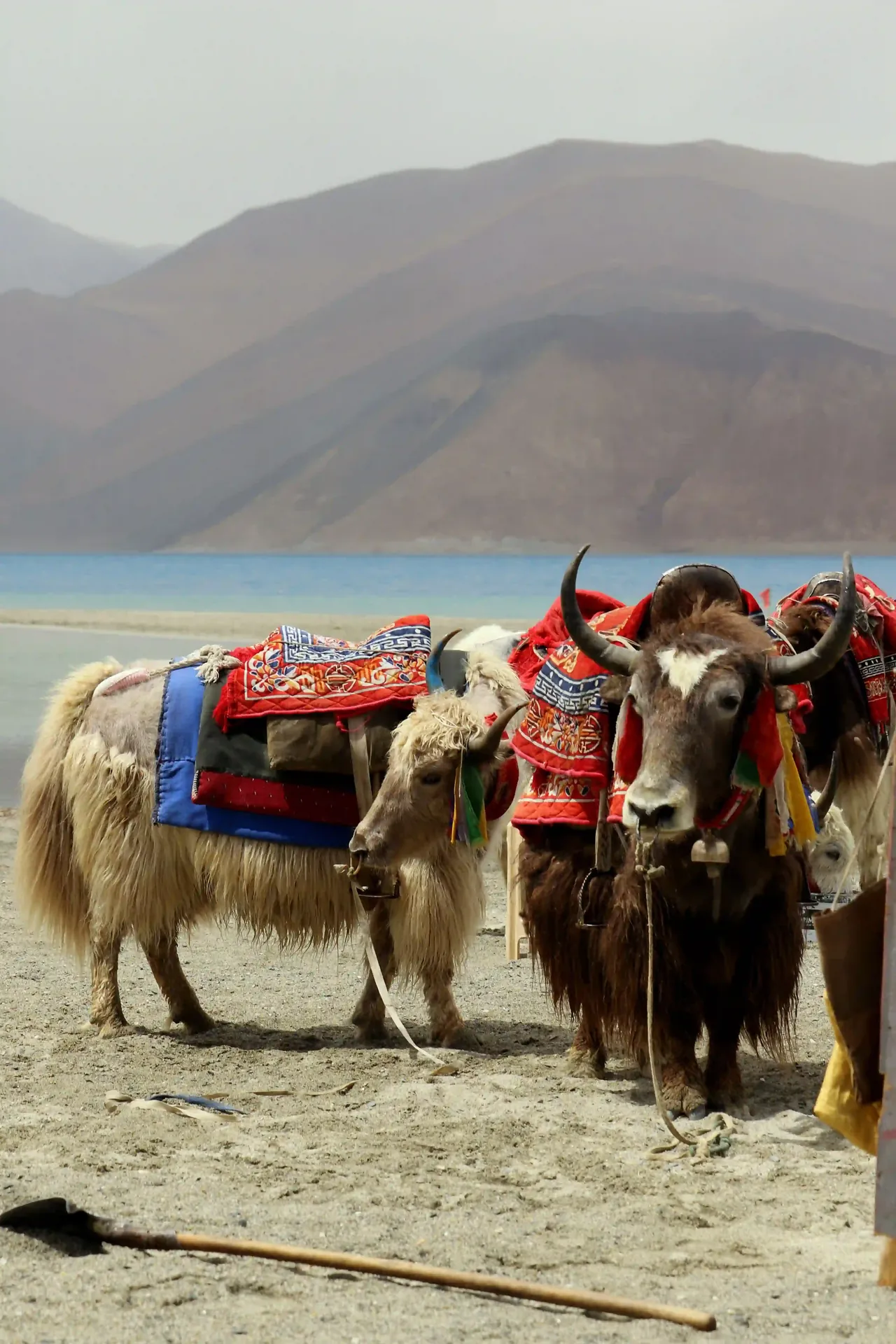
Decorated yaks on the shore of Pangong Lake, Ladakh
All Inclusive
  • All Permits & Entry Fees
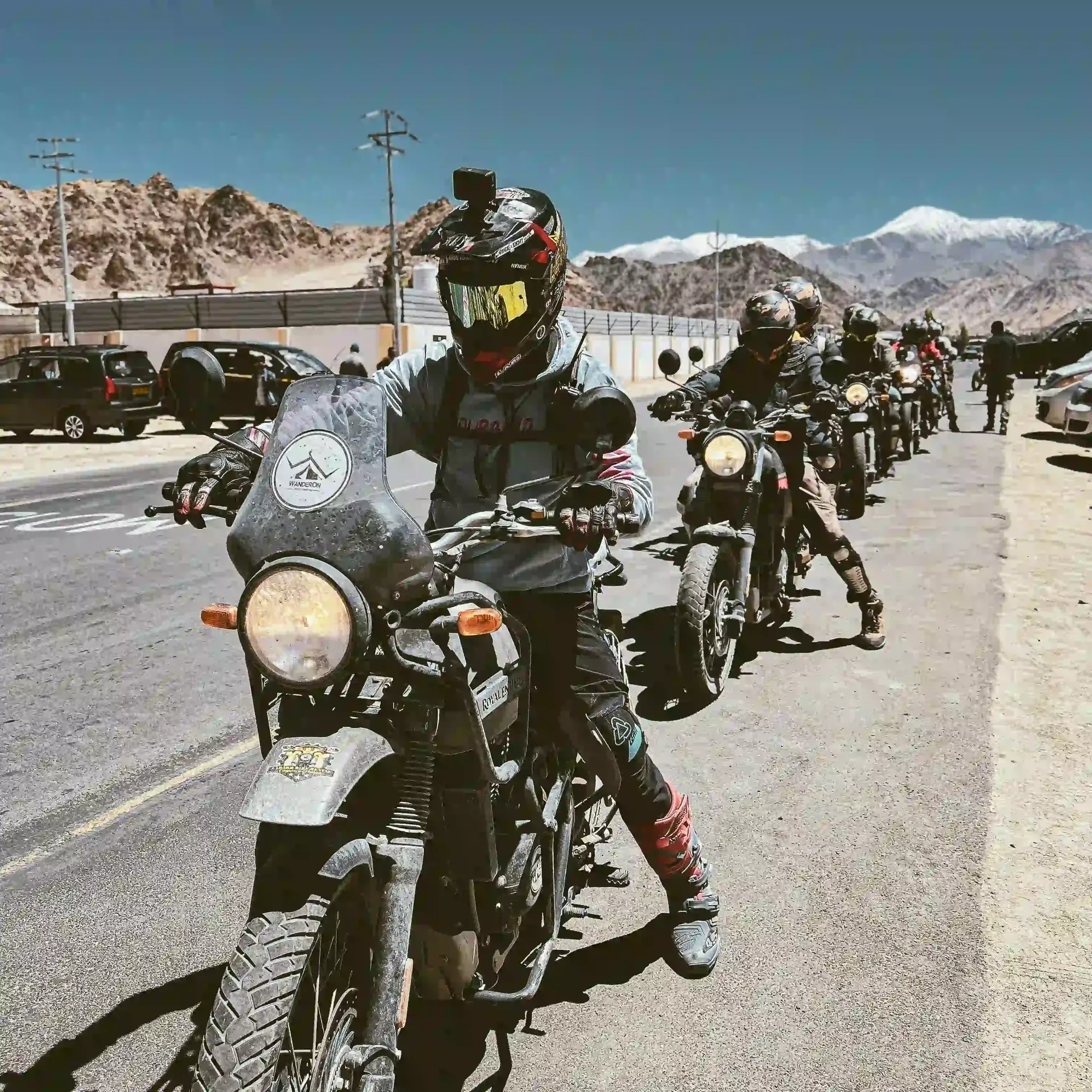
  • Private 4WD Vehicle
  • Monastery Expert Guide
  • 10 Edited Photographs
🏭
All PermitsILP, monastery & protected area
🚘
Private 4WDHigh-altitude terrain vehicle
⚽
All Entry FeesEvery gompa & lake site
📷
10 Edited PhotosComplimentary premium quality
🧭
IITG Licensed GuideEnglish & Spanish

Seven Days at the Roof of the World

From the ancient prayer halls of Thiksey and Hemis to the impossible blue of Pangong, from the sand dunes of Nubra to the magnetic summit of Khardung La — every day of this circuit is chosen to reveal a different, unrepeatable face of the Himalayas.

Day One — Arrival & Acclimatisation
01
Morning · Airport Arrival
Kushok Bakula Airport, Leh — 3,524 m
Your private vehicle meets you at the arrivals gate of Leh’s dramatic high-altitude airport — one of the highest commercial airports in the world, surrounded on all sides by bare Himalayan peaks. Kamran greets you personally. The first priority is not sightseeing but physiology: at 3,524 metres, the body needs time to adjust. You are driven directly to your hotel, where check-in, a warm welcome tea, and a full altitude briefing await. Kamran explains the science of acclimatisation, the symptoms to watch, and exactly what the next seven days will hold. Rest is the agenda for today — and it is the most important item on it.
Private Airport Transfer · Altitude Briefing · Rest Day
02
Afternoon · Day 1
Leh Old Town & Leh Palace — Gentle Walk
If the group feels well after lunch — no headaches, no breathlessness — Kamran leads a gentle, slow-paced walking orientation through the narrow lanes of Leh’s old bazaar. The 17th-century Leh Palace, modelled on the Potala of Lhasa and dominating the old town from its ridge, is the afternoon’s visual anchor. We climb only as far as comfort allows. The point is orientation, not exertion — learning the scale of the place, breathing the air at your own pace, beginning to read the Tibetan script on prayer flags and shop fronts. Entry fee covered. If anyone is unwell, this segment is comfortably rescheduled.
Entry Included · Gentle Pace · Altitude-Sensitive
Day Two — The Indus Valley Monasteries
03
Morning · 8:00 AM
Shey Palace & Thiksey Monastery
The second day opens the circuit’s monastic heart. Shey, 15 kilometres southeast of Leh, was the ancient summer capital of Ladakhi kings — its palace now housing a magnificent two-storey copper-gilt statue of Shakyamuni Buddha, the largest in Ladakh. From Shey we continue to Thiksey, the gompa that most visitors call the most beautiful in the region. Twelve storeys of white and ochre rising directly from a rocky outcrop above the Indus Valley, Thiksey houses some 10 dwelling units, multiple temples, a nunnery, and a 15-metre statue of Maitreya — the Future Buddha — inside a dedicated chamber. Kamran walks through the iconography, the monastic routine, and the living community of monks who inhabit this place not as a museum but as a home.
Entry Included · Sunrise Views · Photography Session
04
Afternoon · Day 2
Hemis Monastery & Stakna
Hemis is the largest, wealthiest, and most celebrated monastery in Ladakh — a Drukpa Kagyu institution founded in the 17th century and still home to over 150 resident monks. Its treasury holds ancient thangkas (painted scroll paintings), silver stupas, and a three-storey thangka of Padmasambhava that is unveiled to the public only once every twelve years. Kamran contextualises its philosophy, its artwork, and its role as a living institution — not a heritage site frozen in time. En route back we stop at Stakna, the ‘tiger’s nose’ gompa, perched on a solitary rocky hill above the Indus — smaller, quieter, and one of Kamran’s personal favourites for the solitude and the uninterrupted river views it commands.
Entry Included · Richest Treasury in Ladakh · Monk Community
Day Three — Pangong Lake
05
Full Day · 5:30 AM Departure
Pangong Tso — 4,350 m
One of the most photographed lakes on earth — and one of the most inadequately described. At 4,350 metres, Pangong Tso stretches 134 kilometres across the Himalayas from Ladakh into Tibet, with barely 40% of it inside Indian territory. Its water is brackish and non-potable, yet the colour shifts continuously through turquoise, cobalt, slate, and steel depending on the hour, the cloud, and the wind. We depart before sunrise to catch the early light on the mountains reflected in still water — the most extraordinary version of the lake. The road via Chang La (5,360 m, the world’s third highest motorable pass) is itself a journey. Kamran narrates the geology, the military history of the border, the local nomadic Changpa pastoralist culture, and the extraordinary biodiversity — bar-headed geese, Brahminy ducks, and if fortunate, the Tibetan wolf — that inhabits the lake’s margins. A full day on the water. Return by evening.
Protected Area Permit Included · Photography Session · Chang La Pass
06
Evening · Day 3
Overnight at Pangong Camp
Rather than returning to Leh for the night, we remain at the lake. A premium glamping camp on the southern shore — insulated tents with proper beds, attached washrooms, and a central dining tent serving hot Ladakhi and continental meals — provides a genuinely extraordinary experience: waking to the lake at dawn, watching the Milky Way arc over the Himalayan ridgeline after dark, and hearing nothing at all except the occasional gust off the water. This is the moment most guests describe as the most memorable of the entire circuit. Dinner and overnight stay included.
Overnight Included · Dinner Included · Milky Way Stargazing
Day Four — Nubra Valley via Khardung La
07
Morning · 6:00 AM Departure
Khardung La Pass — 5,359 m
Khardung La — officially ‘Khardung Pass’ in Ladakhi, 5,359 metres above sea level — is one of the highest motorable roads on the planet and the gateway to the Nubra Valley and the ancient Silk Road corridor beyond it. The drive up from Leh is a sustained ascent through increasingly bare, dramatic, and oxygen-deprived landscape. At the summit, the views across multiple Himalayan and Karakoram ranges in every direction are, on a clear morning, among the most expansive anywhere on the mountain road network. We pause at the top for photographs, for tea from the army canteen — the highest in the world — and for Kamran’s briefing on the military significance of this pass as the supply artery to the Siachen Glacier. The descent into Nubra is equally spectacular, winding into progressively warmer and greener territory as the altitude drops.
Permit Included · World’s Highest Motorable Road · Photography Session
08
Afternoon · Day 4
Diskit Monastery & Hunder Sand Dunes
Diskit Monastery, founded in the 14th century and perched on a dramatic hilltop above Nubra, is the oldest and largest gompa in the valley. The 32-metre statue of Maitreya Buddha looking towards the Karakoram ranges was inaugurated by the Dalai Lama in 2010 — its expression of equanimity in one of the most contested military geographies on earth is quietly striking. In the late afternoon we descend to the cold desert of Hunder — where the Shyok and Nubra rivers converge to create a landscape that should be impossible: white sand dunes carpeted by wild sea-buckthorn bushes at 3,000 metres, with the permanently snow-capped Karakoram peaks as a backdrop. This is the habitat of the double-humped Bactrian camel — a relic of the Silk Road trade — and the opportunity for an optional camel ride at sunset. Overnight in Nubra Valley.
Entry Included · Bactrian Camels · Overnight in Nubra
Day Five — Turtuk & the Silk Road Village
09
Full Day · 8:00 AM
Turtuk Village — India’s Last Village
Turtuk is one of the most extraordinary places in the Indian subcontinent — and one of the least visited. Situated on the banks of the Shyok River just 8 kilometres from the Pakistani border, it was under Pakistani administration until 1971 when it became part of India following the Indo-Pakistani War. Its population is Balti — a Tibetan language group with deep connections to the Baltistan region of Pakistan — and the village retains a cultural identity completely unlike anywhere else in Ladakh: Islamic rather than Buddhist, Balti rather than Tibetan, apricot orchards rather than barley fields. Kamran explores this complexity with characteristic depth: the politics of partition made visible in a single village, the extraordinary hospitality of a community accustomed to very few outsiders, and the physical beauty of a location where the Karakoram towers directly above apricot blossom. One of the most memorable days of the entire circuit.
Permit Included · Restricted Border Area · Cultural Immersion
10
Evening · Day 5
Return to Leh via Khardung La
The return journey from Nubra to Leh via Khardung La is a different experience from the descent — approaching the pass from below in the late afternoon light, the Karakoram peaks glow amber and rose behind you as you climb, while the Zanskar ranges ahead shift from white to violet. We arrive back in Leh in time for dinner, a hot shower, and the particular euphoria that comes from five days at extraordinary altitude. The evening is yours — Kamran recommends the best local restaurants and the old town’s best remaining craft shops if you wish to explore independently.
Scenic Evening Drive · Return to Leh Hotel
Day Six — Alchi, Lamayuru & the Moonland
11
Morning · 7:30 AM
Alchi Monastery — 11th Century Masterwork
Alchi is unlike any other monastery in Ladakh — and it is the reason many serious Buddhist art scholars make the journey. Founded in the 11th century by Rinchen Zangpo, the ‘Great Translator,’ it sits not on a dramatic hilltop but quietly at the valley floor on the banks of the Indus. Its significance is entirely internal: the painted chambers of the Dukhang and the Sumtsek temples contain some of the finest and best-preserved examples of early western Himalayan Buddhist mural art anywhere in Asia — artwork influenced as much by Kashmir and Gandharan traditions as by Tibetan Buddhism, depicting mandalas, bodhisattvas, and royal court scenes with a sophistication and colour palette that has not faded in a thousand years. Kamran reads the iconography panel by panel — a masterclass available nowhere else.
Entry Included · 11th Century Murals · Art Iconography Session
12
Afternoon · Day 6
Lamayuru — Moonland & Oldest Monastery
The road from Alchi towards Lamayuru passes through what geologists describe as one of the most remarkable badland landscapes in Asia — locally called Moonland for the obvious reason that it looks nothing like anything on earth. Erosion has shaped the pale yellow sedimentary rock into a lunar cityscape of pinnacles, craters, and ravines that extends for several kilometres on both sides of the road. Lamayuru Monastery — reputedly the oldest in Ladakh, dating to the 10th century — sits directly above this surreal terrain. Its two hundred rooms, nine temples, and 150 resident monks make it one of the largest functioning monasteries in the region. Kamran narrates the Naropa legend associated with the site and explores the monastery’s meditation caves and its extraordinary cliff-side position at length.
Entry Included · Moonland Landscape · Oldest Gompa in Ladakh
Day Seven — Magnetic Hill, Indus Confluence & Departure
13
Morning · 8:00 AM
Magnetic Hill, Sangam & Gurudwara Patthar Sahib
The final morning assembles three stops that together capture something essential about Ladakh: its peculiarity, its sacred geography, and its layered spiritual life. The Magnetic Hill is a famous optical illusion — a section of road that appears to slope uphill but in fact slopes down, creating the impression that vehicles roll uphill on their own. Kamran explains the physics and the mythology simultaneously. Minutes away, the Sangam is where the blue-green Zanskar River — one of the most technically challenging and legendary whitewater rivers in Asia — meets the brown Indus in a visible, dramatic colour boundary that runs for several hundred metres. Gurudwara Patthar Sahib, a Sikh shrine built to commemorate Guru Nanak’s visit to Ladakh, demonstrates the region’s remarkable spiritual plurality. All three stops take approximately two hours — unhurried, photographed, and contextualised.
Optical Illusion · River Confluence · Sikh Heritage Site
14
Afternoon · Airport Transfer
Departure from Kushok Bakula Airport
Your private vehicle transfers you to Leh Airport for your onward flight. Kamran accompanies the group to the departures entrance, ensures luggage is in order, and says farewell. Within 72 hours of your departure, your 10 complimentary premium edited photographs are delivered digitally — in high resolution, colour-corrected, and ready for print, publication, or personal archives. Seven days at the roof of the world. The altitude drops. The perspective does not.
Private Airport Transfer · Photos Delivered Within 72 hrs

Inclusions & Exclusions

✅ Package Inclusions

  • Private 4WD Vehicle — All 7 Days: A high-altitude-capable private 4WD vehicle with professional mountain driver, exclusively for your group throughout the entire circuit including all inter-site transfers, airport pickups, and drop-offs.
  • All Government Permits & Protected Area Passes: Inner Line Permit (ILP) for Nubra Valley, Pangong Tso, and Turtuk; Chang La and Khardung La road permits; all wildlife and protected zone documentation fully arranged before departure.
  • All Monastery & Heritage Site Entry Fees: Shey Palace, Thiksey, Hemis, Stakna, Diskit, Alchi, Lamayuru, Leh Palace, and Gurudwara Patthar Sahib — every entry fee for every site on the circuit fully covered.
  • One Night Premium Glamping — Pangong Lake: One overnight stay in a fully equipped insulated glamping tent on the southern shore of Pangong Lake, including dinner and breakfast served in the camp dining tent.
  • One Night Guest House — Nubra Valley: One night in a well-appointed Nubra Valley guest house or boutique camp with dinner and breakfast, allowing the full Turtuk day without returning to Leh.
  • 10 Complimentary Premium Edited Photographs: Professional photography sessions woven into the circuit at Thiksey, Pangong, Khardung La, Hunder, and Lamayuru. All 10 images professionally edited and delivered digitally in high resolution within 72 hours of departure.
  • Government-Licensed Expert Guide — Full 7 Days: Kamran Khan, Pan-India IITG licence holder, guiding all sessions in English and Spanish with deep specialist knowledge of Ladakhi Buddhist art, culture, geopolitics, ecology, and mountain medicine.
  • Chilled Water & Snacks In-Vehicle Daily: Mineral water, high-altitude hydration supplements, energy snacks, and hot thermos tea/coffee provided in the vehicle on all travel days.
  • Detailed Altitude Briefing & Safety Monitoring: Comprehensive altitude acclimatisation briefing on Day One. Kamran monitors the group throughout, adjusts the itinerary if altitude sickness symptoms appear, and carries a first-aid kit including supplementary oxygen.

✕ Package Exclusions

  • Flights to & from Leh: International and domestic airfare to and from Kushok Bakula Airport, Leh is not included. We coordinate with your travel agent for seamless airport arrival and departure.
  • Hotel Accommodation in Leh (4 Nights): Accommodation for the four nights in Leh (Days 1, 2, 5, 6) is not included in the package price. We recommend and can book premium guest houses or boutique hotels on request.
  • Meals (Except Those Specified): Meals are included only at the Pangong glamping camp (dinner and breakfast) and the Nubra guest house (dinner and breakfast). All other meals are at your own cost. Kamran recommends the best local restaurants at every location.
  • Optional Bactrian Camel Ride in Hunder: The sunset camel ride on the Hunder dunes is available at the site for a direct local fee. Kamran assists with negotiation and logistics; the cost itself is not included in the package.
  • Personal Travel & Medical Insurance: Travel and altitude-specific medical insurance is the personal responsibility of each participant. Given the high-altitude nature of this circuit, comprehensive insurance including emergency helicopter evacuation cover is strongly recommended.
  • Gratuities for Driver & Local Staff: Tips for the 4WD driver, camp staff, and any local artisans or hosts encountered during the circuit are entirely optional and at the group’s discretion.
  • Personal Shopping & Souvenirs: Items purchased in monastery shops, Leh markets, or Turtuk village are the personal expense of each participant. Kamran can advise on fair prices and authentic craft quality.

What Makes This Different

01
The Monasteries Read as Literature
Most visitors photograph the gompas and leave without understanding a single image they have seen. Kamran reads the Buddhist iconography of every temple room in depth — the mandalas, the bodhisattva hierarchies, the Jataka tales painted on silk, the meaning of each mudra. By Day Two, the paintings stop being decorative and start being legible. Nothing else on the circuit replicates this.
02
Pangong at Dawn & Under Stars
Arriving at Pangong at dawn and spending the night there rather than turning back to Leh is a decision that transforms the lake from a landmark into an experience. The pre-dawn light on the water, the absolute silence, the arc of the Milky Way over the Himalayan ridge after dark — these are not available to day-trippers. The overnight glamping camp is included.
03
Turtuk — The Place No One Goes
Turtuk appears on almost no standard Ladakh itinerary. It requires an additional restricted area permit and an extra three hours of mountain driving beyond the already-remote Nubra Valley. Kamran includes it precisely because it is the most extraordinary and least-understood place in the region — a village where India’s partition, the Silk Road, and Himalayan geography all converge in a single afternoon.
04
Altitude Safety — A Non-Negotiable
Kamran is trained in high-altitude mountain safety. The itinerary is structured to optimise acclimatisation — Day One is a genuine rest day, no exceptions. He monitors the group daily, carries supplementary oxygen and a first-aid kit, and has a clear evacuation protocol for any group member who develops acute altitude sickness. This circuit reaches 5,359 metres. Safety is part of the service.
05
Bilingual English & Spanish
Kamran is one of the very few licensed guides operating in Ladakh who speaks and guides fluently in both English and Spanish. For mixed-nationality groups, every piece of commentary, every piece of iconographic analysis, every geopolitical briefing is delivered in full depth in both languages — not summarised, not translated second-hand.
06
10 Premium Photographs Included
Professional photography sessions are built into the circuit at Thiksey, Pangong at dawn, Khardung La summit, Hunder dunes, and Lamayuru Moonland. All 10 images are professionally edited and delivered in high resolution within 72 hours — the kind of images that hang on walls, not just scroll past on a phone. A genuinely rare deliverable from an adventure of this nature.

What Travellers Say

Verified reviews from guests across 40+ nationalities who have travelled with Kamran Khan.

★★★★★

"Ladakh with Kamran was genuinely one of the five most significant travel experiences of my life. The monasteries stopped being beautiful backgrounds and became actual texts I could read — that is entirely because of Kamran’s iconographic knowledge. Pangong overnight was unreal. The edited photos arrived two days later and three of them are now on my wall. Non-negotiable if you are going to Ladakh."

Alexander V.
Art Historian — Vienna, Austria
Verified on Viator
★★★★★

"Fuimos cuatro personas, todos hispanohablantes, y el hecho de que Kamran explicara absolutamente todo en español con la misma profundidad que en inglés fue excepcional. Turtuk fue el día más inesperado del viaje — jamás habíamos oído hablar de ese pueblo y resultó ser lo más fascinante de todo el circuito. Las fotos editadas fueron impresionantes. Reservad con él sin dudar."

Cristóbal & María R.
Viajeros — Barcelona, España
Verificado en GetYourGuide
★★★★★

"I have been travelling independently for twenty years and have very rarely hired a guide. Kamran is the exception that has made me re-think that rule entirely. His altitude safety approach alone is worth the cost — he genuinely adjusted the Day Two plan when one of our group was showing early symptoms, and handled it with total calm and no drama. The circuit is extraordinary. Kamran makes it extraordinary in a completely different way."

Dr. Sunita P.
Physician — Toronto, Canada
Verified on Airbnb Experiences
★★★★★
5.0 · 200+ Reviews
★★★★★
5.0 · 180+ Reviews
★★★★★
5.0 · 120+ Reviews
★★★★★
Certificate of Excellence

Practical Details

Duration
7 Full Days — 6 Nights
Day 1: Arrival Leh · Days 2–6: Circuit · Day 7: Departure. Itinerary can be extended or adjusted on request.
Best Season
June — September
Peak season is July and August. June and September offer thinner crowds and equally dramatic landscapes. The circuit is not possible between November and May due to pass closures. Confirm with Kamran before booking any shoulder-season dates.
Group Size
1 to 6 Persons
Entirely private. Groups of up to 6 in one vehicle. Larger groups accommodated with additional vehicles on request. Solo travellers warmly welcomed.
Languages
English & Spanish
Full bilingual narration throughout all 7 days. Hindi and Urdu also available. Ladakhi and Balti cultural phrases provided in the printed programme.
Availability
June to September · 7 Days a Week
Advance booking of minimum 14 days required for all permit processing. Contact Kamran via WhatsApp for date confirmation and permit lead times.
Meeting Point
Kushok Bakula Airport, Leh — Private Pickup
Share your flight details and arrival terminal via WhatsApp. Your private vehicle and Kamran meet you at arrivals. Zero coordination required on your part.
Photography Delivery
10 Edited Images · Within 72 Hours
Delivered via private download link in high-resolution JPEG, suitable for large-format print and digital publication.
What to Wear
Layered clothing essential at all altitudes
Ladakh’s temperature swings of 20–25°C between dawn and midday are dramatic at altitude. Mornings at Pangong and Khardung La can be 0–5°C even in summer. Midday in Leh can reach 25–30°C. Layers are not optional. Modest dress (shoulders and knees covered) required for all monastery visits — Kamran provides guidance at each site. Sturdy closed-toe walking shoes or lightweight hiking boots essential for monastery courtyards and Moonland terrain.
What to Bring — Items to Carry
High-Altitude Specific Packing List
▲ Health & Altitude Essentials (Non-Negotiable): Acetazolamide (Diamox) tablets — consult your physician before travel; widely recommended for altitude above 3,000 m · Personal prescription medications with pharmacy labels · Ibuprofen or paracetamol for altitude headaches · Oral rehydration salts (ORS) sachets · High SPF lip balm (SPF 50+; UV radiation is severe above 3,500 m) · High SPF sunscreen (SPF 50+, broad spectrum) · UV-protective sunglasses (polarised; snow blindness is a real risk at pass altitudes) · Personal first-aid basics (plasters, blister pads, antiseptic wipes). ▁ Clothing & Layering System: Thermal base layers (top and bottom) — essential for Pangong overnight and Khardung La · Mid-layer fleece or light down jacket · Outer windproof and waterproof shell jacket · Warm hat covering ears (wool or fleece; compulsory at Khardung La) · Lightweight gloves · Buff or neck gaiter (dust and cold wind protection) · 2–3 changes of comfortable daywear (quick-dry fabrics recommended) · Modest clothing for monastery visits (full-length trousers or skirts; covered shoulders) · Sturdy closed-toe walking shoes or lightweight hiking boots · Sandals for camp evenings. ✎ Documents & Connectivity: Valid passport (required for all Inner Line Permits — Kamran handles the paperwork; you provide the document) · 2 recent passport-sized photographs (required for permit applications) · Travel insurance documents including emergency helicopter evacuation cover · Offline maps downloaded (Google Maps offline for Leh and Nubra; connectivity is intermittent throughout). 📷 Photography & Electronics: Personal camera or smartphone with ample storage · Minimum 2 fully charged power banks (charging points are scarce in Nubra and non-existent at Pangong camp) · Universal travel adaptor (India uses Type C, D, and M sockets) · Ziplock bags to protect electronics from dust on mountain roads. ✓ Provided — Do Not Pack: Mineral water and hydration supplements — replenished in vehicle daily · All monastery entry tickets — pre-covered · All government permits — arranged by Kamran · Supplementary oxygen cylinder — carried by Kamran · Head coverings for monastery visits — provided at each site · Printed circuit programme — provided on Day One.
Reserve Your Circuit
Leh-Ladakh Monasteries & Lakes Circuit
  • Private 4WD vehicle — all 7 days
  • All government permits & ILP
  • All monastery & site entry fees
  • Pangong glamping overnight & meals
  • Nubra Valley guest house overnight & meals
  • 10 complimentary premium edited photos
  • Altitude safety briefing & O₂ kit
  • IITG-licensed bilingual guide (EN & ES)
📞 Book via WhatsApp ← Back to Main Website
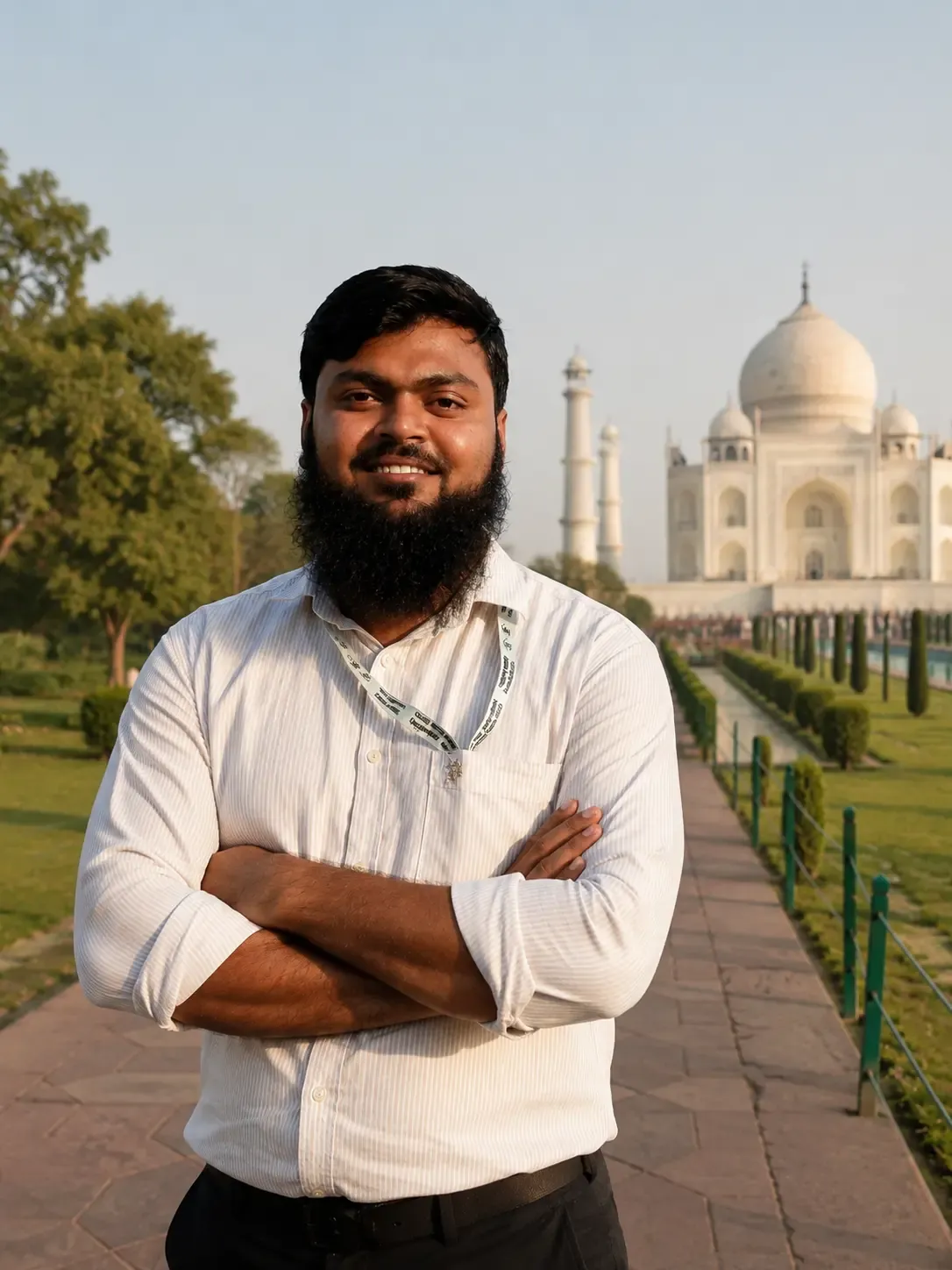
Kamran Khan, government-licensed tour guide, standing in front of the Taj Mahal
IITG Govt. Licensed

Kamran Khan

Ladakh does not reveal itself to the casual traveller. Its monasteries are not museums — they are working institutions whose walls are covered in a visual language that took centuries to develop and requires years of study to read. Its landscapes are not backdrops — they are the product of geological and human forces operating simultaneously across three separate mountain systems. I have spent over 500 tours learning how to make that invisible architecture visible, in English and in Spanish.

I hold a Government Pan-India IITG licence — the highest certification in Indian tourism — and have guided travellers from over 40 nationalities through this circuit. I am also trained in high-altitude mountain safety and carry supplementary oxygen and a full first-aid kit on every Ladakh departure. At these altitudes, the safety of the group is not incidental to the experience — it is the foundation that makes the experience possible.

The day at Turtuk is the one that most guests say changed something in them. A village at the edge of a nation, at the foot of the highest mountain range on earth, where every family has relatives they have not been able to see for fifty years. No classroom teaches that. No guidebook conveys it. You go there and you understand it from the inside.

English Español हिन्दी اردو