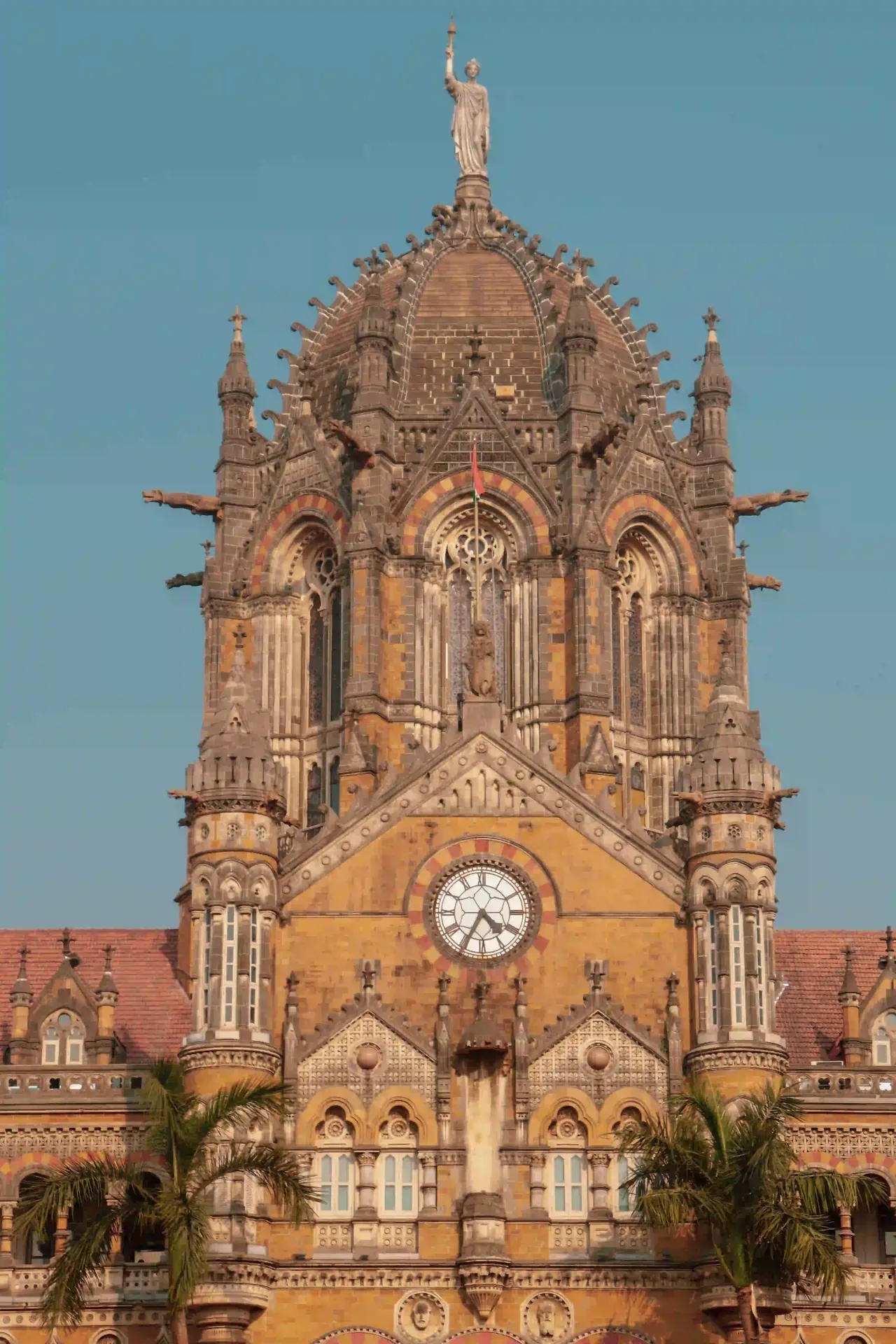
7 Days · Private · Kochi to Alleppey · All Inclusive

Kerala is called God’s Own Country — and it earns that name at every turn. A coastline of 600 kilometres, a network of backwater lagoons and canals that predates any road, spice estates that supplied the ancient world with pepper, cardamom, and cinnamon, hill stations buried in mist and tea, and a classical dance tradition so old it predates most of Europe’s great art forms. This 7-day private expedition moves through all of it — by houseboat, by vehicle, and on foot through cardamom forest. Includes 10 complimentary premium edited photographs.

Book via WhatsApp

Instant reply · Fully private · All logistics handled from Day 1
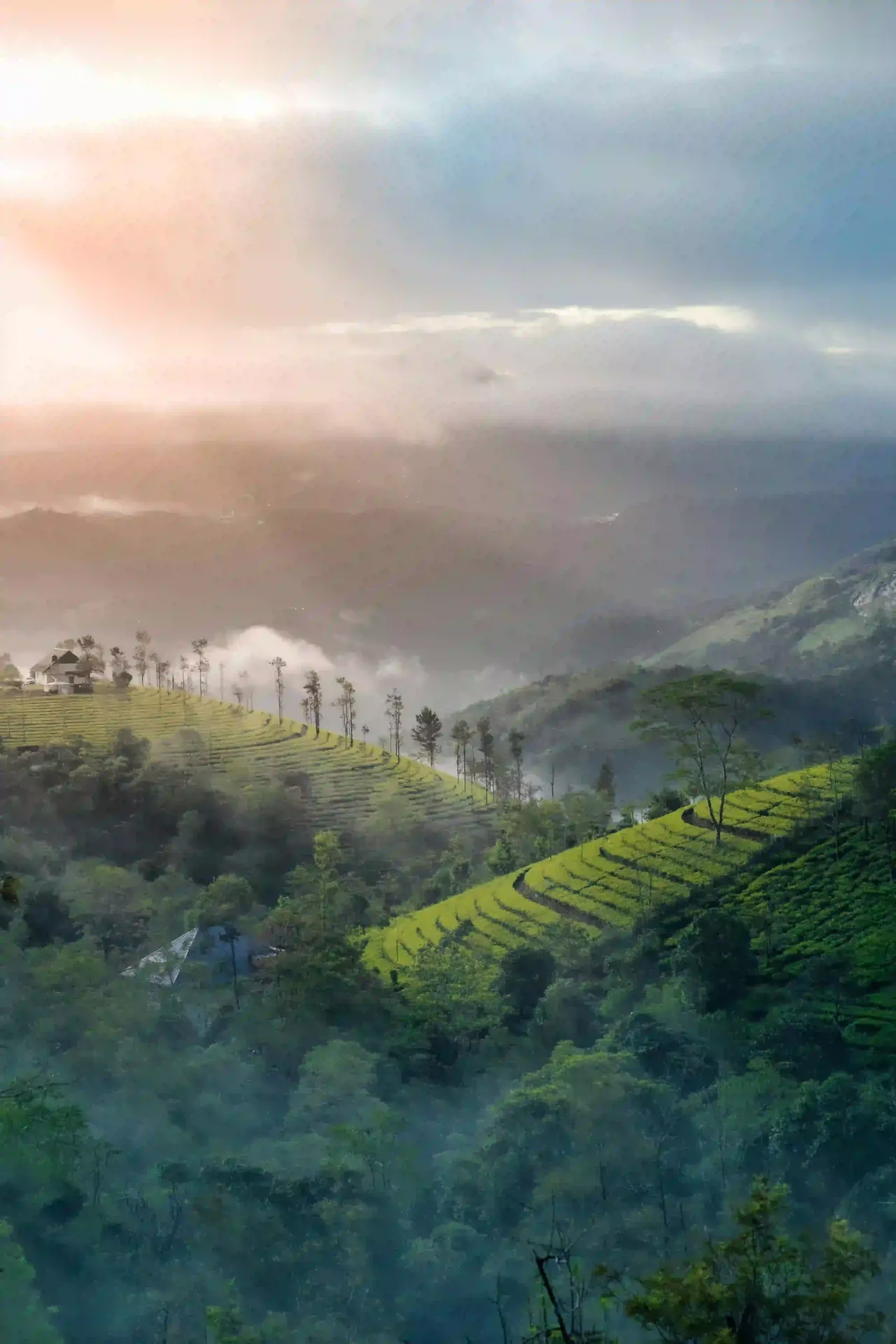
Tea plantations on the misty hills of Munnar, Kerala
7-Day Package
  • Alleppey Overnight Houseboat
  • Munnar Tea Garden Walk
  • Periyar Spice Estate Tour
  • 10 Edited Photographs
🛥
Houseboat NightAlleppey backwaters
🌿
Spice EstatePeriyar cardamom walk
🌿
Munnar TeaHigh-range garden tour
📷
10 Edited PhotosComplimentary premium
🏭
Kathakali ShowClassical Kerala dance

Seven Days Through God’s Own Country

From the Portuguese-Dutch-British layered heritage of Fort Kochi to the mist-wrapped tea gardens of Munnar at 1,600 metres, and down through the ancient spice forests of Thekkady to the still, green mirror of the Alleppey backwaters — this itinerary is structured to move through every landscape Kerala possesses, slowly enough to absorb each one.

01
Day 1 · Arrival · Kochi (Cochin)
Fort Kochi — Where Four Empires Left Their Mark
Arrival at Cochin International Airport. Private AC vehicle and Kamran meet you at the arrivals gate. Transfer to your heritage hotel in Fort Kochi — a peninsula that is, in many respects, the most historically dense neighbourhood in South India. Fort Kochi was the first European colonial settlement in India: the Portuguese arrived in 1503, built a church (the oldest European church in India, still standing), and were then displaced by the Dutch in 1663, who were in turn displaced by the British in 1795. The result is a single small neighbourhood where Portuguese villas, Dutch warehouses, a British Raj courthouse, a 500-year-old synagogue, a Jain temple, and a Chinese fishing net all exist within a 15-minute walk of each other. The afternoon is a guided walk through Fort Kochi: the Santa Cruz Basilica, the Dutch Cemetery, the Paradesi Synagogue in Jew Town (the oldest active synagogue in the Commonwealth, built in 1568), and the iconic Chinese fishing nets at sunset — enormous cantilevered structures introduced to Kerala by Chinese traders in the 14th century and still used daily. Dinner at a heritage restaurant on the Kochi waterfront.
Fort Kochi Walk · Chinese Fishing Nets · Paradesi Synagogue
02
Day 2 · Kochi → Munnar · ~130 km · 4 hrs
Munnar — The Sea of Tea at 1,600 Metres
Morning departure from Kochi after breakfast. The road to Munnar climbs steadily from the coastal plain into the Western Ghats — one of the world’s eight biodiversity hotspots, recognised by UNESCO as a World Heritage Site for its extraordinary concentration of endemic species. The drive is spectacular: rubber plantations give way to spice gardens, then coffee estates, then the first distant emerald hillsides of tea. Munnar sits at 1,600 metres in the Idukki district of Kerala — a hill station that was the summer retreat of the British Raj’s tea planters and is today covered in approximately 30,000 hectares of tea. Afternoon: a walk through a working tea estate with Kamran explaining the full journey of a tea leaf — from the flush (the tender two leaves and a bud that pickers take) through withering, rolling, oxidation, drying, and grading. The tea grown here is almost entirely the Camellia sinensis var. assamica strain, introduced by the British in the 1870s. The landscape from the ridge above the estate at late afternoon, when the mist begins to move up the valley walls and the entire hillside turns a darker green as the light drops, is among the most photographed views in South India. Check-in at a plantation-view heritage resort.
Western Ghats Drive · Tea Estate Walk · Altitude: 1,600 m
03
Day 3 · Munnar · Full Day Exploration
Eravikulam National Park, Mattupetty Dam & Echo Point
A full day in the highlands. The morning begins at Eravikulam National Park — the highest national park in Kerala, home to the Nilgiri Tahr (a critically endangered mountain goat that lives only in the Western Ghats and exists in no other ecosystem on earth). The park covers the Anamudi plateau, which includes Anamudi Peak at 2,695 metres — the highest peak in India outside the Himalayas. In winter the Neelakurinji flower blooms across these hillsides in sheets of blue-violet — a species that flowers only once every twelve years, an event that turns the entire landscape blue and draws pilgrims from across India. Kamran explains the ecological significance of the Ghats shola ecosystem (the patchy montane forests that punctuate the grasslands), the current conservation status of the Nilgiri Tahr, and the relationship between the tea monoculture and the park’s boundaries. Midday at Mattupetty Dam and Lake — a reservoir at 1,700 metres surrounded by tea, where Kerala’s Indo-Swiss Livestock Project dairy farm has operated since the 1950s. Afternoon at Echo Point on Top Station Road, then a visit to the Tata Tea Museum in Munnar town — a well-curated exhibition tracing the complete history of tea cultivation in the Ghats from the 1870s onwards, including the original machinery, colonial-era photographs, and the remarkable story of the Kannan Devan Hills Plantation Company.
Eravikulam NP · Nilgiri Tahr · Tata Tea Museum · Anamudi 2,695 m
04
Day 4 · Munnar → Thekkady / Periyar · ~90 km · 3 hrs
Periyar — The Spice Forest & Wildlife Sanctuary
Morning departure from Munnar through the high-range road via Bison Valley — a beautiful descent through cardamom forest and rubber estates into the warmer lowlands of Idukki. Arrival at Thekkady, the gateway town to the Periyar Tiger Reserve, which at 777 square kilometres is one of the most biodiverse wildlife sanctuaries in India and one of the most important tiger and elephant habitats in the Western Ghats. The first activity on arrival: a private guided spice estate walk at a working cardamom, pepper, coffee, cinnamon, and vanilla plantation on the reserve boundary. This is the living textbook of the ancient spice trade: cardamom pods drying in the sun, black pepper vines climbing teak trees, cinnamon bark being harvested with a tool that has not changed in 2,000 years, vanilla orchid flowers being hand-pollinated one by one. Kamran traces the history of these spices from the ancient Malabar coast trade routes — Phoenicians, Arabs, Romans, Chinese, and ultimately the Portuguese, who broke the Arab monopoly on the spice trade in 1498 and changed the balance of power in the world. The plantation was built around a trade that was worth more than gold. The afternoon includes a guided nature walk within the Periyar buffer zone — birdwatching, elephant tracks, and Malabar giant squirrels in the canopy. Evening at a jungle lodge near the reserve.
Spice Estate Walk · Periyar Tiger Reserve · Nature Walk · Cardamom Forest
05
Day 5 · Periyar → Kumarakom / Alleppey · ~110 km · 3 hrs
Kumarakom Bird Sanctuary & Arrival at the Backwaters
The descent from the Western Ghats plateau to the Kuttanad lowlands — the rice bowl of Kerala, and one of the few places in the world where farming is done below sea level — is one of the most dramatic landscape transitions in South India. The land flattens, the air thickens and warms, coconut palms replace the last of the hill vegetation, and the first glimpses of open water appear between the paddy fields. The Kuttanad region sits 0.6 to 2.2 metres below sea level and is protected from the Arabian Sea and Vembanad Lake by an intricate system of bunds (embankments) that have been maintained by Kerala’s farming communities for centuries. Midday stop at Kumarakom Bird Sanctuary on the eastern shore of Vembanad Lake — a 14-hectare protected wetland that is home to migratory birds including Siberian storks, egrets, herons, cormorants, and the Open-bill Stork. A short walking trail through the mangroves and reed beds with Kamran identifying species. Afternoon arrival at Alleppey (Alappuzha) — the town from which Kerala’s houseboat (kettuvallam) network radiates — and boarding your private overnight houseboat. The kettuvallam is a converted traditional rice barge: a low, wooden-hulled vessel with a thatched canopy, an open sundeck at the prow, a private cabin and bathroom, and a cook who prepares Kerala sadya (the traditional banana-leaf feast) for dinner on the water. Check-in and departure into the canal network as the sun descends behind the coconut palms.
Kumarakom Bird Sanctuary · Kettuvallam Houseboat · Kerala Sadya Dinner
06
Day 6 · Alleppey Backwaters · Dawn to Dusk
A Full Day on the Water — Canals, Villages & the Vembanad Lake
This is the day the pace changes entirely. The houseboat moves at a walking pace through the canal network — the Kerala backwaters are approximately 1,900 kilometres of interconnected lakes, canals, and lagoons running parallel to the Arabian Sea coast, separated from the sea by narrow strips of land. The morning begins with the houseboat cook preparing an elaborate Kerala breakfast: appam (fermented rice pancakes with coconut milk), puttu (steamed rice cylinders with coconut), egg curry, and fresh coconut chutney — all eaten on the open sundeck as the first fishermen pole their small canoes through the lilies alongside. The route moves through the narrow village canals of Champakulam — where houses and churches back directly onto the water, where coconut coir (fibre) is laid out to dry along the banks, where women do laundry at the canal steps and children wave from the narrow pedestrian bridges above. A stop at Champakulam church — the oldest church in Kerala, founded in 427 CE by the Apostle Thomas according to local tradition, though the current structure dates to 1579. Midday on the open expanse of Vembanad Lake, the largest lake in Kerala at 2,033 square kilometres, where the famous Nehru Trophy Boat Race takes place every August in a tradition of snake boats (chundan vallam) that stretches back to the 16th century. Afternoon canal cruise through the narrower channels of the Kuttanad backwaters. The 10 complimentary premium edited photographs are taken during this day — the light on the backwaters in the early morning and late afternoon is extraordinary. Overnight on the houseboat.
Champakulam Village · Vembanad Lake · Photography Day · Kerala Backwaters
07
Day 7 · Alleppey → Kochi · Kathakali & Departure
Kathakali Performance & Kerala Ayurveda — The Final Chapter
The houseboat returns to the Alleppey jetty by 9:00 AM after a final breakfast on the water — fresh fruit, coconut milk rice, and the cook’s signature prawn preparation if fish was caught by dawn. Private AC vehicle transfer back to Kochi (approximately 1.5 hours). The final afternoon in Kerala is structured around two of the state’s most distinctive cultural traditions. First: a Kerala Ayurvedic wellness session at a heritage centre in Fort Kochi — a 60-minute traditional Abhyanga massage using warm sesame oil infused with medicinal herbs, followed by a brief consultation explaining the Tridosha system (Vata, Pitta, Kapha) underlying Ayurvedic diagnosis. Kerala is the home of classical Ayurveda — the 5,000-year-old Indian medical system that is now formally recognised by the WHO. Second, and most important of the day: Kathakali. Kathakali is one of the world’s oldest surviving theatrical traditions — a classical dance-drama from Kerala that combines elaborate face paint in nine distinct codified colours (each communicating a specific character type), extraordinarily detailed hand gestures (mudras) from the Hastha Lakshanadeepika — a text with 24 primary gestures that can form 900 distinct meanings — and a percussion ensemble (chenda, maddalam, and ilathalam) that can be heard across a village. The pre-show makeup process alone takes 3–4 hours and is a performance in itself. Your tickets include the pre-performance makeup viewing and the full one-hour performance at Kerala Kathakali Centre, Fort Kochi. Kamran stays for the full performance and explains the Ramayana or Mahabharata episode being performed in real time. Photo delivery of 10 premium edited photographs to WhatsApp before airport departure. Transfer to Cochin International Airport.
Kathakali Performance · Ayurvedic Abhyanga · 10 Photos Delivered · Airport Transfer

Inclusions & Exclusions

✅ Package Inclusions

  • All Private AC Transfers (7 Days): Airport pickup on Day 1, all inter-city transfers (Kochi–Munnar–Thekkady–Alleppey–Kochi), and final airport drop-off. Dedicated vehicle and driver throughout.
  • 6 Nights Accommodation: 2 nights in a heritage hotel in Fort Kochi, 1 night at a plantation-view resort in Munnar, 1 night at a jungle lodge near Periyar, 1 overnight houseboat on the Alleppey backwaters (full board), and 1 final night in Kochi pre-departure.
  • Private Overnight Houseboat (Full Board): One full night and a full day on a private AC kettuvallam houseboat including all meals: traditional Kerala breakfast, lunch, Kerala sadya dinner on the water, and next morning breakfast. Cook and crew included.
  • Private Spice Estate Walk — Thekkady: A 90-minute guided walk through a working spice plantation: cardamom, black pepper, cinnamon, coffee, vanilla, and turmeric. Expert botanical commentary by Kamran on the history and trade of each spice. Entry fee included.
  • Tea Estate Walk — Munnar: A guided walk through a working high-range tea estate explaining cultivation, plucking, and processing. Tata Tea Museum entry included.
  • Eravikulam National Park Entry: All entry fees for Eravikulam National Park and its shuttle bus to the Nilgiri Tahr viewing area.
  • Kathakali Performance Tickets — Fort Kochi: Pre-show makeup viewing and full one-hour Kathakali performance at Kerala Kathakali Centre. Kamran provides full narrative context throughout in English and Spanish.
  • Kerala Ayurvedic Abhyanga Session: 60-minute traditional Abhyanga full-body massage at a certified Ayurvedic centre in Fort Kochi. Consultation and dosha explanation included.
  • Government Licensed Bilingual Guide (Full 7 Days): Kamran Khan in English and Spanish for the entire programme. Pan-India IITG licence. Cultural commentary, spice botany, temple context, wildlife identification, and performance narrative throughout.
  • 10 Complimentary Premium Edited Photographs: Professionally composed and post-processed photographs from backwater dawn, spice estate, Chinese fishing nets, Kathakali, and tea garden. Delivered via WhatsApp on Day 7 before airport transfer.
  • Daily Breakfast at All Hotels: Full breakfast included at every overnight property (Days 1–4 and Day 7). Houseboat meals fully included separately on Days 5 and 6.

✕ Package Exclusions

  • Flights to / from Kochi: International or domestic flights to Cochin International Airport are not included. Kamran can advise on optimal routing from Delhi, Mumbai, Bangalore, or international hubs on booking.
  • Lunches & Dinners (Except Houseboat): Meals other than breakfasts at hotels and full board on the houseboat are not included. Kamran pre-selects premium local restaurants for every lunch and dinner and makes reservations; you pay directly.
  • Periyar Boat Safari (Optional Add-On): The Forest Department boat safari on Periyar Lake inside the tiger reserve is optional and not included. Can be added at cost on request — elephant sightings are common in the early morning.
  • Personal Expenses & Souvenirs: Spice purchases at the estate, Kashmiri carpet and pashmina shops in Kochi, antique shops on Jew Town Road, and any other personal shopping.
  • Travel Insurance: Strongly recommended. Kerala’s monsoon (June–August) can affect road conditions; insurance including trip disruption cover is advisable for travellers in that window.
  • Alcoholic Beverages: Kerala has state government restrictions on alcohol sales; availability varies by district. Any beverages beyond standard non-alcoholic options are at guest cost.
  • Gratuities: Optional and entirely at your discretion for the houseboat cook and crew, driver, and local activity guides.

What Makes This Different

01
Three Distinct Landscapes in Seven Days
The colonial port heritage of Kochi, the misty tea-covered highlands of Munnar at 1,600 metres, the ancient spice forest of Periyar, and the still green labyrinth of the backwaters — are four entirely different worlds within a single state. This itinerary moves through all of them with enough time in each to understand what you are looking at.
02
The Private Houseboat Experience
The difference between a shared houseboat and a private one is the difference between a tourist bus and a private car. Your kettuvallam is entirely yours: your crew, your cook, your pace through the canals, your dinner on the water. The 10 complimentary photographs are taken on the backwaters — the light here in the early morning is unlike anything else in India.
03
The Spice Route — Told From the Source
Every spice in your kitchen has a history that changed the world — pepper, cardamom, cinnamon, and vanilla all originate in this region. Kamran traces the full history of the Malabar spice trade from the Phoenician era through the Arab monopoly, the Portuguese arrival in 1498, and the formation of the Dutch and British East India Companies — all while you are standing in a cardamom forest in Periyar.
04
Kathakali — Understood, Not Just Watched
Kathakali is one of the most technically sophisticated performing arts in the world — but without context it is simply a man in elaborate makeup moving his hands. Kamran explains the mudra language, the character types indicated by each face colour, and the mythological episode being performed in real time during the show. It becomes an entirely different experience.
05
Bilingual Guide — English & Spanish
Kamran speaks fluent English and Spanish throughout Kerala’s complete cultural, ecological, and culinary landscape. Spanish-speaking travellers experience the full depth of a civilisation that has been trading, worshipping, and performing for 2,000 years — entirely in their own language.
06
Kerala Cuisine — Every Meal Matters
Kerala’s cuisine is among the most distinctive in India: coconut milk, curry leaf, mustard seed, tamarind, raw mango, and fresh fish from the coast and backwaters. Every restaurant is pre-selected by Kamran for quality, hygiene, and authenticity. The Kerala sadya on the houseboat — over 20 dishes served on a banana leaf — is the single best meal in this programme.

Practical Details

Duration
7 Days / 6 Nights — Kochi to Kochi
Day 1 begins on arrival at Cochin International Airport. Day 7 ends with airport transfer after the Kathakali performance. The programme is fully flexible around your arrival and departure flight times.
Group Size
1 to 6 Persons
Entirely private — your group only. Larger groups (7–12 persons) available on request with an additional vehicle and assistant guide. The houseboat accommodates up to 4 guests comfortably in 2 double cabins; larger groups board two vessels in convoy.
Languages
English & Spanish
Hindi, Urdu, and Malayalam (basic communication) also available. All local specialists (spice estate guides, Kathakali context) delivered via Kamran in English and Spanish.
Best Season
October — March (Peak) · All Year Available
October to March is Kerala’s dry season: clear skies, low humidity, and the backwaters at their calmest. April and May are hot and pre-monsoon. The Southwest Monsoon (June–September) brings dramatic rainfall — the Western Ghats receive some of the heaviest monsoon rains in India, and Kerala at monsoon is a entirely different, deeply atmospheric experience: full rivers, mist in the tea gardens, and the backwaters at their greenest. The tour runs year-round with itinerary adjustments during monsoon.
Availability
All Year · 7 Days a Week
Contact Kamran via WhatsApp with your arrival date. Last-minute bookings welcome with at least 48 hours notice; peak season (Dec–Jan) requests advance booking for houseboat availability.
Meeting Point
Cochin International Airport, Kerala
Share your flight number and arrival terminal via WhatsApp. Kamran or the designated driver will meet you at the arrivals gate with a name board. Hotel in Fort Kochi is approximately 35 minutes from the airport.
What to Wear
Light, breathable fabrics · Modest for temples & churches
Kerala is tropical: temperatures range from 23–35°C on the coast and plains, and 15–25°C in Munnar. Lightweight, breathable cotton or linen is ideal for all days except Munnar, where a light fleece or layer is useful in the evenings. Modest dress (covered shoulders and knees) is required at the Paradesi Synagogue, Fort Kochi churches, and Hindu temples. Shoes are removed at Hindu temples and inside the Kathakali performance space.
What to Bring — Items to Carry
Complete Packing List for Kerala
Clothing: 4–5 lightweight cotton or linen tops (Kerala humidity demands breathable fabric above all else). 2–3 pairs of light trousers or midi skirts (doubles as modest temple wear, avoiding the need for a separate set). 1 lightweight layer or cardigan for Munnar evenings (temperature drops noticeably at 1,600 m). 1 waterproof poncho or packable rain jacket (essential if travelling June–September; advisable year-round). Comfortable walking sandals with good grip for estate and forest walks. One pair of closed-toe shoes or trainers for the Periyar forest walk (open footwear not recommended on trail). Flip-flops or slip-on sandals for the houseboat deck and temple visits. A lightweight scarf or dupatta (doubles as temple cover and sun protection). Health & Essentials: SPF 50+ sunscreen — coastal and backwater UV is intense. Insect repellent with DEET (essential for the backwaters at dusk and the Periyar forest walk — mosquitoes are active in both). Personal prescription medications for the full duration. Anti-diarrhoeal medication and oral rehydration sachets (tropical food adjustment precaution). Antihistamine for insect bites and plant reactions during forest walks. Small personal first-aid kit: plasters, antiseptic wipes, ibuprofen. Lip balm and moisturiser (air conditioning in vehicles and hotels dries skin quickly). Hand sanitiser for street food stops and market visits. Documents & Electronics: Valid passport and visa (visa-on-arrival available for many nationalities at Cochin International Airport — check your country’s eligibility in advance). Travel insurance document (printed and digital). Power bank — strongly recommended for houseboat days when charging may be limited to generator hours. Universal travel adapter. Waterproof phone case or dry bag for houseboat and backwater excursions. Camera with a lens suited to low-light (dawn on the backwaters in mist is the defining photographic moment of the trip). Your WhatsApp number active for photo delivery on Day 7. Houseboat-Specific Items: Light sleepwear (the houseboat cabin has AC, but it can be strong — a light layer for sleeping is useful). A small dry bag or ziplock bag for valuables on open-deck canal stretches. Biodegradable sunscreen if you plan to swim in the backwater canals (conventional sunscreens harm the waterway ecosystem). A small personal towel as a backup (houseboat provides towels, but an extra compact travel towel is useful for estate and forest walks). What to Leave Behind: Heavy luggage is unnecessary — a soft duffel bag or medium roller is ideal. Jeans are not recommended (heavy, slow to dry, uncomfortable in humidity). High heels serve no purpose on this itinerary. Avoid black clothing in direct sun — heat absorption in the Kerala coastal climate is significant.
Reserve Your Journey
Kerala Backwaters & Spice Route
  • All private AC transfers — 7 days
  • 6 nights accommodation (heritage hotel + resort + jungle lodge + houseboat)
  • Private overnight houseboat — full board
  • Spice estate walk, tea estate walk & Eravikulam NP
  • Kathakali performance tickets & Ayurvedic session
  • Government-licensed bilingual guide — 7 days
  • 10 complimentary premium edited photographs
Book via WhatsApp ← Back to Main Website
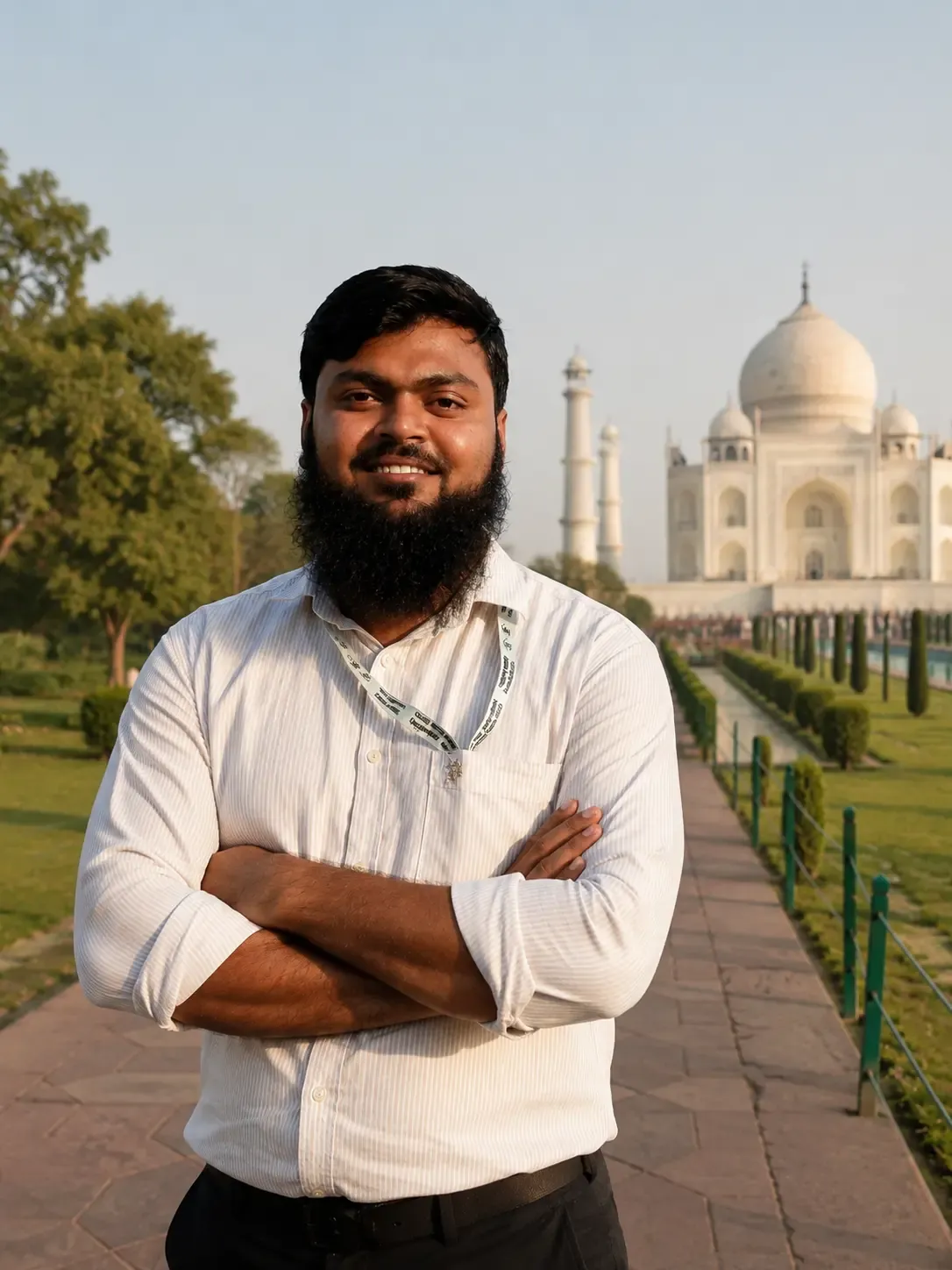
Kamran Khan, government-licensed tour guide, standing in front of the Taj Mahal
IITG Govt. Licensed

Kamran Khan

People think they know what Kerala looks like — they have seen the houseboat photographs, the green water, the tea hillsides. What they do not know is what it means. The backwaters are not decorative. They are a working transport and agricultural system that has operated continuously for 2,000 years. The spice estates are not a garden attraction. They are the literal reason the modern world was mapped — every major European power sent its navy here. I am not exaggerating when I say that the pepper vine in that cardamom forest in Periyar changed the course of human history more than almost anything else you can stand next to.

I hold a Government Pan-India IITG licence — the highest certification in Indian tourism. For over a decade I have guided travellers from more than 40 nationalities through India’s most extraordinary landscapes. Kerala is the tour I return to most willingly. No other state in India has this density of landscape, history, cuisine, and performing art in one place.

The Kathakali performance on Day 7 is the moment when everything connects. The spice that paid for the empire that built the fort that faces the fishing nets that fed the people who performed this dance for 2,000 years. That is the tour. That is always the goal.

English Español More+