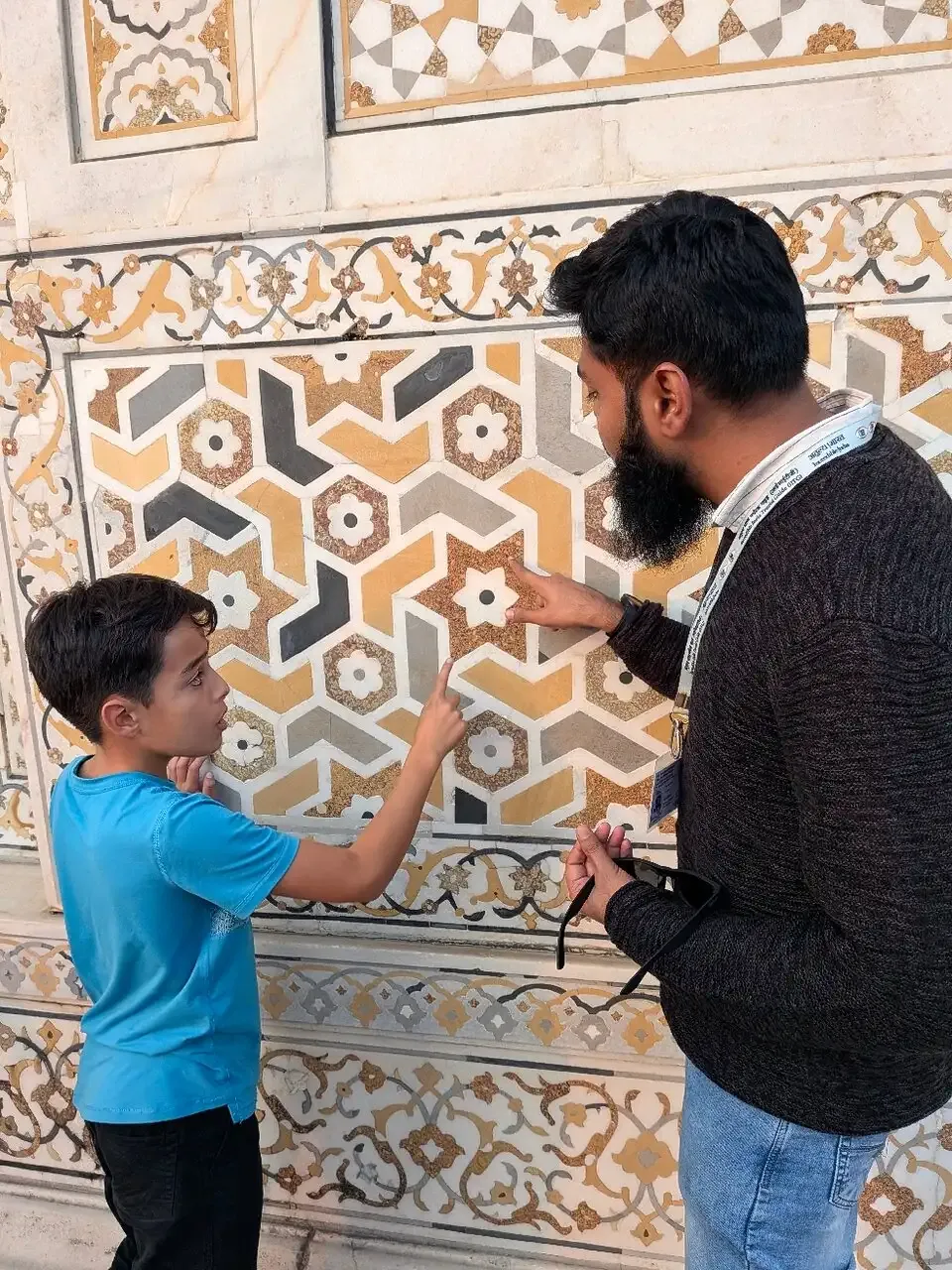
What "Government Licensed" Actually Means
A government-licensed guide in India has been certified by the Ministry of Tourism, Government of India, typically under the Incredible India programme (often referred to as IITG certification for guides trained through the Indian Institute of Tourism and Travel Management). This isn't a paid directory listing or a self-declared title — it involves training, an exam, and ongoing authorisation to guide at protected monuments including the Taj Mahal. Licensed guides are legally permitted to conduct paid guiding inside monuments like the Taj Mahal and Agra Fort; many unlicensed individuals technically are not.
What a "Local Guide" Usually Means
"Local guide" is a loose, informal term — it can describe anyone from a knowledgeable resident to someone who simply approaches tourists outside a monument gate. The range in quality and legitimacy is enormous. Some are genuinely knowledgeable people without formal certification; others are commission-driven touts whose main goal is steering you toward specific shops rather than giving accurate history. Because there's no licensing test behind the label, "local guide" tells you almost nothing about what you're actually getting until you're already committed.
Side-by-Side Comparison
| Government Licensed Guide | Unlicensed Local Guide | |
|---|---|---|
| Authorised by | Ministry of Tourism, Government of India | No formal authority |
| Legally permitted inside monuments | Yes | Often not, or restricted |
| Historical accuracy | Trained and tested | Highly variable, often invented stories |
| Pricing transparency | Generally fixed, agreed upfront | Frequently negotiated, sometimes inflated mid-tour |
| Shop commission pressure | Rare, professional conduct expected | Common — a known scam pattern |
| Identification | Government-issued ID card | None, or informal |
Where Each Type Is Legally Allowed to Operate
At protected monuments like the Taj Mahal and Agra Fort, paid guiding is meant to be conducted by licensed guides. Unlicensed individuals offering guiding services at the gate are operating outside that framework — which is exactly why so many scam reports from Agra and Delhi trace back to gate-side touts rather than pre-booked licensed guides. We go into these patterns in more detail in 15 tourist scams in India every visitor should avoid.
Cost Differences and Why
Licensed guides typically charge a fixed, published-range fee that reflects training, certification, and legal authorisation to work inside monuments. Unlicensed guides may quote a lower initial price specifically to win the booking, then apply pressure through commission-driven shop stops, "extra" charges, or an inflated final ask once you're mid-tour and less able to walk away. The cheaper upfront number is often not the cheaper actual trip.
Book a Verified Licensed Guide
Kamran Khan is a Government of India licensed guide, certified under Incredible India, with 10+ years of experience across Delhi, Agra, Jaipur and Rajasthan. Message us to confirm your date.
Risks of Choosing an Unlicensed Guide
- Historically inaccurate information presented as fact
- Pressure to visit specific shops for undisclosed commissions
- Undisclosed or inflated final pricing
- Restricted or denied access at certain monument checkpoints
- No accountability mechanism if something goes wrong
How to Verify a Guide's Licence
- Ask to see their government-issued guide ID card directly
- Confirm the fee and inclusions in writing before the tour starts
- Book in advance through a verifiable contact rather than at the gate
- Check for consistent reviews mentioning the guide by name
Quick Facts
- Licensed by
- Ministry of Tourism, Government of India
- Certification programme
- Incredible India
- Verification
- Ask to see the government-issued ID card
- Legally permitted inside monuments
- Licensed guides, yes
- Common risk with unlicensed
- Shop commission pressure, price inflation
Frequently Asked Questions
It means they're certified by the Ministry of Tourism, Government of India, typically under the Incredible India programme, and are legally authorised to conduct paid guiding at protected monuments like the Taj Mahal and Agra Fort.
Paid guiding at protected monuments is meant to be conducted by licensed guides. Unlicensed individuals offering guiding services at the gate are operating outside that framework, which is a common source of scams and inflated pricing.
Ask to see their government-issued guide identity card. A genuine licensed guide will show it without hesitation. You can also book through a verifiable, reviewed contact in advance rather than choosing someone at the gate.
No, not always — some are genuinely knowledgeable. But because 'local guide' isn't a regulated title, there's no guarantee of accuracy, legal standing, or transparent pricing, which is why a licensed guide is the safer default, especially for first-time visitors.
The upfront quote can be similar or even lower with a licensed guide once you account for the shop-commission pressure and price inflation that's common with unlicensed guides mid-tour.