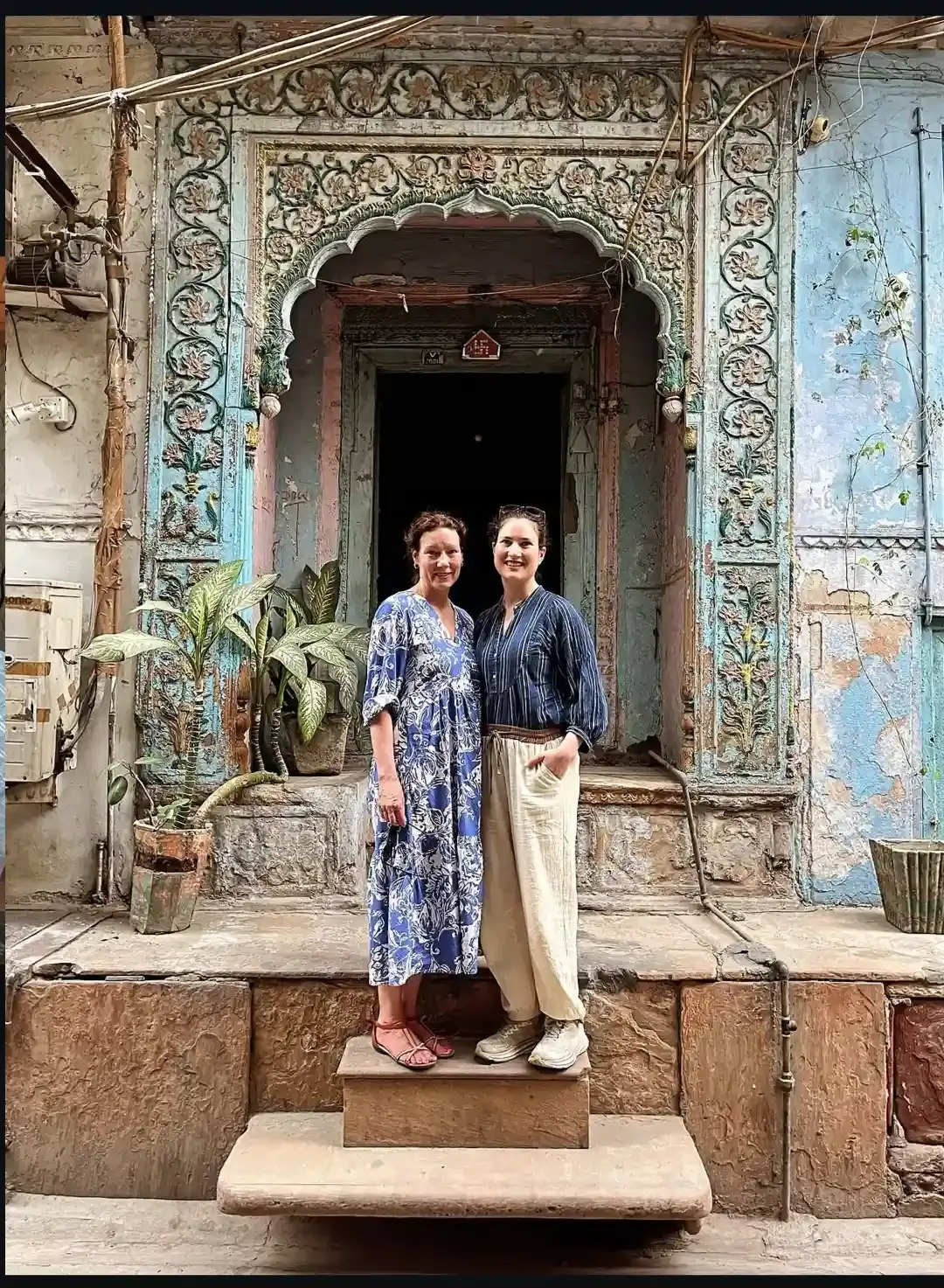
Solo Female · Private · Safe · All Inclusive · Golden Triangle

India is one of the most extraordinary countries on earth for a solo woman traveller — and it is one that requires the right infrastructure to experience fully and safely. This circuit is designed from the ground up for women travelling alone: a curated 5-day private journey through Delhi, Agra, and Jaipur with a government-licensed bilingual guide who has accompanied solo female travellers from over 40 nationalities, pre-vetted accommodation, safe private transport, and a day-by-day structure that gives you complete independence inside a framework of genuine security. India on your own terms.

📞 Book via WhatsApp

Instant reply · Solo travellers exclusively · Airport pickup on arrival
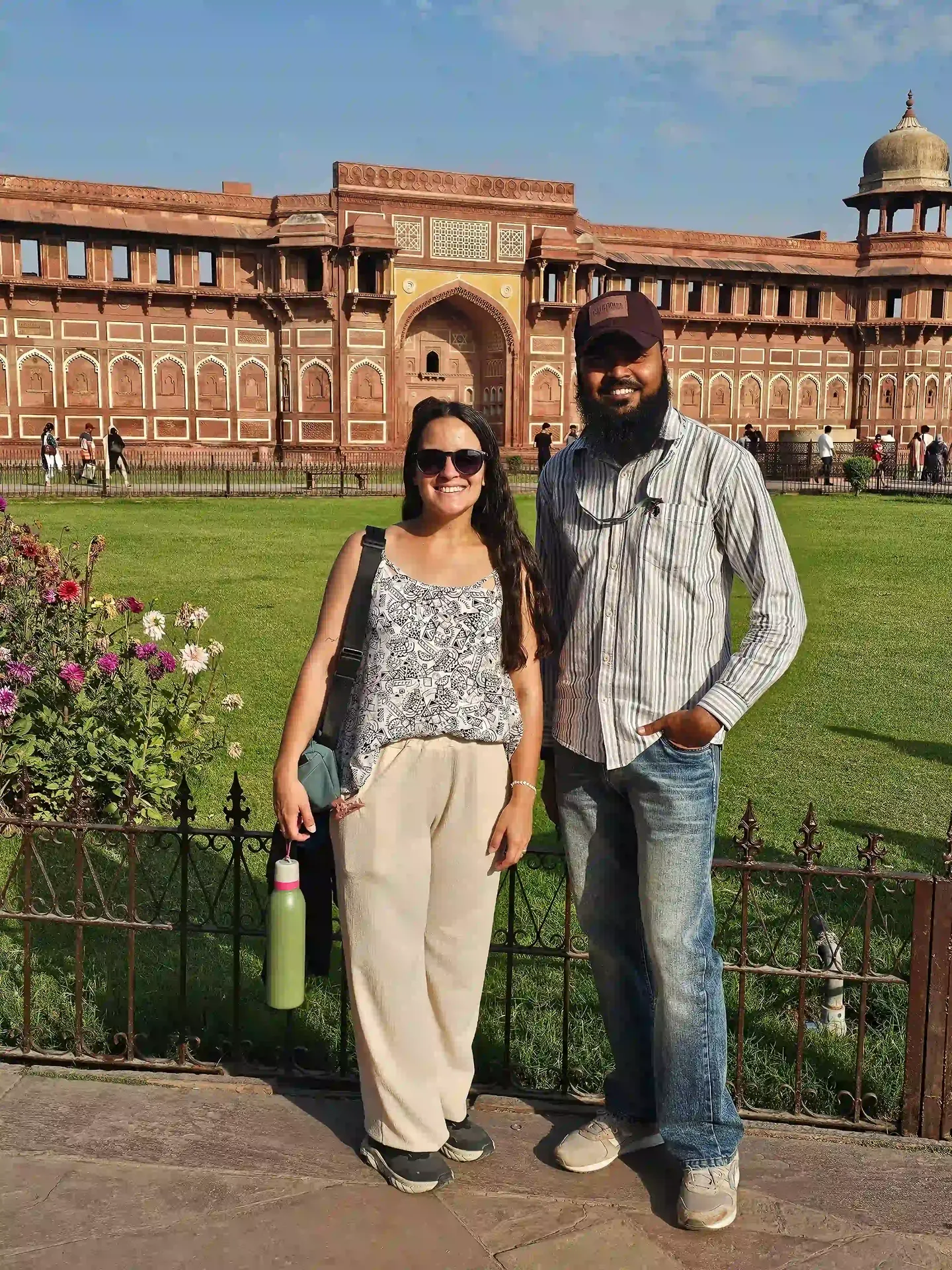
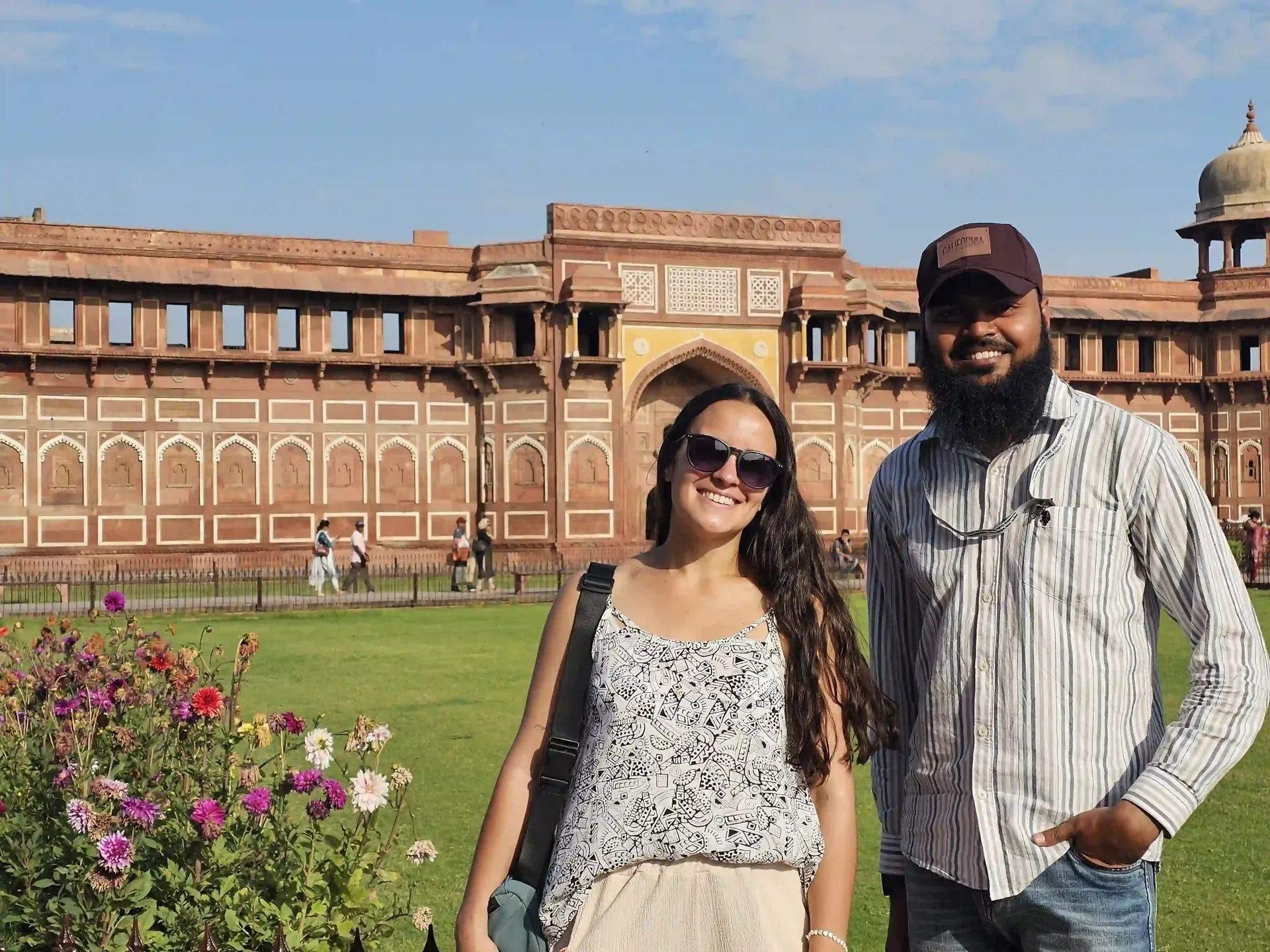
A solo female traveller with her guide at Agra Fort
Designed For You
  • Private Safe Transport
  • Pre-Vetted Hotels
  • 24 / 7 WhatsApp Access
  • Solo-Specific Safety Brief
🚗
Private Safe TransportAll transfers, all 5 days
🏭
All Entry TicketsEvery monument covered
📱
24/7 WhatsAppKamran always reachable
📷
10 Edited PhotosComplimentary premium quality
🧭
Licensed GuidePan-India IITG certified

Five Days, Three Cities, One Unbroken Thread

The Golden Triangle — Delhi, Agra, Jaipur — is the most celebrated circuit in India, and for good reason. Each city is architecturally and culturally distinct, each is a full world in itself, and the road between them passes through a landscape that tells its own story. This version of the circuit is structured specifically for the solo woman traveller: every stop curated for safety and depth, every transition planned to eliminate friction, every day ending with a confirmed, pre-vetted place to sleep.

Day One — Arrival in Delhi & Safety Orientation
01
Arrival · Airport Pickup
Indira Gandhi International Airport — Private Transfer
Kamran meets you personally at the arrivals gate at IGI Airport with a name board, regardless of flight time. Your private air-conditioned vehicle — a vetted car with a professional driver whose identity and licence plate details have been shared with you in advance via WhatsApp — takes you directly to your pre-booked hotel. Kamran accompanies you to check-in, confirms all is in order, and delivers the printed five-day circuit programme for the trip ahead. There is no negotiation with autorickshaws, no unfamiliar queues, no ambiguity about where you are going. The circuit begins with zero friction.
Private Airport Transfer · Driver Details Pre-Shared · Hotel Check-In
02
Evening · Day 1
Safety & City Orientation Brief
Before the tour begins in earnest, Kamran conducts a thorough and practical solo female travel safety orientation — specific to Delhi and the cities ahead, not generic advice. Topics covered in full: how to read a neighbourhood; the situations to avoid and those that are entirely safe; how to handle unwanted attention (verbal strategies that work, and those that do not); how to use a prepaid SIM card; which apps to have active; the emergency numbers to know; how to identify a legitimate auto versus a problematic one; the cultural codes around dress and behaviour that reduce friction without compromising freedom; and how to navigate markets and bazaars independently. This session is not a list of restrictions — it is a practical toolkit for moving through India confidently and on your own terms. Dinner together at a curated restaurant nearby to close the evening.
Safety Orientation · Practical Toolkit · Welcome Dinner
Day Two — Delhi in Full
03
Morning · 8:30 AM
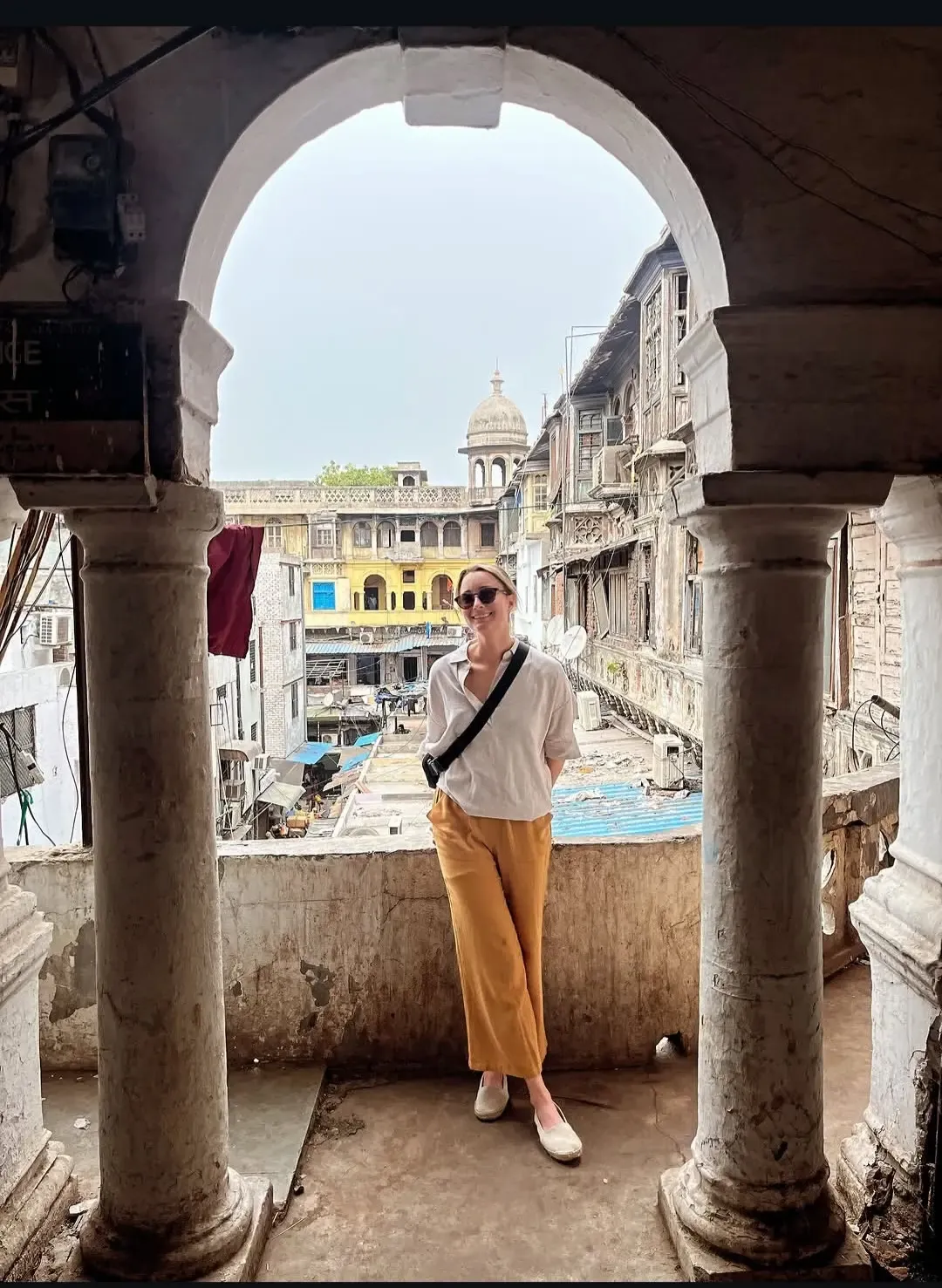
Old Delhi — Jama Masjid, Rickshaw & Chandni Chowk
The second day opens in the medieval heart of the city. We begin at the Jama Masjid — India’s largest mosque, built by Shah Jahan in 1644, its red sandstone courtyard commanding views over the old city below. Kamran provides the full historical and religious context, then we descend into the bazaar on a private cycle rickshaw through Chandni Chowk — the silver and spice market that Shah Jahan designed as the commercial engine of his capital — and on to Khari Baoli, Asia’s largest wholesale spice market. Kamran has guided solo women through this section of Delhi hundreds of times. He is immediately present for any moment of friction and has the local relationships and the language to defuse anything instantly. The objective is full immersion without anxiety.
Rickshaw Included · Entry Included · Guided Immersion
04
Afternoon · 1:30 PM
Humayun’s Tomb, Qutub Minar & Lodhi Art District
After lunch at a vetted restaurant near the old city, the afternoon moves through three of Delhi’s most compelling sites. Humayun’s Tomb — the architectural forerunner of the Taj Mahal, built in 1570 in red sandstone and white marble — is where Kamran reads the Mughal imperial project as a story of grief transformed into permanence. Qutub Minar, the 73-metre victory tower begun in 1193, anchors the afternoon’s conversation around the beginning of Delhi’s layered history. The day closes with a walk through the Lodhi Art District — an entire residential neighbourhood transformed into one of Asia’s largest open-air mural installations, where Kamran discusses contemporary India’s engagement with its own urban identity. The photography session for several of the 10 premium edited images takes place here and at Humayun’s Tomb.
Entries Included · Photography Session · UNESCO World Heritage
Day Three — Delhi to Agra & The Taj Mahal
05
Morning · 6:00 AM
Sunrise at the Taj Mahal — Agra
We depart Delhi at 6:00 AM in the private vehicle, arriving at the Taj Mahal’s East Gate in time for first entry at sunrise — the only hour of the day at which the monument is genuinely uncrowded and the light on the white Makrana marble produces the effect for which it was designed. The Taj Mahal is not primarily an architectural marvel: it is a monument of grief. Shah Jahan built it between 1631 and 1648 to house the body of his wife Mumtaz Mahal, who died in childbirth. The perfection of the building — the optical corrections built into the minarets so they appear straight from the ground; the Quranic calligraphy that increases in size as it ascends so it appears uniform from below; the garden divided into four rivers of paradise — is the product not of aesthetic ambition but of inconsolable loss. Kamran reads the building as a love letter in stone. The photography session for the premium edited Taj images takes place at dawn and from the Mehtab Bagh riverbank across the Yamuna at sunset.
Sunrise Entry · Photography Session · UNESCO World Heritage
06
Afternoon · Day 3
Agra Fort & Mehtab Bagh Sunset
Agra Fort — a UNESCO World Heritage Site and the seat of Mughal imperial power for the emperors Akbar, Jahangir, Shah Jahan, and Aurangzeb — is the afternoon anchor. Its red sandstone and white marble interiors contain the Diwan-i-Am (Hall of Public Audience), the Diwan-i-Khas (Hall of Private Audience), and the Musamman Burj — the octagonal tower from which Shah Jahan, imprisoned by his own son Aurangzeb in the final years of his life, is said to have gazed at the Taj Mahal until he died. It is one of the most poignant rooms in any building anywhere in the world. The day ends at the Mehtab Bagh — the Moonlight Garden directly across the Yamuna from the Taj — for the sunset view that reveals the building in silhouette against the falling light: the version of the Taj that most visitors never see. Overnight at a pre-vetted Agra hotel.
Entry Included · Sunset View · Pre-Vetted Overnight Hotel
Day Four — Fatehpur Sikri & Drive to Jaipur
07
Morning · 8:00 AM
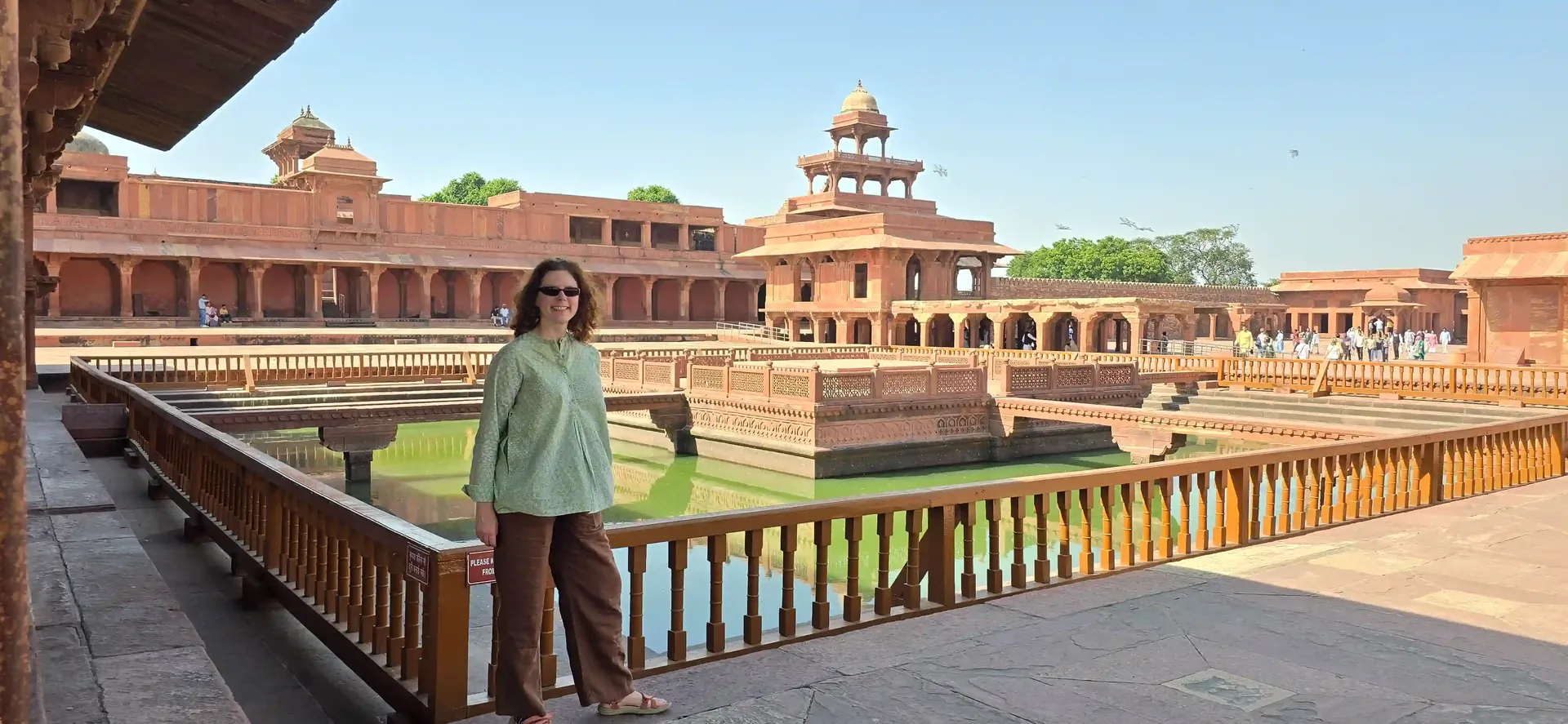
Fatehpur Sikri — The Abandoned Capital
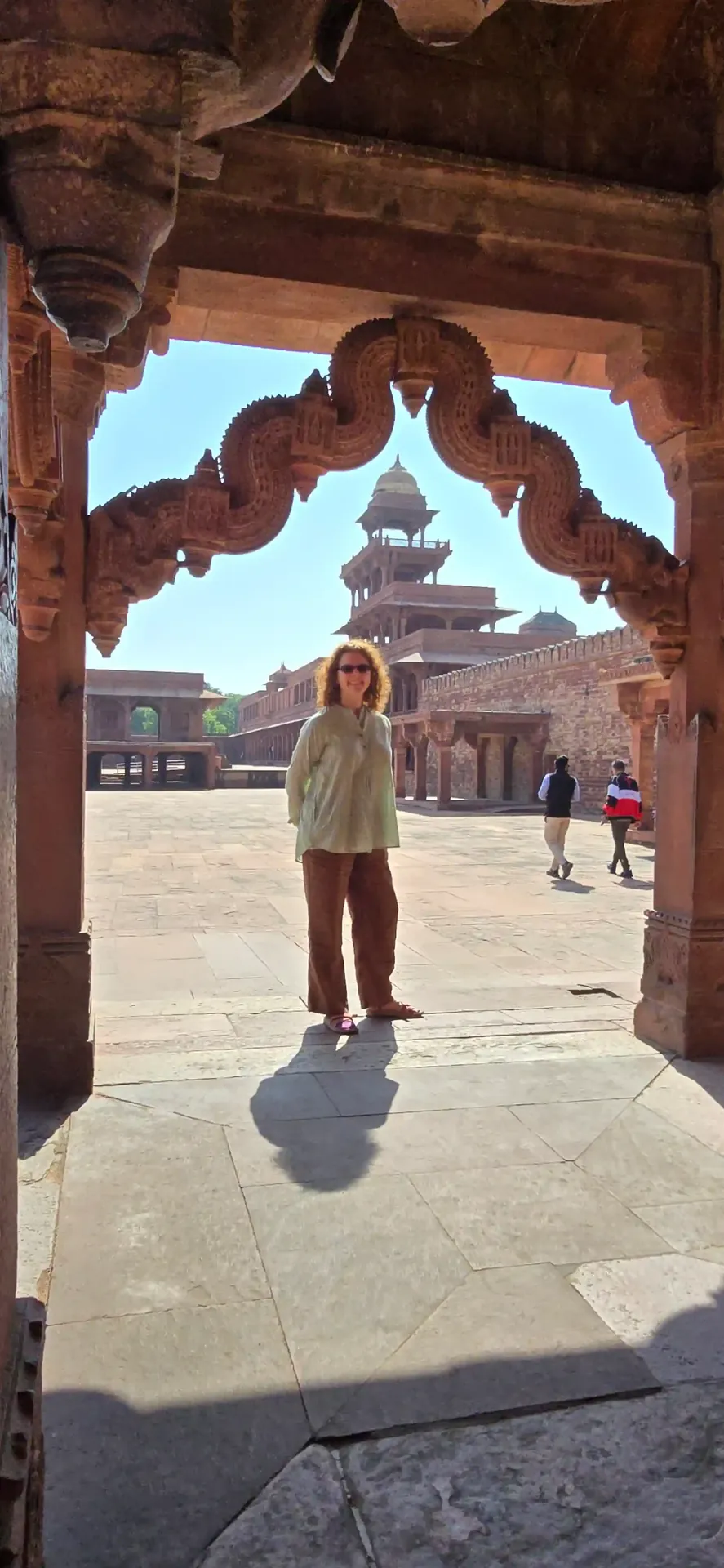
Forty kilometres from Agra, built entirely in red sandstone between 1571 and 1585, Fatehpur Sikri is one of the most perfectly preserved Mughal cities in existence — and one of the least understood. The Emperor Akbar built it as a new imperial capital, naming it after his victory over the Sultan of Gujarat at the Battle of Fateh. It was inhabited for only fourteen years before being abandoned, its water supply insufficient for the population it was designed to serve. Today it stands almost exactly as it was left — the Diwan-i-Khas, the Panch Mahal’s five-storey wind tower, the carved jali screens of the zenana (women’s quarters), the Buland Darwaza gateway which at 54 metres is the highest gateway in the world. Kamran spends particular time in the zenana, the spaces designed for and by the women of the court, discussing their political agency, their cultural production, and their daily lives as Kamran reads the architecture from the inside out.
Entry Included · UNESCO World Heritage · Women’s History Focus
08
Afternoon · Day 4
Drive to Jaipur via National Highway & Check-In
The drive from Fatehpur Sikri to Jaipur via National Highway 21 takes approximately four hours through the Rajasthan landscape — the scrub desert, the roadside dhabas, the camel carts, and the long straight highway that cuts through a terrain where the quality of the light changes completely from anything seen in Delhi or Agra. Kamran uses the drive as a contextual briefing for what lies ahead: the history of the Rajput clans, the political relationship between the Rajputs and the Mughal Empire, and the particular character of Jaipur as a planned city built in 1727 by the astronomer-king Jai Singh II. You arrive at a pre-vetted Jaipur hotel in the late afternoon, with time to walk the nearby streets independently for the first time using the confidence and tools from the Day One safety brief.
Scenic Highway Drive · Rajasthan Briefing · Pre-Vetted Hotel
Day Five — Jaipur & Departure
09
Morning · 8:00 AM
Amber Fort, Hawa Mahal & City Palace
Jaipur’s day begins with Amber Fort — the hilltop Rajput fortress-palace that served as the seat of the Kachwa clan for centuries, its succession of courts and apartments climbing the hillside above the Maota Lake. Kamran traces the extraordinary diplomatic career of the Rajput rulers who managed to maintain sovereignty within the Mughal Empire by intermarriage and alliance rather than conquest, and the remarkable women of the Rajput zenana whose purdah practice shaped the entire architectural vocabulary of the buildings we walk through. The Hawa Mahal — the five-storey ‘Palace of Winds’ built in 1799 with 953 latticed windows so that the women of the royal household could observe street processions without being seen — is one of the most politically legible buildings in India when read in context. The City Palace, still partially occupied by the royal family, closes the morning with a discussion of how Indian princely states navigated independence and modernity.
Entries Included · Women’s Architecture Focus · Photography Session
10
Afternoon · Day 5
Johari Bazaar, Jantar Mantar & Farewell
The afternoon of Day Five is intentionally the most independent segment of the circuit — an opportunity to apply everything the safety orientation provided on Day One in the most accessible and beautiful of Jaipur’s public spaces. Jantar Mantar, the UNESCO-listed open-air astronomical observatory built by Jai Singh II in 1734 — its nineteen instruments capable of measuring celestial time with an accuracy that outperformed every contemporary European instrument — occupies the first hour. Johari Bazaar, Jaipur’s historic jewellery and gemstone market, provides the afternoon’s independent exploration window: Kamran walks you through the street once, identifies the reliable dealers and the ones to avoid, explains the gemstone market dynamics, and then gives you an hour of completely unaccompanied exploration — the first in the circuit — with a confirmed meeting point and a WhatsApp check-in protocol. Your onward transfer to Jaipur airport or railway station departs from the hotel at the confirmed time. Within 72 hours of your final day, your 10 complimentary premium edited photographs are delivered digitally in high resolution.
Entry Included · Independent Exploration Hour · Photos in 72 hrs

Inclusions & Exclusions

✅ Package Inclusions

  • Private Safe AC Vehicle — All 5 Days: A fully private air-conditioned vehicle with a vetted, professional driver whose name, licence plate, and emergency contact details are shared with you in advance via WhatsApp before every transfer. Exclusively yours throughout the entire circuit — no shared transport at any point.
  • Airport, Hotel & Station Pickups & Drop-offs: All transfers throughout the circuit: IGI Airport Delhi arrival, hotel to hotel inter-city transfers, Fatehpur Sikri, and final departure from Jaipur Airport or Railway Station.
  • All Monument Entry Tickets: Jama Masjid, Humayun’s Tomb, Qutub Minar, Taj Mahal, Agra Fort, Mehtab Bagh, Fatehpur Sikri, Amber Fort, Hawa Mahal, City Palace, and Jantar Mantar — every entry fee for every site on the circuit fully pre-covered.
  • Old Delhi Private Rickshaw Ride: Private cycle rickshaw through Chandni Chowk and Khari Baoli on Day Two — dedicated to the group, not shared.
  • Solo Female Safety Orientation — Day One: A thorough, practical, India-specific solo female travel safety briefing covering neighbourhoods, transport, unwanted attention, digital tools, emergency contacts, cultural codes, and market navigation. Delivered in English or Spanish depending on preference.
  • Pre-Vetted Hotel Recommendations & Booking Assistance: Kamran recommends and assists with the booking of pre-vetted, solo-female-friendly hotels at each city stop — properties with strong front-desk safety practices, well-lit common areas, and positive track records for solo women travellers.
  • 10 Complimentary Premium Edited Photographs: Professional photography sessions woven into the circuit at Humayun’s Tomb, the Taj Mahal at dawn, Amber Fort, and Jaipur. All 10 images professionally edited and delivered digitally in high resolution within 72 hours of the final tour day.
  • 24/7 WhatsApp Access to Kamran: Kamran’s personal WhatsApp is available around the clock throughout the circuit for any question, concern, change of plan, or situation that requires immediate advice or assistance.
  • Government-Licensed Expert Guide — All 5 Days: Kamran Khan, Pan-India IITG licence holder, guiding all sessions in English and Spanish with deep specialist knowledge of Mughal history, Rajput heritage, women’s histories in Indian architecture, and contemporary India.
  • Chilled Water & Snacks In-Vehicle Daily: Mineral water and light snacks replenished in the vehicle on all travel days.

✕ Package Exclusions

  • International & Domestic Flights: Airfare to Delhi and onward from Jaipur (or return) is not included. Kamran coordinates with your travel arrangements for seamless airport arrival and departure.
  • Hotel Accommodation (Recommended & Assisted, Not Booked): Hotel costs at each city are not included in the package price. Kamran provides curated, pre-vetted recommendations and assists with bookings, but the accommodation cost itself is paid separately by you.
  • Meals (Except Day One Welcome Dinner): All meals beyond the Day One welcome dinner are at your own expense. Kamran recommends vetted, safe, and high-quality restaurants at every stop and can join you for meals on request.
  • Elephant or Horse Rides at Amber Fort: Optional local animal rides are available at the site at a direct local fee and are not part of the package. Kamran can advise on ethical options.
  • Personal Shopping & Souvenirs: Items purchased in bazaars, at heritage sites, or in craft shops are the personal expense of each participant. Kamran can advise on fair pricing and authentic quality throughout.
  • Personal Travel Insurance: Travel and medical insurance is the personal responsibility of each participant. For solo female travellers, comprehensive insurance including medical evacuation is strongly recommended.
  • Gratuities for Driver: Tips for the driver are entirely optional and at your discretion.

What Makes This Different

01
Built Specifically for Solo Women
This is not a standard Golden Triangle tour with a safety note appended. Every decision in this circuit — the driver vetting protocol, the pre-shared vehicle details, the 24/7 WhatsApp access, the Day One safety orientation, the hotel selection criteria, the deliberate independent hour on Day Five — has been designed around the specific experience and needs of a woman travelling alone in India for the first time or the tenth.
02
Women’s Histories Read Into the Architecture
The zenana at Fatehpur Sikri, the 953 windows of the Hawa Mahal, the purdah architecture of the Amber Fort, the role of empress Bega Begum in commissioning Humayun’s Tomb, and the political agency of Mughal and Rajput women — these are not footnotes in Kamran’s narration. They are central chapters. The monuments look different when the women who inhabited, commissioned, and shaped them are returned to the story.
03
Driver Identity Pre-Shared Every Time
Before every transfer, you receive via WhatsApp the full name, photograph, and vehicle registration of your driver. This is non-negotiable and applies to every single journey in the circuit — airport arrivals, inter-city drives, monument transfers. You never step into a vehicle without knowing exactly who is behind the wheel and having that information independently saved on your device.
04
Practical Safety, Not Restriction
The Day One safety orientation is not a list of things you cannot do. It is an actionable intelligence briefing — the kind that gives you the specific verbal strategies, digital tools, neighbourhood knowledge, and cultural understanding to move through India independently with confidence rather than anxiety. The goal is not to keep you safe by keeping you close. The goal is to equip you to be safe on your own.
05
Bilingual English & Spanish
Kamran is one of very few licensed guides in India who guides fluently in both English and Spanish. For solo women travellers from Spanish-speaking countries — Spain, Mexico, Argentina, Colombia, Chile, Peru, and beyond — every piece of contextual narration, every safety briefing, and every practical instruction is delivered in full in their own language, without loss of nuance.
06
500+ Five-Star Reviews — Many from Solo Women
Verified on Viator, GetYourGuide, and Airbnb by travellers from over 40 nationalities. A significant number of those reviews come from solo women travellers who specifically comment on the safety, the confidence the circuit gave them, and the quality of the historical narration. Read them before you book — they are the most accurate description of the experience available.

Practical Details

Duration
5 Full Days — Delhi, Agra & Jaipur
Day 1: Arrival Delhi & Safety Orientation · Day 2: Delhi full day · Day 3: Agra (Taj Mahal at sunrise, Agra Fort) · Day 4: Fatehpur Sikri, drive to Jaipur · Day 5: Jaipur & departure. Itinerary can be extended or adjusted on request.
Who This Tour Is For
Solo Women Travellers Only
This circuit is designed exclusively for women travelling alone — first-timers to India and experienced solo travellers alike. All experience levels welcome. No prior India knowledge required.
Languages
English & Spanish
Full bilingual narration and safety briefing throughout all 5 days. Hindi and Urdu also available in-context. Safety orientation delivered in whichever language you are most comfortable in.
Availability
All Year · 7 Days a Week
Available all year. The Taj Mahal is closed on Fridays. If your Day 3 falls on a Friday, Kamran adjusts the Agra schedule accordingly with no loss of content. Confirm your travel dates via WhatsApp and Kamran will build the circuit around your flights.
Meeting Point
IGI Airport, Delhi — Arrivals Gate
Share your flight number and terminal via WhatsApp. Kamran meets you personally at arrivals with a name board. Driver name, photo, and vehicle registration sent to you in advance. Zero ambiguity on arrival in a new country.
Photography Delivery
10 Edited Images · Within 72 Hours
Delivered via private download link in high-resolution JPEG, suitable for large-format print and social media. Includes Taj Mahal dawn, Amber Fort, Humayun’s Tomb, and Jaipur city photography.
What to Wear
Modest, comfortable, and layered
Modest dress (shoulders and knees covered) is required for Jama Masjid and significantly reduces unwanted attention across all cities. Lightweight fabrics that cover arms and legs are ideal — both for cultural reasons and for sun protection. Head covering required at Jama Masjid — provided by Kamran. Comfortable closed-toe walking shoes essential. Avoid displaying jewellery or expensive accessories in bazaar environments.
What to Bring — Items to Carry
Solo Female Packing Essentials
🔓 Safety & Digital Security (Non-Negotiable): Indian prepaid SIM card (purchase at Delhi airport arrivals — Kamran advises on which network; data is essential for maps and WhatsApp) · Phone fully charged on arrival with Kamran’s number already saved · Offline maps downloaded before departure (Google Maps offline for Delhi, Agra, and Jaipur) · Emergency contacts list saved on phone AND written on paper as backup · Travel insurance documentation including medical evacuation cover · Passport and one photocopy stored separately from the original · A small, cross-body bag worn in front in busy bazaar environments — not a backpack. 📸 Clothing for the Circuit: Lightweight full-length or midi-length trousers and skirts (2–3 pairs; quick-dry fabrics ideal) · Lightweight tops with sleeves covering shoulders · One warm layer for Delhi and Agra mornings (November–February can be 5–10°C at dawn) · Comfortable closed-toe walking shoes — the marble floors of the Taj Mahal require shoe removal at the inner gate; flip-flops or slip-ons for that transition are helpful · A lightweight scarf or dupatta — functional at the Jama Masjid and useful for deflecting unwanted attention in crowded areas · Sunglasses and a wide-brimmed hat or cap for outdoor monument visits. 💊 Health & Comfort: High SPF sunscreen (SPF 50+; monument courtyards have intense UV exposure) · Insect repellent (particularly for the Delhi and Agra evenings) · Oral rehydration salts (ORS) sachets — essential for staying hydrated in the heat · Personal prescription medications with pharmacy labels · Small personal first-aid kit (paracetamol, antidiarrheal, antiseptic wipes, blister plasters) · Hand sanitiser · Feminine hygiene products — these are available in India but selecting in an unfamiliar pharmacy is easier avoided; bring sufficient supply. 📷 Electronics & Documents: Personal camera or smartphone with ample storage · Minimum 1 portable power bank (days run long; charging opportunities at monuments are zero) · Universal travel adaptor (India uses Type C, D, and M sockets) · Cash in Indian Rupees for bazaar shopping and personal expenses (ATMs are available in all three cities; Kamran advises on safe locations) · A small notebook — Kamran’s narration is dense; many guests find it useful to note things they want to research later. ✓ Provided — Do Not Pack: Mineral water and snacks — in vehicle throughout · All monument entry tickets — pre-covered · Head coverings for Jama Masjid — provided by Kamran · Printed 5-day circuit programme — provided Day One · Driver details before every transfer — sent via WhatsApp.
Reserve Your Circuit
Solo Female Safe Travel Circuit
  • Private safe AC vehicle — all 5 days
  • All monument entry tickets (11 sites)
  • Driver identity pre-shared every transfer
  • Day One solo female safety orientation
  • Pre-vetted hotel recommendations
  • 10 complimentary premium edited photos
  • 24/7 WhatsApp access to Kamran
  • IITG-licensed bilingual guide (EN & ES)
📞 Book via WhatsApp ← Back to Main Website
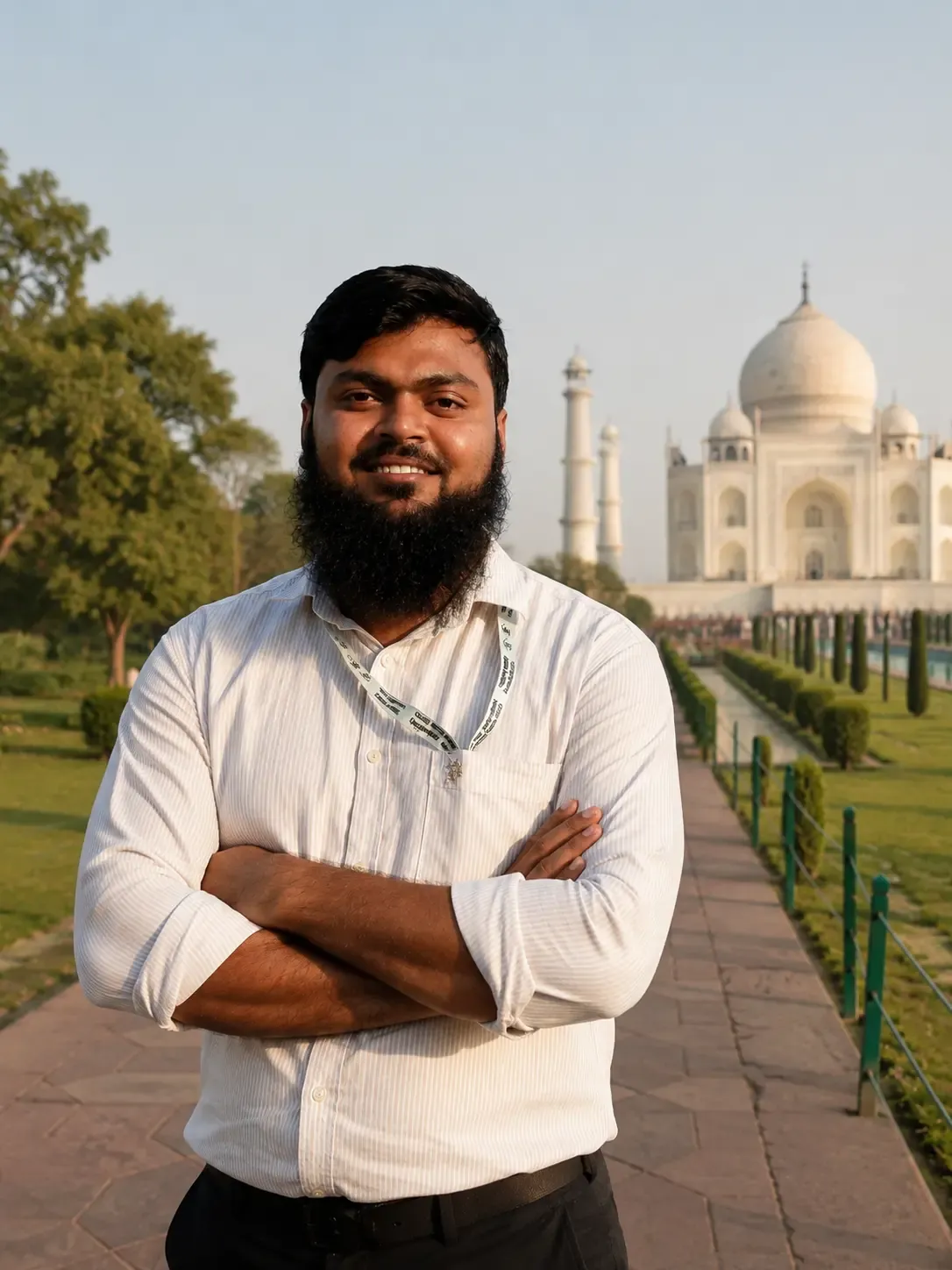
Kamran Khan, government-licensed tour guide, standing in front of the Taj Mahal
IITG Govt. Licensed

Kamran Khan

I have guided solo women from over 40 nationalities through India over more than a decade, and I have thought carefully about what that experience requires — not just the monuments, the history, the food, and the language, but the specific confidence and intelligence that a woman travelling alone in India needs to move through this country freely and without anxiety. The safety orientation I deliver on Day One has been refined through hundreds of conversations with guests about what actually worked, what they wished they had known, and what made the difference between a trip that felt precarious and one that felt empowering.

I hold a Government Pan-India IITG licence — the highest certification in Indian tourism — and I guide entirely in English and Spanish. My specialist interest in the roles of women in Mughal and Rajput history — the empresses, the architects, the poets, the regents, the women whose names appear in no guidebook but whose decisions shaped the buildings we walk through — means that this circuit is not a standard Golden Triangle tour. It is a different reading of the same landscape. More complete. More honest.

The goal of this circuit is not to keep you safe by keeping you managed. The goal is to send you home from India with the knowledge, the experience, and the confidence to come back and do it entirely alone.

English Español हिन्दी اردو