Full Day · Private · Colonial & Contemporary

No city in India contains more contradictions per square kilometre than Mumbai. A Victorian Gothic university stands beside a Mughal-era mosque. The world’s largest open-air laundry operates in the shadow of a Bollywood film studio. A UNESCO World Heritage railway terminus handles more passengers each day than the entire rail network of Australia. This private full-day tour navigates all of it — the colonial grandeur of South Bombay, the raw energy of Dharavi, the ancient rock-cut temples of Elephanta — guided in English and Spanish by a licensed expert who knows which story is hidden inside every stone.

Book via WhatsApp

Instant reply · Private tour · Hotel pickup · Ferry tickets included
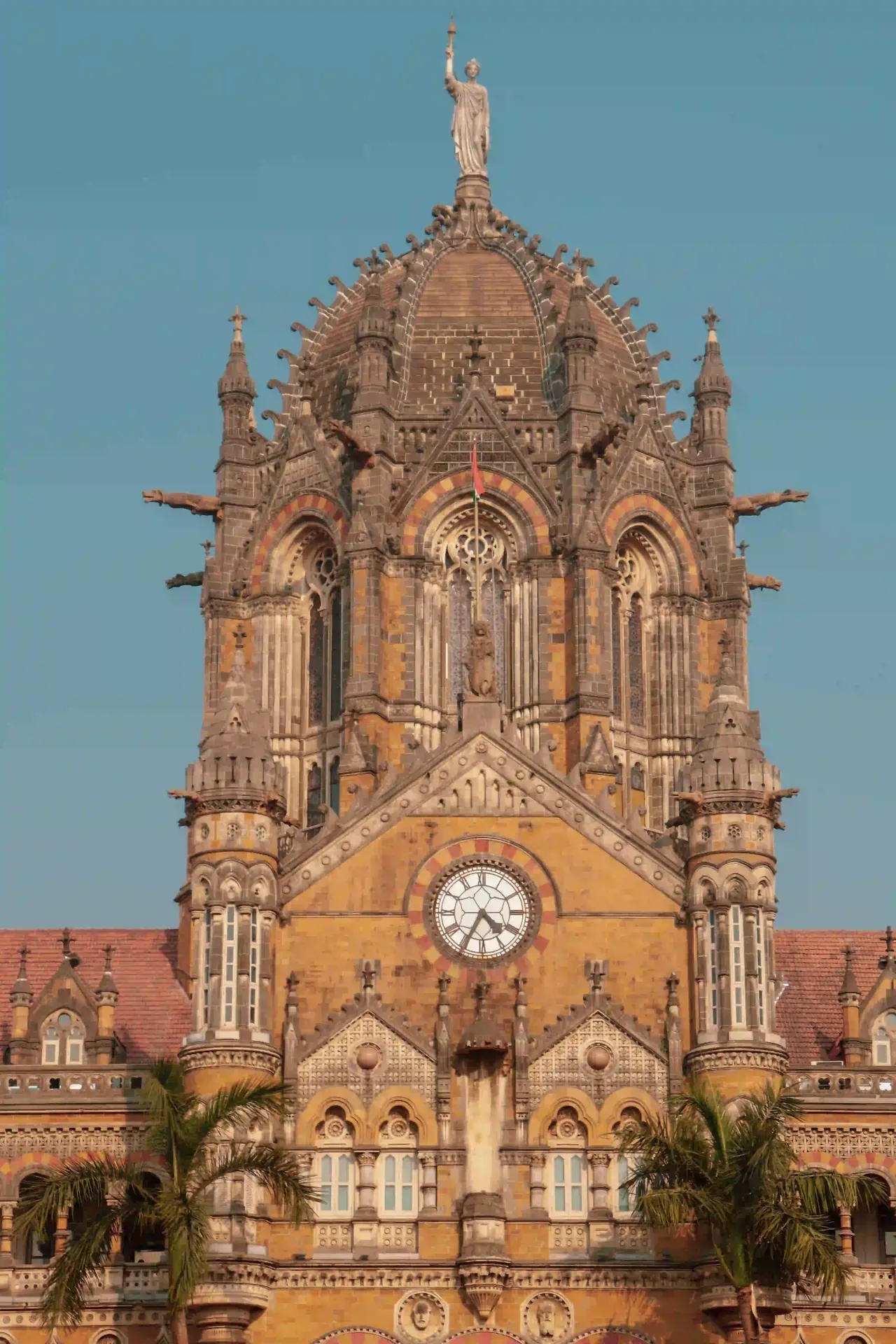
Chhatrapati Shivaji Terminus, Mumbai's Gothic railway station
Full Day Highlights
  • UNESCO Heritage District
  • Dharavi & Dhobi Ghat
  • Elephanta Caves by Ferry
  • Colaba & Crawford Market
🏛
6 Heritage SitesMonuments & entry included
⛽
Ferry to ElephantaReturn tickets covered
🚘
AC Vehicle All DayPrivate door-to-door
🧭
Licensed GuidePan-India IITG certified
⏱
Full Day8 AM – 7 PM

One Day Inside Two Hundred Years of Bombay

Mumbai is not one city — it is at least four, layered on top of each other across two centuries of empire, migration, industry, and reinvention. This itinerary moves deliberately through each layer: the colonial administrative city, the ancient island cave temples, the industrial washing ghats, the world’s most-discussed urban settlement, and the cosmopolitan art deco waterfront. Each stop explains the one before it.

01
Morning · 8:00 AM
Hotel Pickup & Mumbai Briefing
Your private AC vehicle collects you from your Mumbai hotel. En route, Kamran lays the essential foundation: the seven islands that were joined by British land reclamation between 1784 and 1845 to create the peninsula that is modern South Mumbai; the successive waves of communities — Parsi, Gujarati, Maratha, Maharashtrian, South Indian, and East African — that each built a distinct layer of the city’s cultural identity; and the economic trajectory from cotton-trading port to the financial capital of a billion-person democracy. You will not see a single building the same way after this ten-minute brief.
Private Pickup · Historical Foundations
02
Morning · 8:45 AM
Dhobi Ghat — The Open-Air Laundry
We begin at one of Mumbai’s most arresting sights — and one of the most misunderstood. Dhobi Ghat is the world’s largest open-air laundry: a grid of over 700 concrete wash pens in which approximately 7,000 dhobis (washermen) process the laundry of Mumbai’s hospitals, hotels, and households every single day. The operation has run continuously since the 1890s. From the overbridge, the scene below is remarkable: rows of men beating wet cloth against stone, rows of lines heavy with white sheets drying in the early sun, the specific rhythmic sound of cloth on stone that has not changed in 130 years. Kamran explains the caste economy of the dhobi community, the logistics of a city-scale industrial operation with no machinery, and why this is one of the most photographed — and least understood — sights in India.
Iconic Mumbai · Since the 1890s
03
Morning · 9:45 AM
Dharavi — Inside the City Within a City
Dharavi is one of the most complex, misrepresented, and extraordinary urban environments on earth. It is not a slum in the way the word is typically understood in the West: it is a self-sufficient urban township of approximately one million people spread across 2.39 square kilometres, containing over 5,000 registered businesses, 15,000 single-room factories, and an informal economy estimated at over one billion US dollars per year. We enter the recycling district — where every form of industrial and domestic waste collected from across Mumbai is sorted, processed, and resold — and the pottery colony of Kumbharwada, where a community of potters from Gujarat has produced traditional red terracotta pots by hand on foot-driven wheels since the 1920s. Kamran ensures complete dignity and respect throughout, and explains both the economic reality and the political complexity of Dharavi’s contested future.
Respectful Access · Economic Reality
04
Late Morning · 11:15 AM
Chhatrapati Shivaji Maharaj Terminus
The railway station formerly known as Victoria Terminus — completed in 1888 and designated a UNESCO World Heritage Site in 2004 — is the greatest single work of Victorian Gothic architecture in Asia. Its architect, Frederick William Stevens, spent ten years fusing the pointed arches and flying buttresses of 13th-century Gothic cathedrals with the domes, turrets, and decorative motifs of Indian Mughal and Maratha architecture into a building that manages to be both monumental and intricate at the same time. The result is a railway station that handles more than three million passengers per day — more than the entire rail networks of several European countries combined — and that has been in continuous operation since the year of its completion. Kamran walks you through the exterior stonework, the dome and its allegorical statuary, the gargoyles that are half-English griffin and half-Indian tiger, and explains why this building remains the most important single document of colonial-era Mumbai.
UNESCO World Heritage · Ticket Included
05
Midday · 12:30 PM
Lunch in South Bombay
A sit-down lunch at a carefully selected restaurant in the Fort or Colaba district, chosen to reflect Mumbai’s unique culinary character — a city where Parsi dhansak (lentil and meat stew with brown rice), Maharashtrian vada pav (the definitive Mumbai street snack, elevated here to a sit-down version), Konkan seafood, and Irani café bun maska exist within a ten-minute walk of each other. Kamran uses the pause to contextualise the afternoon: the ferry crossing to Elephanta, the significance of the cave temples, and what to look for in the rock-cut sculpture that dates to the 5th–8th century. Lunch cost is not included in the package and is paid directly at the restaurant.
Heritage Restaurant · Lunch Not Included
06
Afternoon · 2:00 PM
Gateway of India & Ferry Departure
The Gateway of India is the defining monument of colonial Mumbai: a 26-metre basalt arch in the Indo-Saracenic style, built to commemorate the visit of King George V and Queen Mary in 1911, and completed in 1924. Its supreme historical irony is that the last British troops to leave India at Independence in 1948 marched through this same gate — the arch built to celebrate imperial arrival was used to mark imperial departure. Kamran explains the layered significance of this geography: the Taj Mahal Palace Hotel behind it, built in 1903 by the Parsi industrialist Jamsetji Tata partly in response to being refused entry to a European-only hotel; the harbour that was the gateway to empire for two centuries. From the jetty directly beside the Gateway, we board the government ferry for the 40-minute crossing to Elephanta Island.
Ferry Ticket Included · Return Journey
07
Afternoon · 3:00 PM
Elephanta Caves — 6th-Century Rock-Cut Temples
The Elephanta Caves are among the most significant works of sacred art and architecture in the entire Indian subcontinent — and among the least-explained to visitors. Excavated from the volcanic basalt of Gharapuri Island between the 5th and 8th centuries CE, the cave complex is dedicated to the god Shiva and contains some of the finest rock-cut sculpture of the ancient Hindu world. The centrepiece is the Trimurti — a six-metre high triple portrait of Shiva as creator, preserver, and destroyer, considered one of the supreme masterpieces of Indian sculpture, comparable in artistic achievement to the greatest works of ancient Greece or Renaissance Italy. Kamran decodes the iconography in depth: the significance of each facial expression, the attributes held in each of the deity’s many hands, the narrative of each carved panel, and the astronomical orientation of the main cave that aligns with the rising sun at the winter solstice. The caves were designated a UNESCO World Heritage Site in 1987.
UNESCO World Heritage · Entry Ticket Included
08
Late Afternoon · 5:00 PM
Return Ferry & Colaba Causeway
The return ferry brings us back to the Gateway of India as the afternoon light softens over the harbour. We walk north along the Colaba Causeway — South Mumbai’s most characterful street — past the Sassoon Docks (Mumbai’s oldest docks, used since the 1870s), the Afghan Memorial Church of St. John the Evangelist (1858, built to commemorate British soldiers killed in the First Anglo-Afghan War), and into the atmospheric lanes of Colaba itself: the antique dealers, the old Irani cafés, the Bollywood poster shops, the narrow alleyways where the city’s fishing community has lived for three centuries. Kamran identifies the architectural styles — Gothic Revival, Art Deco, Portuguese colonial, and Chawl tenement — that mark Colaba as a compressed record of everything Mumbai has been.
Walking District · Architectural Survey
09
Evening · 6:15 PM
Marine Drive & Art Déco Sunset
We end the day at Marine Drive — the sweeping 3.6-kilometre seafront promenade that curves around Back Bay from Nariman Point to Chowpatty Beach, flanked by what is collectively the largest surviving concentration of Art Déco architecture in the world outside of Miami’s South Beach. The Marine Drive–Oval Maidan ensemble was designated a UNESCO World Heritage Site in 2018. The buildings — constructed between the 1930s and 1950s — display the full vocabulary of Bombay Deco: the sunburst motifs, the streamlined corners, the terrazzo lobbies, the exterior decorative friezes that blend European modernism with Indian iconographic motifs. At sunset, when the entire west-facing arc of the seafront catches the last light off the Arabian Sea, this is one of the most beautiful urban views in India. Kamran points out the specific buildings, explains the Indian architects who adapted the style, and closes the day with the larger story of what this remarkable city has built — and why it keeps building.
UNESCO World Heritage · Sunset Viewing
10
Evening · 7:00 PM
Hotel Drop-off & Kamran’s Personal List
Your private vehicle returns you to your hotel. Before you part, Kamran gives you his personal written recommendations for Mumbai — the Irani café for breakfast, the best Crawford Market vendors for spices and dry fruit, the specific buildings in the Fort precinct that most visitors walk past, the evening street food strip on Chowpatty Beach, and the restaurants in Bandra and Khar that represent the new wave of Mumbai cooking. This is not a generic list; it is built from years of professional knowledge of the city and is given with complete transparency about quality and value. One day inside Mumbai opens the door. The list is for every day that follows.
Hotel Drop-off · Personal Recommendations

Inclusions & Exclusions

✅ Package Inclusions

  • Private AC Vehicle All Day: Full-day private air-conditioned transportation with a professional driver, covering all road transfers between sites across Mumbai from hotel pickup to final drop-off.
  • Hotel Pickup & Drop-off: Door-to-door service from and to your Mumbai accommodation anywhere within the city limits.
  • Return Ferry Tickets to Elephanta: Government ferry return tickets from the Gateway of India jetty to Elephanta Island and back, including the toy-train fare on the island.
  • All Monument & Cave Entry Tickets: Entry to Elephanta Caves (UNESCO) and Chhatrapati Shivaji Maharaj Terminus (UNESCO) observation access. All site fees are fully covered.
  • Government Licensed Bilingual Guide: Full-day service by Kamran Khan in English and Spanish. Pan-India IITG licence — the highest certification in Indian tourism, currently held at Silver level. Expert in colonial history, Hindu iconography, urban economics, and Bombay film culture.
  • Water & Refreshments En Route: Mineral water and light refreshments provided throughout the day in the vehicle. Essential in Mumbai’s humidity.
  • Kamran’s Personal Mumbai Recommendations: A written list of Kamran’s own favourite restaurants, cafés, markets, and architectural walking routes in Mumbai for your independent exploration.

✕ Package Exclusions

  • Lunch: Meal costs at the selected South Bombay restaurant are not included. Kamran chooses the venue for quality and authenticity; you pay directly. Budget approximately ₹500–1,000 per person for a full meal with drinks.
  • Airport Transfers: The private vehicle covers all site-to-site transfers during the tour day. Separate airport pickup or drop-off is available on request and priced additionally.
  • Personal Purchases: Any items purchased in Colaba, Crawford Market, or Dharavi’s cooperative workshops are at your discretion and paid directly to vendors.
  • Camera Fees at Elephanta: A separate still or video camera fee (approximately ₹25–50) is charged at the Elephanta Caves entrance for professional camera equipment. Smartphone photography is free.
  • Gratuities: Optional and entirely at your discretion for the driver and guide.

What Makes This Different

01
Three UNESCO Sites in One Day
Elephanta Caves, Chhatrapati Shivaji Terminus, and the Marine Drive Art Déco precinct are all UNESCO World Heritage Sites. No other city tour in India covers three UNESCO designations in a single itinerary, spanning 1,500 years of built history.
02
Dharavi With Context
Most Dharavi visits are voyeuristic. Kamran approaches it as an economist and urban historian — with full community respect — explaining the recycling economy, the pottery cooperative, and the political stakes of its contested future. You leave understanding, not just having looked.
03
Iconography Decoded
The Trimurti at Elephanta is one of the greatest sculptures ever made. Most visitors photograph it and move on. Kamran reads the entire panel — every facial expression, every hand attribute, every narrative scene — turning rock into one of the most meaningful art experiences you will have anywhere.
04
Bilingual English & Spanish
Kamran speaks fluent English and Spanish — genuinely rare in Mumbai. Spanish-speaking travellers experience the colonial architecture, cave temples, and urban complexity of this city entirely in their own language, at full depth and with no nuance lost.
05
Entirely Private
No shared buses, no group timelines, no strangers. The itinerary is structured but not rigid — if you want to spend an extra hour at Elephanta or take a longer walk through Colaba, the day adjusts around you. The private vehicle is yours throughout.
06
500+ Five-Star Reviews
Verified reviews on Viator, GetYourGuide, and Airbnb from travellers across 40+ nationalities — all five stars. Read them before you book.

What Travellers Say

Reviews from travellers across 40+ nationalities on Viator, GetYourGuide, and Airbnb.

Viator
★★★★★

“I had one day in Mumbai and I cannot imagine having spent it any other way. Dharavi with Kamran’s context is not what you expect at all — it is one of the most fascinating economic stories I have encountered anywhere in the world. Elephanta was genuinely revelatory. Kamran’s explanation of the Trimurti sculpture brought me to tears. Book this immediately.”

Rachel & Ben O.
Sydney, Australia
GetYourGuide
★★★★★

“Three UNESCO sites in one day — and each one felt completely different and completely understood. What impressed me most was how Kamran connected everything: the Victorian railway station, the medieval cave temples, the Art Déco seafront all became part of one coherent story of this astonishing city. The ferry at sunset was unforgettable.”

Heinrich & Petra M.
Munich, Germany
Airbnb
★★★★★

“Hicimos el tour entero en español y fue absolutamente perfecto. Kamran habla un español fluido y preciso — no el español básico de un guía turístico. Dhobi Ghat, Dharavi, las cuevas, Marine Drive: todo tuvo sentido porque él nos dio las claves antes de llegar. Mumbai es enorme y complicada. Con Kamran, la entiendes.”

Alejandro & Valeria C.
Bogotá, Colombia
⭐
ViatorTop Rated Experience
🌟
GetYourGuide5.0 · 200+ Reviews
🏠
AirbnbSuperhost Experience
🇿🇷
TripAdvisorCertificate of Excellence
🏢
IITG LicensedPan-India Govt. Certified

Practical Details

Duration
Full Day — Approx. 11 Hours
8:00 AM – 7:00 PM. The Elephanta ferry schedule is fixed by the government (departures hourly from approx. 9 AM; last return ferry at 5:30 PM). Kamran structures the itinerary to align perfectly with ferry timings.
Group Size
1 to 6 Persons
Entirely private. Larger groups on request — please enquire via WhatsApp for group availability and vehicle options.
Languages
English & Spanish
Hindi and Marathi also available for local interaction. Kamran can communicate directly with Dharavi community members in Hindi for authentic exchanges.
Availability
All Year · 7 Days a Week
Last-minute bookings welcome. Note: The Elephanta ferry does not operate on days of extreme weather (monsoon closures). In the event of a ferry cancellation, Kamran substitutes with alternative South Bombay sites of equal significance.
Meeting Point
Hotel Pickup — All Mumbai Areas
Share your hotel name and address via WhatsApp. Kamran collects from South Bombay, Bandra, Juhu, Andheri, and all airport-adjacent areas. If arriving by train at CST or Dadar, pickup directly from the station is available.
Best Season
October – March (Peak Season)
Mumbai is a year-round destination. October to March offers lower humidity and reliable dry weather. June to September is monsoon season — the city is dramatic and atmospheric in the rain, but the Elephanta ferry may be affected on heavy-rain days.
What to Bring
Items to Carry on the Day
Essential items: • Lightweight, breathable clothing — Mumbai’s humidity is significant year-round, peaking in the monsoon. Loose cotton or linen is strongly recommended. Avoid synthetic fabrics

• Covered shoulders and modest clothing — required for entry to Elephanta Caves (a sacred Hindu monument). Sleeveless tops are acceptable with a scarf or light layer

• Comfortable, closed-toe walking shoes — Elephanta involves a 500-metre uphill walk on stone stairs from the jetty to the cave entrance; Dharavi lanes are narrow and uneven

• Sea legs for the ferry — the Elephanta crossing takes 40 minutes each way across open harbour. The boat rocks. If you are prone to motion sickness, bring seasickness tablets and take them 30 minutes before departure

• High-SPF sunscreen and a hat or cap — the ferry crossing, the Elephanta island walk, and Marine Drive are fully exposed to direct sun. Mumbai’s sun is intense even in winter

• A light rain layer or travel umbrella — even in the dry season, Mumbai can produce brief sharp showers. During monsoon season (June–September), a proper waterproof jacket is essential

• Cash in Indian Rupees (INR) — for lunch, any personal purchases in Colaba or Crawford Market, and small temple donations at Elephanta. Budget ₹1,000–2,000 in cash for the day beyond the tour cost

• A secure crossbody bag or daypack — Colaba and the ferry jetty are busy areas. Keep your valuables in a secure, front-facing bag. Avoid back pockets in crowded streets

• Smartphone or camera with a weatherproof case — the ferry spray, monsoon rain, and general Mumbai humidity can be hard on unprotected electronics. A waterproof phone case or dry bag is strongly advised

• Insect repellent — Elephanta Island has mosquitoes, particularly in and around the cave interiors in the late afternoon. A DEET-based spray or natural alternative is recommended

• Government-issued photo ID — passport or a clear photo of it on your phone is required for Elephanta Caves entry for foreign nationals

• An open schedule for the evening — the tour ends at Marine Drive at sunset. Many travellers choose to stay for dinner in Colaba or a walk along Chowpatty Beach rather than returning immediately to their hotel. Kamran’s recommendation list tells you exactly where to go.
Reserve Your Spot
Mumbai Heritage & Culture Tour
  • Private AC vehicle all day
  • Hotel pickup & drop-off anywhere in Mumbai
  • Return ferry tickets to Elephanta Island
  • Elephanta Caves & CST entry tickets
  • Dharavi & Dhobi Ghat guided access
  • Government-licensed bilingual guide
Book via WhatsApp ← Back to Main Website
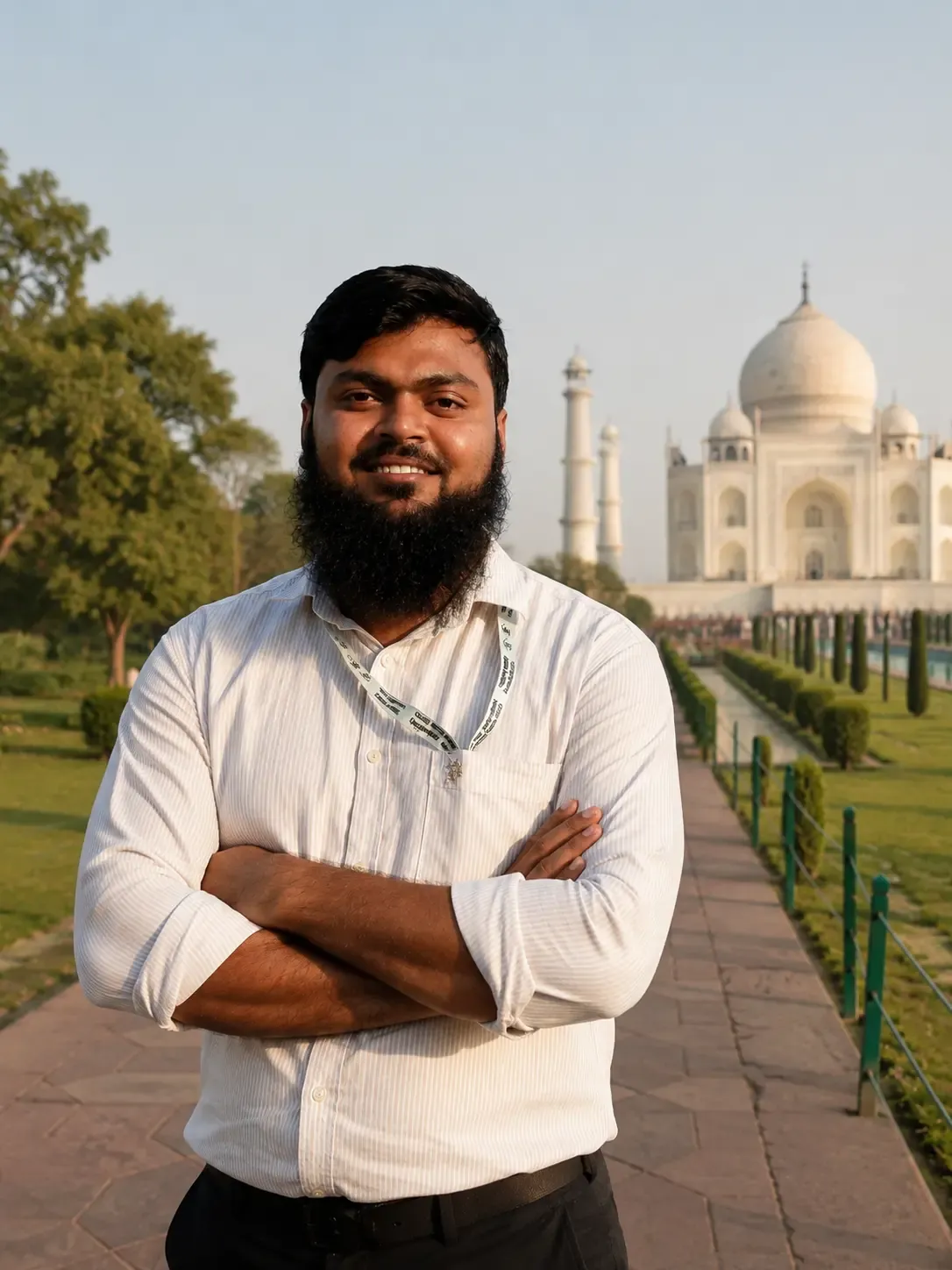
Kamran Khan, government-licensed tour guide, standing in front of the Taj Mahal
IITG Govt. Licensed

Kamran Khan

Mumbai is the only city in India — perhaps the only city in the world — where a 6th-century rock-cut Hindu temple, a 19th-century Victorian Gothic railway station, a 20th-century Art Déco seafront, and one of the world’s largest informal urban economies all exist within a single boat ride of each other. Most people see the postcard. I show you the whole story.

I hold a Government Pan-India IITG licence — the highest certification in Indian tourism — and I have guided more than 500 tours across Mumbai, Delhi, and Rajasthan over more than a decade. My approach to Dharavi is built on years of relationships with community members and cooperatives. My interpretation of Elephanta is built on years of study of Hindu iconographic tradition. Neither can be replicated from a guidebook.

The Trimurti at Elephanta is a six-metre portrait of a god. It was carved over fifteen centuries ago by artists whose names we do not know, for worshippers who sailed out from the mainland at dawn to pray in a cave on an island in the Arabian Sea. When I explain what it means and how it was made, the distance between you and those artists collapses. That is what I am here to do.

English Español हिन्दी मराठी