Full Day · Private · Himalayan · Tibetan Buddhism & Colonial Heritage
Día Completo · Privado · Himalaya · Budismo Tibetano y Patrimonio Colonial

The
Himalayan
Peace Trail

El Sendero
de la Paz
Himalayo

At 1,457 metres in the Kangra Valley of the Dhauladhar range, Dharamshala and McLeodganj hold one of the most improbable confluences of history on earth: a Victorian hill station built by the British in the 1850s, a seat-in-exile of the Dalai Lama and the government of Tibet established in 1959, and a living Tibetan monastic culture transplanted from the Himalayan plateau into the Indian foothills. The mountain air carries prayer flags and diesel smoke in equal measure. This private full-day trail moves through every layer — ancient temples, colonial churches, living monasteries, painted thangkas, and the ridge walk that reveals the full arc of the Dhauladhar peaks — guided in English and Spanish by a licensed expert who knows every story the stones hold.

A 1.457 metros en el valle de Kangra de la cordillera Dhauladhar, Dharamshala y McLeodganj albergan una de las confluencias históricas más improbables del planeta: una estación de montaña victoriana construida por los británicos en la década de 1850, la sede del gobierno tibetano en el exilio y del Dalai Lama establecida en 1959, y una cultura monástica tibetana viva trasplantada de la meseta himalaya a las estribaciones indias. El aire de la montaña transporta banderas de oración y humo de diésel a partes iguales. Este sendero privado de un día completo recorre cada capa — templos antiguos, iglesias coloniales, monasterios vivos, thangkas pintados y el paseo de la cresta que revela el arco completo de los picos Dhauladhar — guiado en inglés y español por un experto con licencia oficial que conoce cada historia que guardan las piedras.

Book via WhatsApp Reservar por WhatsApp

Instant reply · Private tour · Hotel pickup · All monastery entries included
Respuesta inmediata · Tour privado · Recogida en hotel · Entradas a monasterios incluidas

Dharamshala and McLeodganj Peace Trail — Tibetan prayer flags over the Dhauladhar range with monasteries and colonial heritage
Trail Highlights
Lo Mejor del Sendero
  • Dalai Lama Temple ComplexTemplo del Dalai Lama
  • Tibetan Monastery & MonksMonasterio Tibetano y Monjes
  • Bhagsu Waterfall TrailSendero a la Cascada de Bhagsu
  • Colonial St. John’s ChurchIglesia Colonial St. John
🛒
Monastery EntriesAll temple fees covered
Entradas MonasterioTodas las tarifas incluidas
🏔
Mountain WalkingRidge & waterfall trail
Caminata en MontañaCresta y cascada
🚘
AC Vehicle All DayPrivate door-to-door
Vehículo AC Todo el DíaPrivado puerta a puerta
🧭
Licensed GuidePan-India IITG certified
Guía CertificadoIITG oficial panindiano
Full Day8 AM – 6 PM
Día Completo8:00 – 18:00 h

One Day Across Two Centuries & Two Civilisations

Un Día a Través de Dos Siglos y Dos Civilizaciones

Dharamshala and McLeodganj are two settlements on the same ridge, separated by nine kilometres and separated by an entire world of meaning. The lower town is a working Indian district. The upper town is simultaneously a Himalayan village, a Tibetan government-in-exile, an international Buddhist pilgrimage destination, and the residence of the 14th Dalai Lama. This trail moves through both — and through the colonial layer that preceded them both — to reveal the complete, extraordinary palimpsest of this mountain place.

Dharamshala y McLeodganj son dos asentamientos en la misma cresta, separados por nueve kilómetros y separados por un mundo entero de significado. La ciudad baja es un barrio indio vivo. La ciudad alta es simultáneamente un pueblo himalayo, un gobierno tibetano en el exilio, un destino de peregrinación budista internacional y la residencia del 14º Dalai Lama. Este sendero recorre ambos — y la capa colonial que los precedió a ambos — para revelar el completo y extraordinario palimpsesto de este lugar de montaña.

01
Morning · 8:00 AM
Mañana · 8:00 AM
Hotel Pickup & The Two Cities Briefing
Recogida en Hotel e Introducción a las Dos Ciudades
Your private vehicle collects you from your Dharamshala or McLeodganj hotel. En route to the first stop, Kamran lays the essential historical foundation that turns everything that follows from sightseeing into genuine understanding. The British hill station of Dharamshala was established in 1849 after the annexation of the Punjab — the same administrative logic that created Shimla, Mussoorie, and Ooty: move the colonial government to the cool hills in summer. The settlement was largely destroyed by a catastrophic earthquake in 1905 and rebuilt in the lower town. Then, in 1959, the Dalai Lama Tenzin Gyatso fled Tibet following the Chinese military occupation and was granted asylum by the Indian government in Dharamshala. The upper village of McLeodganj — abandoned by the British after the earthquake — became the seat of the Tibetan Government-in-Exile. Kamran traces both timelines and explains why this small Himalayan ridge became one of the most politically and spiritually significant places in 20th-century Asia.
Tu vehículo privado te recoge en tu hotel de Dharamshala o McLeodganj. De camino a la primera parada, Kamran sienta las bases históricas esenciales que convierten todo lo que sigue de turismo en comprensión genuina. La estación de montaña británica de Dharamshala se estableció en 1849 tras la anexión del Punjab — la misma lógica administrativa que creó Shimla, Mussoorie y Ooty: trasladar al gobierno colonial a las frescas colinas en verano. El asentamiento fue destruido en gran parte por un catastrófico terremoto en 1905 y reconstruido en la ciudad baja. Entonces, en 1959, el Dalai Lama Tenzin Gyatso huyó del Tíbet tras la ocupación militar china y el gobierno indio le concedió asilo en Dharamshala. El pueblo alto de McLeodganj — abandonado por los británicos tras el terremoto — se convirtió en la sede del Gobierno Tibetano en el Exilio. Kamran traza ambas líneas temporales y explica por qué esta pequeña cresta himalaya se convirtió en uno de los lugares política y espiritualmente más significativos del Asia del siglo XX.
Private Pickup · Historical Foundations Recogida Privada · Bases Históricas
02
Morning · 8:45 AM
Mañana · 8:45 AM
St. John in the Wilderness — The Colonial Elegy
St. John in the Wilderness — La Elegía Colonial
We begin not with the Tibetan layer but with the British one — because to understand what McLeodganj became, you must first understand what it was. St. John in the Wilderness is one of the finest surviving examples of Victorian Gothic neo-Gothic church architecture in the Indian Himalaya. Built in 1852 entirely from local deodar cedar and grey stone, it sits in a forest of ancient deodars above the lower town, surrounded by the graves of British administrators, soldiers, and their families who died in the hills far from home. The church was severely damaged by the 1905 earthquake but its tower — and the grave of Lord Elgin, Viceroy of India, who died at Dharamshala in 1863 — survived intact. Kamran reads the gravestones as a social document, explaining the lives encoded in the epitaphs: the ages, the regiments, the causes of death, and the extraordinary distances these individuals had travelled to end their lives on an Indian mountain ridge.
Comenzamos no con la capa tibetana sino con la británica — porque para entender lo que McLeodganj llegó a ser, primero debes entender lo que era. St. John in the Wilderness es uno de los mejores ejemplos supervivientes de arquitectura neogótica victoriana en el Himalaya indio. Construida en 1852 íntegramente con cedro deodar local y piedra gris, se asienta en un bosque de deodar ancestrales sobre la ciudad baja, rodeada de las tumbas de administradores, soldados británicos y sus familias que murieron en las colinas lejos de casa. La iglesia quedó gravemente dañada por el terremoto de 1905, pero su torre — y la tumba de Lord Elgin, Virrey de la India, que murió en Dharamshala en 1863 — sobrevivieron intactos. Kamran lee las lápidas como documento social, explicando las vidas codificadas en los epítafes: las edades, los regimientos, las causas de muerte y las extraordinarias distancias que habían recorrido estos individuos para terminar sus vidas en una cresta de montaña india.
Colonial Heritage · Built 1852 Patrimonio Colonial · Construida en 1852
03
Morning · 10:00 AM
Mañana · 10:00 AM
Tsuglagkhang Complex — The Dalai Lama’s Temple
Complejo Tsuglagkhang — El Templo del Dalai Lama
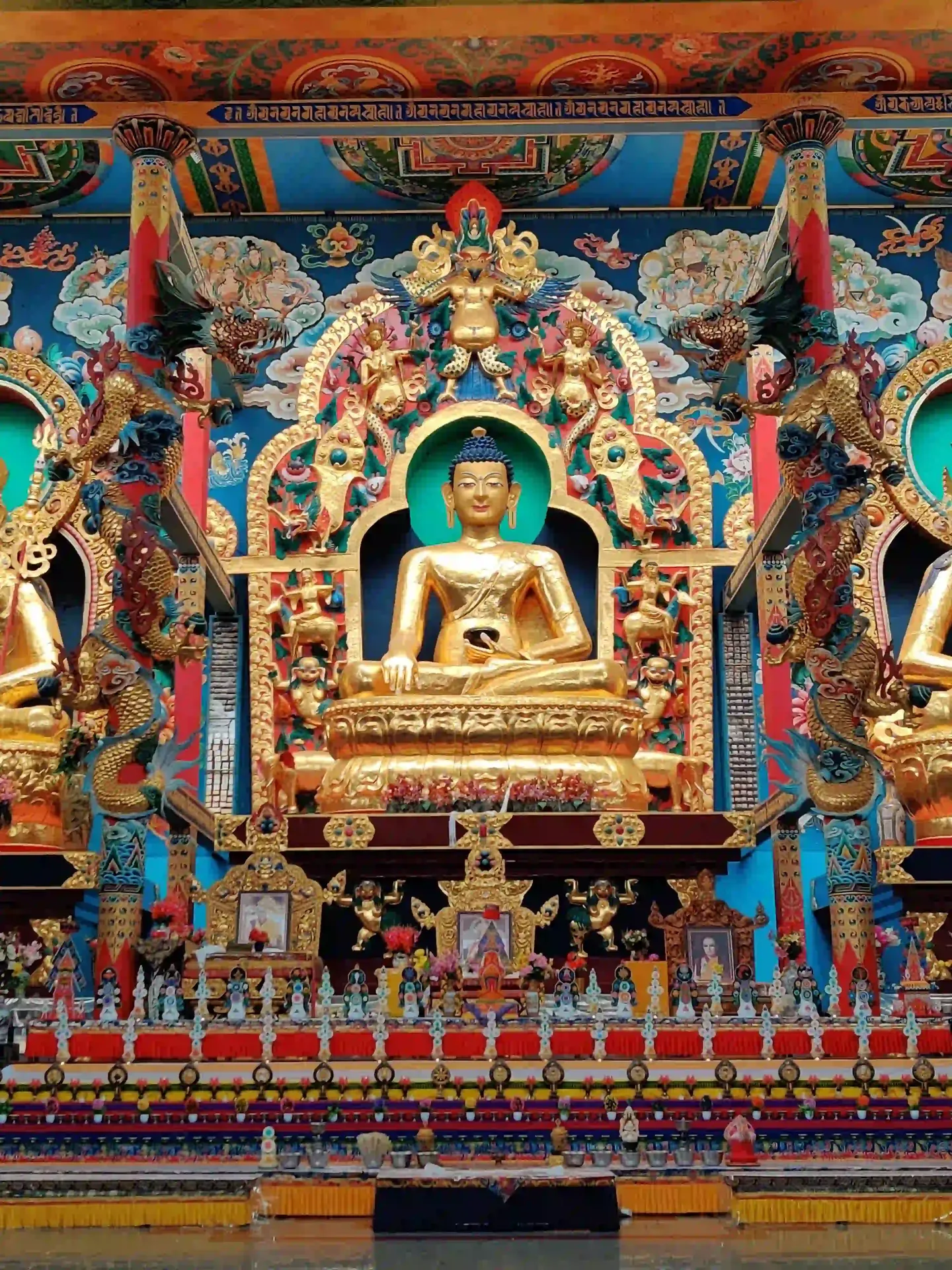
The Tsuglagkhang Complex is the spiritual heart of the Tibetan exile community and one of the most sacred sites in Tibetan Buddhism outside of Lhasa. The main temple — whose name means “great cathedral” in Tibetan — houses three of the most revered sacred objects in the exile tradition: a 5-metre gilded statue of Shakyamuni Buddha (the historical Buddha), a statue of Avalokiteshvara (the bodhisattva of compassion, of whom the Dalai Lama is considered the incarnation), and a statue of Padmasambhava, the 8th-century master who brought Buddhism from India to Tibet. Kamran walks you through the iconography of each figure in depth — the hand gestures (mudras), the symbolic objects carried, the crown and jewelled ornaments — and explains the theological significance of the trinity of deities represented. The complex also houses the Tibet Museum and the offices of the Central Tibetan Administration. On mornings when the Dalai Lama is in residence and gives public teachings, the courtyard fills with monks in saffron and maroon from across the Himalayan world.
El Complejo Tsuglagkhang es el corazón espiritual de la comunidad tibetana en el exilio y uno de los lugares más sagrados del budismo tibetano fuera de Lhasa. El templo principal — cuyo nombre significa “gran catedral” en tibetano — alberga tres de los objetos sagrados más venerados de la tradición del exilio: una estatua dorada de 5 metros de Shakyamuni Buda (el Buda histórico), una estatua de Avalokiteshvara (el bodhisattva de la compasión, del que se considera que el Dalai Lama es la encarnación) y una estatua de Padmasambhava, el maestro del siglo VIII que llevó el budismo desde la India al Tíbet. Kamran te guía por la iconografía de cada figura en profundidad — los gestos de las manos (mudras), los objetos simbólicos portados, la corona y los ornamentos enjoyados — y explica la significación teológica de la trinidad de deidades representada. El complejo también alberga el Museo del Tíbet y las oficinas de la Administración Central Tibetana. En las mañanas en que el Dalai Lama está en residencia e imparte enseñanzas públicas, el patio se llena de monjes de color azafrán y granate llegados de todo el mundo himalayo.
Entry Included · Sacred Buddhist Site Entrada Incluida · Sitio Budista Sagrado
04
Late Morning · 11:30 AM
Mañana Avanzada · 11:30 AM
Kora Circuit — The Circumambulation Walk
Circuito Kora — El Paseo de la Circunambulación
The kora is the Tibetan Buddhist practice of circumambulating — walking clockwise around — a sacred site while reciting mantras or turning prayer wheels. The kora path around the Tsuglagkhang is approximately 2 kilometres and is walked every morning by hundreds of monks, nuns, lay practitioners, and pilgrims from across the Himalayan world. We join the circuit at a respectful pace, Kamran explaining the significance of each element encountered: the prayer wheels (each containing thousands of written mantras that are “activated” by rotation), the mani stones (rocks carved with the six-syllable mantra Om Mani Padme Hum), the incense offerings, the prostration practitioners who measure the entire circuit with their bodies by lying flat, rising, and repeating across the full two kilometres. This is not a religious exercise for you — it is an anthropological encounter with one of the oldest and most precisely prescribed spiritual practices in the world, explained in full context as you walk it.
El kora es la práctica budista tibetana de circunambular — caminar en el sentido de las agujas del reloj alrededor de — un lugar sagrado recitando mantras o girando ruedas de oración. El sendero kora alrededor del Tsuglagkhang tiene aproximadamente 2 kilómetros y cada mañana lo recorren cientos de monjes, monjas, practicantes laicos y peregrinos de todo el mundo himalayo. Nos unimos al circuito a un ritmo respetuoso, con Kamran explicando el significado de cada elemento encontrado: las ruedas de oración (cada una conteniendo miles de mantras escritos que se “activan” mediante la rotación), las piedras mani (rocas talladas con el mantra de seis sílabas Om Mani Padme Hum), las ofrendas de incienso, los practicantes de prostración que miden todo el circuito con sus cuerpos tumbándose boca abajo, levantándose y repitiendo durante los dos kilómetros completos. Esto no es un ejercicio religioso para ti — es un encuentro antropológico con una de las prácticas espirituales más antiguas y más precisamente prescritas del mundo, explicada en pleno contexto mientras la caminas.
Gentle Walking · Living Buddhist Practice Caminata Suave · Práctica Budista Viva
05
Midday · 1:00 PM
Mediodía · 13:00 h
Tibetan Lunch & Thangka Gallery
Almuerzo Tibetano y Galería de Thangka
Lunch at a carefully selected Tibetan restaurant in McLeodganj — one of the most extraordinary culinary traditions in Asia, developed over centuries at altitude in one of the most climatically severe inhabited regions on earth. Thukpa (hearty noodle soup with vegetables and meat, eaten across the entire Himalayan arc from Ladakh to Bhutan), tingmo (steamed yeast bread served with vegetable or meat curries), momos (Tibetan steamed dumplings that have become the most popular street food in northern India), and butter tea — the famously acquired taste of salted tea churned with yak butter that has sustained Himalayan communities for a thousand years. After lunch, Kamran takes you to a working thangka atelier where artists from Tibet paint traditional scroll paintings on cotton using mineral pigments — gold, lapis lazuli, malachite, cinnabar — following iconographic grids unchanged for six centuries. You observe the painting process, learn to read the iconography of the most common subjects (Green Tara, Chenrezig, the Medicine Buddha, the Wheel of Life), and have the opportunity to purchase an original work directly from the painter at studio prices. Lunch costs are paid directly at the restaurant.
Almuerzo en un restaurante tibetano cuidadosamente seleccionado en McLeodganj — una de las tradiciones culinarias más extraordinarias de Asia, desarrollada a lo largo de siglos a gran altitud en una de las regiones habitadas climáticamente más extremas de la Tierra. Thukpa (rib. sopa de fideos con verduras y carne, comida en todo el arco himalayo desde Ladakh hasta Bután), tingmo (pan de levadura al vapor servido con curris de verduras o carne), momos (empanadillas tibetanas al vapor que se han convertido en la comida callejera más popular del norte de la India) y té de mantequilla — el famoso gusto adquirido del té salado batido con mantequilla de yak que ha sustentado a las comunidades himalaya durante mil años. Después del almuerzo, Kamran te lleva a un atelier de thangka en activo donde artistas del Tíbet pintan pinturas en rollo tradicionales sobre algodón usando pigmentos minerales — oro, lapislázuli, malaquita, cinabrio — siguiendo cuadrículas iconográficas sin cambios durante seis siglos. Observas el proceso de pintura, aprendes a leer la iconografía de los temas más comunes (Tara Verde, Chenrezig, el Buda de la Medicina, la Rueda de la Vida) y tienes la oportunidad de comprar una obra original directamente al pintor a precios de estudio. El coste del almuerzo se paga directamente en el restaurante.
Tibetan Cuisine · Thangka Atelier Visit Cocina Tibetana · Visita al Taller de Thangka
06
Afternoon · 2:30 PM
Tarde · 14:30 h
Namgyal Monastery — The Personal Monastery of the Dalai Lama
Monasterio Namgyal — El Monasterio Personal del Dalai Lama
Namgyal Monastery — adjacent to the Tsuglagkhang — is the personal monastery of the Dalai Lama and one of the most important centres of Vajrayana Buddhist practice in the world outside Tibet. It was originally founded in the 16th century at Drepung Monastery in Lhasa, became the private chapel of the 3rd Dalai Lama, and was re-established in McLeodganj in 1967 after the exile. Approximately 200 monks in permanent residence study a curriculum that encompasses Tibetan Buddhist philosophy, debate, ritual arts, sand mandala construction, and thangka painting across a 20-year programme. We observe (at respectful distance) the monks in philosophical debate — the Tibetan tradition of scholastic disputation in which one monk defends a position while another claps hands and challenges with questions, a practice designed to sharpen understanding of doctrine — and Kamran explains the significance of what you are watching: a 1,300-year-old oral tradition of philosophical inquiry, now preserved in an Indian hillside town because of the events of 1959.
El Monasterio Namgyal — adyacente al Tsuglagkhang — es el monasterio personal del Dalai Lama y uno de los centros más importantes de práctica budista Vajrayana en el mundo fuera del Tíbet. Fue fundado originalmente en el siglo XVI en el Monasterio de Drepung en Lhasa, se convirtió en la capilla privada del 3º Dalai Lama y fue restablecido en McLeodganj en 1967 tras el exilio. Aproximadamente 200 monjes en residencia permanente estudian un currículum que abarca filosofía budista tibetana, debate, artes rituales, construcción de mandalas de arena y pintura de thangka a lo largo de un programa de 20 años. Observamos (a una distancia respetuosa) a los monjes en debate filosófico — la tradición tibetana de disputación escolástica en la que un monje defiende una posición mientras otro aplaude y desafía con preguntas, una práctica diseñada para agudizar la comprensión de la doctrina — y Kamran explica el significado de lo que estás presenciando: una tradición oral de indagación filosófica de 1.300 años, ahora preservada en una ciudad de ladera india a causa de los eventos de 1959.
Entry Included · Monastic Debate Entrada Incluida · Debate Monástico
07
Afternoon · 3:30 PM
Tarde · 15:30 h
Bhagsu Waterfall Trail & Shiva Temple
Sendero a la Cascada de Bhagsu y Templo de Shiva
We leave the Tibetan layer entirely and enter the oldest layer of all: the pre-Buddhist Himalayan religious tradition that predates every other faith in these mountains. The walk to Bhagsu Waterfall follows a narrow stone path through pine and rhododendron forest for approximately 1.5 kilometres from the village of Bhagsunag, with a 150-metre elevation gain that brings the full panorama of the Dhauladhar range into view. En route we pass the Bhagsunag Shiva Temple — one of the oldest active places of worship in the Kangra Valley, dedicated to the god Shiva in his Himalayan aspect as destroyer and ascetic, and believed to predate the arrival of both Islam and Tibetan Buddhism in the region. The waterfall at the trail end drops approximately 20 metres over a basalt shelf into a natural rock pool. Kamran explains the significance of water in Himalayan Hindu religious practice, the mythological stories attached to this specific source, and the relationship between the indigenous Gaddi pastoral community — Himalayan shepherds who have grazed their flocks across the Dhauladhar passes for centuries — and the sacred springs and waterways of this mountain landscape.
Abandonamos por completo la capa tibetana y entramos en la capa más antigua de todas: la tradición religiosa himalaya pre-budista que precede a todas las demás fe en estas montañas. El camino a la Cascada de Bhagsu sigue un estrecho sendero de piedra a través de bosque de pinos y rododendros durante aproximadamente 1,5 kilómetros desde el pueblo de Bhagsunag, con un desnivel positivo de 150 metros que ofrece el panorama completo de la cordillera Dhauladhar. En el camino pasamos por el Templo Shiva de Bhagsunag — uno de los lugares de culto activos más antiguos del Valle de Kangra, dedicado al dios Shiva en su aspecto himalayo de destructor y ascético, y del que se cree que precede a la llegada tanto del islam como del budismo tibetano a la región. La cascada al final del sendero cae aproximadamente 20 metros sobre una plataforma de basalto hasta una poza natural en la roca. Kamran explica el significado del agua en la práctica religiosa hindú himalaya, las historias mitológicas vinculadas a esta fuente específica y la relación entre la comunidad indígena de pastores Gaddi — pastores himalayos que han apacentado sus rebaños a través de los pasos Dhauladhar durante siglos — y las fuentes y cauces sagrados de este paisaje de montaña.
Mountain Trail · Ancient Hindu Temple Sendero de Montaña · Templo Hindú Antiguo
08
Late Afternoon · 5:00 PM
Última Tarde · 17:00 h
McLeodganj Bazaar & Tibetan Refugee Market
Bazar de McLeodganj y Mercado Tibetano de Refugiados
The final walk through McLeodganj’s main bazaar is simultaneously the most sensory and the most politically complex part of the day. The street market is run almost entirely by Tibetan refugees and their Indian-born children — selling traditional crafts, woven textiles, singing bowls, prayer wheels, incense, thangka prints, and Tibetan silver jewellery alongside the rucksacks, hiking gear, and instant coffee that McLeodganj’s significant community of long-term Western residents demands. Kamran explains how to identify authentic handmade Tibetan craft from machine-produced tourist imitations: the marks of handwork in silver, the characteristics of genuine hand-woven wool versus synthetic weave, the difference between a hand-painted thangka original and a photomechanical reproduction. He also introduces the political dimension with full sensitivity: the “Free Tibet” flags and posters, the significance of the Tibetan National Uprising Day commemoration, and the daily reality of a community living in exile — some for over 60 years — in a foreign country, sustained by a culture, a language, and a religious tradition that the Chinese government has worked systematically to erase.
El paseo final por el bazar principal de McLeodganj es simultáneamente la parte más sensorial y la más políticamente compleja del día. El mercado callejero está regentado casi íntegramente por refugiados tibetanos y sus hijos nacidos en India — vendiendo artesanía tradicional, textiles tejidos, cuencos cantores, ruedas de oración, incienso, estampas de thangka y joyería de plata tibetana junto a las mochilas, equipo de senderismo y café instantáneo que demanda la significativa comunidad de residentes occidentales de larga estancia en McLeodganj. Kamran explica cómo identificar la artesanía tibetana auténtica hecha a mano de las imitaciones turísticas producidas a máquina: las marcas del trabajo manual en la plata, las características de la lana genuina tejida a mano frente al tejido sintético, la diferencia entre un original de thangka pintado a mano y una reproducción fotomecánica. También introduce la dimensión política con plena sensibilidad: las banderas y carteles de “Tibet libre”, el significado de la conmemoración del Día del Levantamiento Nacional Tibetano y la realidad cotidiana de una comunidad que vive en el exilio — algunos durante más de 60 años — en un país extranjero, sostenida por una cultura, una lengua y una tradición religiosa que el gobierno chino ha trabajado sistemáticamente por borrar.
Tibetan Refugee Market · Craft Authentication Mercado de Refugiados Tibetanos · Autenticidad Artesanal
09
Evening · 6:00 PM
Tarde-Noche · 18:00 h
Hotel Drop-off & Kamran’s Personal Recommendations
Regreso al Hotel y Recomendaciones Personales de Kamran
Your private vehicle returns you to your Dharamshala or McLeodganj hotel. Before you part, Kamran gives you his personal written recommendations for the area — the specific Tibetan restaurant for dinner that evening, the best viewpoint for the Dhauladhar peaks at dawn, the trekking routes onto the ridge that reward an early start, the meditation centres that accept short-term visitors, and the handful of craft vendors in the market whose authenticity and fair pricing he can personally vouch for. If you are staying for more days, he will also indicate the Norbulingka Institute at Sidhpur — a museum and craft centre established by the Tibetan government-in-exile to preserve traditional arts — and the Kangra Fort in the valley below, one of the oldest and largest fortresses in the Himalayas, whose history encompasses every dynasty that has ruled this region for 2,000 years.
Tu vehículo privado te devuelve a tu hotel de Dharamshala o McLeodganj. Antes de despedirse, Kamran te entrega sus recomendaciones personales escritas para la zona — el restaurante tibetano específico para cenar esa tarde, el mejor mirador para los picos Dhauladhar al amanecer, las rutas de senderismo hacia la cresta que recompensan un comienzo temprano, los centros de meditación que aceptan visitantes a corto plazo y el puñado de vendedores artesanales en el mercado cuya autenticidad y precio justo puede avalar personalmente. Si te quedas más días, también te indicará el Instituto Norbulingka en Sidhpur — un museo y centro artesanal establecido por el gobierno tibetano en el exilio para preservar las artes tradicionales — y el Fuerte de Kangra en el valle abajo, una de las fortalezas más antiguas y grandes del Himalaya, cuya historia abarca todas las dinásticas que han gobernado esta región durante 2.000 años.
Hotel Drop-off · Personal Recommendations Regreso al Hotel · Recomendaciones Personales

Inclusions & Exclusions

Inclusiones y Exclusiones

✅ Package Inclusions✅ El Paquete Incluye

  • Private AC Vehicle All Day:Vehículo AC Privado Todo el Día: Full-day private air-conditioned transportation with a professional driver covering all transfers between Dharamshala lower town and McLeodganj upper town, and between all sites on the trail.Transporte privado con aire acondicionado durante todo el día con conductor profesional, cubriendo todos los traslados entre la ciudad baja de Dharamshala y la ciudad alta de McLeodganj, y entre todos los sitios del sendero.
  • Hotel Pickup & Drop-off:Recogida y Regreso en Hotel: Door-to-door service from and to your Dharamshala or McLeodganj accommodation. If arriving by bus at the HRTC bus stand, pickup from the stand is available.Servicio puerta a puerta desde y hasta tu alojamiento en Dharamshala o McLeodganj. Si llegas en autobús a la parada HRTC, la recogida desde la parada está disponible.
  • All Monastery & Temple Entry Fees:Todas las Entradas a Monasterios y Templos: Tsuglagkhang Complex, Namgyal Monastery, Bhagsunag Shiva Temple, and St. John in the Wilderness — all site fees fully covered.Complejo Tsuglagkhang, Monasterio Namgyal, Templo Shiva de Bhagsunag y St. John in the Wilderness — todas las tarifas de los sitios completamente cubiertas.
  • Thangka Atelier Visit & Demonstration:Visita al Taller de Thangka y Demostración: Access to a working Tibetan thangka painting studio with a live demonstration of the traditional mineral-pigment painting technique and full iconographic explanation.Acceso a un estudio de pintura de thangka tibetana en activo con demostración en vivo de la técnica tradicional de pintura con pigmentos minerales y explicación iconográfica completa.
  • Bhagsu Waterfall Trail Walk:Caminata por el Sendero de la Cascada de Bhagsu: Guided mountain trail walk of approximately 3 kilometres return, including the Bhagsunag Shiva Temple and the waterfall viewpoint.Caminata guiada por el sendero de montaña de aproximadamente 3 kilómetros de ida y vuelta, incluyendo el Templo Shiva de Bhagsunag y el mirador de la cascada.
  • Government Licensed Bilingual Guide:Guía Bilingüe con Licencia Oficial: Full-day service by Kamran Khan in English and Spanish. Pan-India IITG licence — the highest certification in Indian tourism. Expert in Tibetan Buddhist iconography, colonial Himalayan history, and Hindu sacred traditions.Servicio de día completo de Kamran Khan en inglés y español. Licencia IITG panindiana — la certificación más alta del turismo indio. Experto en iconografía budista tibetana, historia colonial himalaya y tradiciones sagradas hindúes.
  • Water & Refreshments En Route:Agua y Refrescos en Ruta: Mineral water and light refreshments provided throughout the day in the vehicle.Agua mineral y refrescos ligeros durante todo el día en el vehículo.
  • Kamran’s Personal Recommendations List:Lista de Recomendaciones Personales de Kamran: A written list of Kamran’s personal recommendations for dining, trekking, meditation centres, and the Norbulingka Institute for further exploration of the area.Una lista escrita de recomendaciones personales de Kamran para comer, hacer senderismo, centros de meditación y el Instituto Norbulingka para seguir explorando la zona.

✕ Package Exclusions✕ El Paquete Excluye

  • Lunch:Almuerzo: The cost of lunch at the selected Tibetan restaurant is not included in the package price. Kamran chooses the venue; you pay directly. Budget approximately ₹300–600 per person for a full Tibetan meal with tea.El coste del almuerzo en el restaurante tibetano seleccionado no está incluido en el precio del paquete. Kamran elige el local; se paga directamente. Presupuesto aproximado de ₹300–600 por persona para una comida tibetana completa con té.
  • Personal Purchases:Compras Personales: Thangka paintings, Tibetan jewellery, singing bowls, prayer wheels, textiles, and other market purchases are entirely at your discretion and paid directly to vendors.Las pinturas de thangka, la joyería tibetana, los cuencos cantores, las ruedas de oración, los textiles y otras compras en el mercado son completamente a tu discreción y se pagan directamente a los vendedores.
  • Tibet Museum Entry:Entrada al Museo del Tíbet: The Tibet Museum within the Tsuglagkhang Complex charges a separate entry fee (approximately ₹30–50 for foreign nationals). Kamran recommends it as an optional addition if time allows.El Museo del Tíbet dentro del Complejo Tsuglagkhang cobra una tarifa de entrada separada (aproximadamente ₹30–50 para ciudadanos extranjeros). Kamran lo recomienda como adición opcional si el tiempo lo permite.
  • Travel to & from Dharamshala:Viaje hacia y desde Dharamshala: The tour day begins and ends in Dharamshala or McLeodganj. Travel from Delhi, Chandigarh, or other cities to reach the area is not included. Kamran can recommend bus and taxi options when you book via WhatsApp.El día del tour comienza y termina en Dharamshala o McLeodganj. El viaje desde Delhi, Chandigarh u otras ciudades para llegar a la zona no está incluido. Kamran puede recomendar opciones de autobús y taxi al reservar por WhatsApp.
  • Gratuities:Propinas: Optional and entirely at your discretion for the driver and guide.Opcionales y totalmente a tu criterio para el conductor y el guía.

What Makes This Different

Qué lo Hace Diferente

01
Three Civilisations in One Day
Tres Civilizaciones en Un Día
The colonial British layer (1849–1947), the Tibetan exile layer (1959–present), and the ancient Himalayan Hindu layer (pre-history to present) all exist simultaneously on this ridge. No other guide in the area connects all three with the depth and historical precision that Kamran brings.
La capa colonial británica (1849–1947), la capa tibetana en el exilio (1959–presente) y la antigua capa hindú himalaya (prehistoria hasta el presente) coexisten simultáneamente en esta cresta. Ningún otro guía de la zona conecta las tres con la profundidad y la precisión histórica que aporta Kamran.
02
Iconography in Depth
Iconografía en Profundidad
Tibetan Buddhist iconography is a complete visual language — every hand gesture, colour, attribute, and facial expression is a specific statement of meaning. Most visitors see beautiful statues. Kamran makes every figure speak. You will never look at a Buddhist image the same way again.
La iconografía budista tibetana es un lenguaje visual completo — cada gesto de mano, color, atributo y expresión facial es una declaración específica de significado. La mayoría de los visitantes ven estatuas hermosas. Kamran hace hablar a cada figura. Nunca volverás a mirar una imagen budista de la misma manera.
03
Living Culture, Not a Museum
Cultura Viva, No un Museo
The kora circuit, the monastic debate, the working thangka studio — these are active living practices, not staged performances. Kamran’s relationships with the local monastic and artisan community ensure genuine access, approached with full respect and no voyeurism.
El circuito kora, el debate monástico, el estudio de thangka en activo — son prácticas vivas activas, no actuaciones escenificadas. Las relaciones de Kamran con la comunidad monástica y artesanal local garantizan un acceso genuino, abordado con pleno respeto y sin voyeurismo.
04
Bilingual English & Spanish
Bilingüe Inglés y Español
There is no other licensed bilingual English-Spanish guide operating in the Dharamshala region. Spanish-speaking travellers experience the Tibetan exile story, the Buddhist philosophy, and the colonial Himalayan history entirely in their own language — with full depth and no nuance lost in translation.
No hay ningún otro guía bilingüe con licencia inglés-español operando en la región de Dharamshala. Los hispanohablantes experimentan la historia del exilio tibetano, la filosofía budista y la historia colonial himalaya íntegramente en su propio idioma — con toda su profundidad y sin perder matices en la traducción.
05
The Mountain Walk
La Caminata de Montaña
The Bhagsu trail gives you the Dhauladhar in full: the pine forest, the waterfall, and the ridge panorama that frames everything else the day has shown you. It is a gentle walk, not a trek — but it earns you a view that most visitors to McLeodganj never reach.
El sendero de Bhagsu te ofrece los Dhauladhar en su plenitud: el bosque de pinos, la cascada y el panorama de la cresta que enmarca todo lo demás que el día te ha mostrado. Es una caminata suave, no un trekking — pero te gana una vista que la mayoría de los visitantes de McLeodganj nunca alcanzan.
06
500+ Five-Star Reviews
Más de 500 Reseñas de 5 Estrellas
Verified reviews on Viator, GetYourGuide, and Airbnb from travellers across 40+ nationalities — all five stars. Read them before you book.
Reseñas verificadas en Viator, GetYourGuide y Airbnb de viajeros de más de 40 nacionalidades — todas de cinco estrellas. Léelas antes de reservar.

What Travellers Say

Lo que Dicen los Viajeros

Reviews from travellers across 40+ nationalities on Viator, GetYourGuide, and Airbnb.

Reseñas de viajeros de más de 40 nacionalidades en Viator, GetYourGuide y Airbnb.

Viator
★★★★★

“I have visited McLeodganj twice before and thought I knew it. Kamran showed me a completely different place. The kora walk with his explanation of each element — the prayer wheels, the mani stones, the prostration practitioners — transformed a pleasant walk into one of the most moving experiences of my entire trip to India. The colonial church and its graveyard were heartbreaking and extraordinary. Unmissable.”

“He visitado McLeodganj dos veces antes y creía conocerlo. Kamran me mostró un lugar completamente diferente. El paseo kora con su explicación de cada elemento — las ruedas de oración, las piedras mani, los practicantes de prostración — transformó un agradable paseo en una de las experiencias más emotivas de todo mi viaje a la India. La iglesia colonial y su cementerio fueron desgarradores y extraordinarios. Imprescindible.”

Fiona & Andrew L.
Edinburgh, Scotland
Edimburgo, Escocia
GetYourGuide
★★★★★

“Kamran’s explanation of the Tibetan Buddhist iconography at the Tsuglagkhang was worth the entire trip. I have been to Buddhist temples all across Asia and nobody has ever explained what I was looking at with such precision and passion. By the time we reached the thangka studio I could read the paintings myself. The Bhagsu waterfall trail at the end of the day was the perfect close — peaceful, beautiful, and earned.”

“La explicación de Kamran sobre la iconografía budista tibetana en el Tsuglagkhang valió todo el viaje. He estado en templos budistas por toda Asia y nadie jamás me explicó lo que estaba viendo con tal precisión y pasión. Para cuando llegamos al taller de thangka ya podía leer las pinturas por mí mismo. El sendero a la cascada de Bhagsu al final del día fue el cierre perfecto — tranquilo, hermoso y bien ganado.”

Marco V.
Milan, Italy
Milán, Italia
Airbnb
★★★★★

“Hicimos el tour completo en español y fue absolutamente revelador. Kamran nos explicó la política del exilio tibetano, la historia colonial británica y la iconografía budista en nuestro propio idioma con una profundidad que no habíamos encontrado en ningún otro guía en toda la India. El debate monástico en Namgyal nos dejó sin palabras. Imposible de olvidar.”

“Hicimos el tour completo en español y fue absolutamente revelador. Kamran nos explicó la política del exilio tibetano, la historia colonial británica y la iconografía budista en nuestro propio idioma con una profundidad que no habíamos encontrado en ningún otro guía en toda la India. El debate monástico en Namgyal nos dejó sin palabras. Imposible de olvidar.”

Lucía & Rodrigo E.
Montevideo, Uruguay
Montevideo, Uruguay
ViatorTop Rated Experience
🌟
GetYourGuide5.0 · 200+ Reviews
🏠
AirbnbSuperhost Experience
🇿🇷
TripAdvisorCertificate of Excellence
🏢
IITG LicensedPan-India Govt. Certified

Practical Details

Información Práctica

Duration
Duración
Full Day — Approx. 10 Hours
Día Completo — Aprox. 10 Horas
8:00 AM – 6:00 PM. Flexible on request. The Bhagsu trail section can be shortened for guests with mobility limitations — inform Kamran when booking.
8:00 – 18:00 h. Flexible bajo petición. La sección del sendero de Bhagsu puede acortarse para huéspedes con limitaciones de movilidad — infórmalo a Kamran al reservar.
Group Size
Tamaño del Grupo
1 to 6 Persons
1 a 6 Personas
Entirely private. Larger groups on request. Note: some monastery spaces (particularly during teachings and debate sessions) have limited visitor capacity — small groups enable the best access.
Completamente privado. Grupos más grandes bajo petición. Nota: algunos espacios monasteriales (especialmente durante las enseñanzas y las sesiones de debate) tienen capacidad limitada para visitantes — los grupos pequeños permiten el mejor acceso.
Languages
Idiomas
English & Spanish
Inglés y Español
Hindi available for local interaction. Kamran communicates with monastery staff and market vendors in Hindi, ensuring complete transparency in any negotiations.
Hindi disponible para la interacción local. Kamran se comunica con el personal del monasterio y los vendedores del mercado en hindi, garantizando total transparencia en cualquier negociación.
Availability
Disponibilidad
All Year · 7 Days a Week
Todo el Año · 7 Días a la Semana
Last-minute bookings welcome. Note: on Losar (Tibetan New Year, January–February), the Dalai Lama’s birthday (6 July), and the Tibetan National Uprising Day (10 March), the monastery complex has special ceremonial access — these are extraordinary days to visit. Inform Kamran if your dates coincide.
Se aceptan reservas de última hora. Nota: en Losar (Año Nuevo Tibetano, enero–febrero), el cumpleaños del Dalai Lama (6 de julio) y el Día del Levantamiento Nacional Tibetano (10 de marzo), el complejo monasterial tiene acceso ceremonial especial — son días extraordinarios para visitar. Infórmale a Kamran si tus fechas coinciden.
Meeting Point
Punto de Encuentro
Hotel Pickup — Dharamshala or McLeodganj
Recogida en Hotel — Dharamshala o McLeodganj
Share your hotel name and address via WhatsApp. Pickup available from all hotels and guesthouses in both the lower town (Dharamshala) and upper town (McLeodganj). Bus-stand pickup available for those arriving by overnight bus from Delhi or Chandigarh.
Comparte el nombre y la dirección de tu hotel por WhatsApp. Recogida disponible en todos los hoteles y casas de huéspedes tanto de la ciudad baja (Dharamshala) como de la ciudad alta (McLeodganj). Recogida en la parada de autobús disponible para quienes llegan en autobús nocturno desde Delhi o Chandigarh.
Best Season
Mejor Época
March – June & September – November
Marzo – Junio y Septiembre – Noviembre
Spring (March–June) and autumn (September–November) offer the clearest Dhauladhar views and the most comfortable walking conditions. July–August is monsoon season — the mountains are dramatic and lush but cloud cover frequently obscures the peaks. December–February is cold and occasionally snowy but very quiet — the monasteries are particularly atmospheric in winter.
La primavera (marzo–junio) y el otoño (septiembre–noviembre) ofrecen las vistas más claras de los Dhauladhar y las condiciones más cómodas para caminar. Julio–agosto es la estación del monsún — las montañas son dramáticas y exuberantes, pero la nubosidad frecuentemente oculta los picos. Diciembre–febrero es frío y ocasionalmente nevado, pero muy tranquilo — los monasterios son especialmente atmosféricos en invierno.
What to Bring
Qué Llevar
Items to Carry on the Day
Artículos para Llevar el Día del Tour
Essential items:Layered clothing — McLeodganj is at 1,457 metres and the temperature swings significantly between morning (cool, sometimes cold) and midday (warm). A fleece or light jacket for the morning, a breathable layer for the midday walk. In winter (December–February), bring a proper warm jacket as temperatures can drop below 5°C

Modest, respectful clothing — covered shoulders and knees are required for all monastery visits, the Tsuglagkhang, and the Bhagsunag Shiva Temple. This is non-negotiable at active places of worship. Kamran keeps a small stole in the vehicle for guests who forget, but planning ahead is strongly advised

Sturdy, comfortable walking shoes with grip — the Bhagsu trail involves 150 metres of elevation gain on stone paths that can be wet and mossy. The kora circuit is paved but uneven in places. Avoid sandals or flat-soled shoes for the trail section

A small daypack or backpack — for the trail section. Keep it light: water, a snack, a rain layer. Leave heavy bags in the vehicle

Rain layer or packable waterproof — mountain weather is unpredictable at any season. A lightweight packable rain jacket takes up virtually no space and is essential insurance, particularly on the trail section

Cash in Indian Rupees (INR) — for lunch, optional Tibet Museum entry, and any market purchases. The Tibetan refugee market operates almost entirely in cash. Budget ₹1,000–3,000 depending on shopping intentions. ATMs are available in McLeodganj main square but can be unreliable — carry cash from your hotel

Small offerings (optional) — it is customary and deeply appreciated to make a small monetary offering (₹10–50) inside the main temple at the Tsuglagkhang. There is a donation box at the entrance. This is entirely optional but regarded as respectful by the monastic community

Sunscreen and a hat or cap — the ridge walk and the time around the kora circuit involve significant sun exposure, particularly between 10 AM and 3 PM even in cooler months

Insect repellent — the forest section of the Bhagsu trail, especially in monsoon and post-monsoon season, has mosquitoes and small biting insects

Smartphone or camera — prayer flags against the Dhauladhar peaks, the monastery interior, the waterfall, and the colonial graveyard are among the most photographable locations in northern India. Note: photography inside the main prayer hall of the Tsuglagkhang is not permitted — Kamran will advise on where photography is and is not allowed throughout the day

An open and unhurried mind — the kora circuit moves at the pace of the monks and pilgrims walking it. The monastic debate cannot be rushed or timed. The thangka studio visit has no fixed end. This trail rewards patience. If you are in a hurry, the day will not give you its best.
Artículos esenciales:Ropa por capas — McLeodganj está a 1.457 metros y la temperatura varía significativamente entre la mañana (fresca, a veces fría) y el mediodía (cálido). Un forro polar o chaqueta ligera para la mañana, una capa transpirable para la caminata de mediodía. En invierno (diciembre–febrero), lleva una chaqueta abrigada de verdad ya que las temperaturas pueden bajar de 5°C

Ropa modesta y respetuosa — hombros y rodillas cubiertos son obligatorios para todas las visitas a monasterios, el Tsuglagkhang y el Templo Shiva de Bhagsunag. Esto es innegociable en los lugares de culto activos. Kamran tiene una pequeña estola en el vehículo para los huéspedes que se olvidan, pero planificarlo con antelación es muy recomendable

Calzado resistente y cómodo con agarre — el sendero de Bhagsu implica 150 metros de desnivel positivo por caminos de piedra que pueden estar mojados y musgosos. El circuito kora está pavimentado pero es irregular en algunos tramos. Evita las sandalias o los zapatos de suela plana para la sección del sendero

Una mochila pequeña de día — para la sección del sendero. Llévala ligera: agua, un aperitivo, una capa impermeable. Deja las bolsas pesadas en el vehículo

Capa impermeable o chubasquero plegable — el tiempo de montaña es impredecible en cualquier estación. Una chaqueta impermeable ligera plegable ocupa virtualmente ningún espacio y es un seguro esencial, especialmente en la sección del sendero

Efectivo en Rupias Indias (INR) — para el almuerzo, la entrada opcional al Museo del Tíbet y cualquier compra en el mercado. El mercado de refugiados tibetanos funciona casi íntegramente en efectivo. Presupuesta ₹1.000–3.000 según tus intenciones de compra. Hay cajeros en la plaza principal de McLeodganj pero pueden ser poco fiables — lleva efectivo desde el hotel

Pequeñas ofrendas (opcional) — es costumbre y muy apreciado hacer una pequeña ofrenda monetaria (₹10–50) dentro del templo principal del Tsuglagkhang. Hay una caja de donaciones en la entrada. Es completamente opcional pero considerado respetuoso por la comunidad monástica

Protección solar y sombrero o gorra — el paseo por la cresta y el tiempo alrededor del circuito kora implican una exposición solar significativa, especialmente entre las 10 AM y las 3 PM incluso en los meses más fríos

Repelente de insectos — la sección forestal del sendero de Bhagsu, especialmente en la temporada del monsún y posmonsún, tiene mosquitos e insectos picadores pequeños

Smartphone o cámara — las banderas de oración ante los picos Dhauladhar, el interior del monasterio, la cascada y el cementerio colonial están entre los lugares más fotográficos del norte de la India. Nota: la fotografía dentro de la sala de oración principal del Tsuglagkhang no está permitida — Kamran te avisará sobre dónde se permite y no se permite fotografiar a lo largo del día

Una mente abierta y sin prisa — el circuito kora avanza al ritmo de los monjes y peregrinos que lo recorren. El debate monástico no puede apresurase ni cronometrarse. La visita al estudio de thangka no tiene un final fijo. Este sendero recompensa la paciencia. Si tienes prisa, el día no te dará lo mejor de sí mismo.
Reserve Your Spot
Reserva tu Plaza
Dharamshala & McLeodganj: The Peace Trail
Dharamshala y McLeodganj: El Sendero de la Paz
  • Private vehicle all day — Dharamshala & McLeodganj
  • Hotel pickup & drop-off
  • Tsuglagkhang, Namgyal & Bhagsunag temple entries
  • Kora circuit walk & Bhagsu waterfall trail
  • Thangka atelier visit with live demonstration
  • Government-licensed bilingual guide
  • Vehículo privado todo el día — Dharamshala y McLeodganj
  • Recogida y regreso en hotel
  • Entradas al Tsuglagkhang, Namgyal y Templo Bhagsunag
  • Circuito kora y sendero a la cascada de Bhagsu
  • Visita al taller de thangka con demostración en vivo
  • Guía bilingüe con licencia oficial del gobierno
Book via WhatsApp Reservar por WhatsApp ← Back to Main Website ← Volver al Sitio Principal
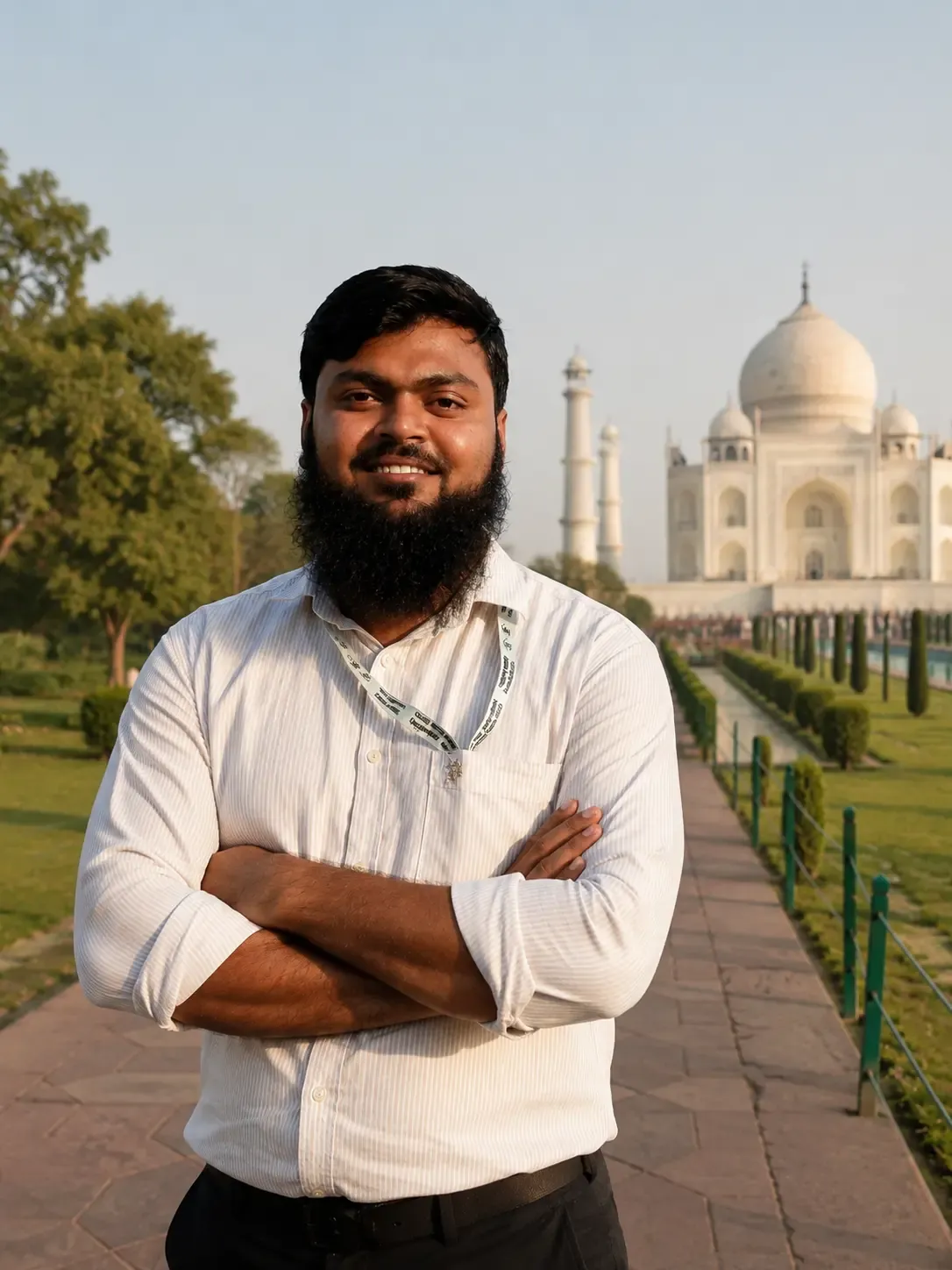
Kamran Khan — Licensed Tour Guide Dharamshala McLeodganj Peace Trail
IITG Govt. Licensed Lic. Oficial

Kamran Khan

McLeodganj is one of the most layered places in India — and one of the most superficially experienced. Most visitors spend two days walking the main street, buying prayer flags, and eating momos. They leave having seen the surface of something extraordinary without understanding what lies beneath it. Beneath it is one of the most remarkable political and spiritual stories of the 20th century — still being lived, right now, in the monastery courtyard fifty metres from the tourist restaurants.

McLeodganj es uno de los lugares con más capas de la India — y uno de los más vividos superficialmente. La mayoría de los visitantes pasan dos días recorriendo la calle principal, comprando banderas de oración y comiendo momos. Se van habiendo visto la superficie de algo extraordinario sin entender lo que hay debajo. Debajo hay una de las historias políticas y espirituales más notables del siglo XX — aún viviéndose, ahora mismo, en el patio del monasterio a cincuenta metros de los restaurantes turísticos.

I hold a Government Pan-India IITG licence — the highest certification in Indian tourism — and I have guided more than 500 tours across northern India over more than a decade. My study of Tibetan Buddhist iconography and my relationships with the monastic community in McLeodganj have been built over years of sustained engagement, and what I bring to this trail cannot be replicated from a guidebook or a Wikipedia page.

Poseo la licencia nacional IITG del Gobierno — la certificación más alta del turismo indio — y he guiado más de 500 tours por el norte de la India a lo largo de más de una década. Mi estudio de la iconografía budista tibetana y mis relaciones con la comunidad monástica de McLeodganj se han forjado a lo largo de años de compromiso sostenido, y lo que aporto a este sendero no puede replicarse a partir de una guía de viaje ni de una página de Wikipedia.

The Dalai Lama arrived in this village with nothing in 1959. He came over the Himalayan passes on horseback in the winter, in disguise, with a small group of attendants, leaving everything he had known behind him. Sixty-five years later, the tradition he carried — the monasteries, the medicine, the art, the philosophy, the language — is alive and practised and taught on this hillside every single day. When you understand that story, every prayer flag you see is a complete sentence in one of the greatest acts of cultural preservation in human history.

El Dalai Lama llegó a este pueblo sin nada en 1959. Cruzó los pasos himalayos a caballo en invierno, disfrazado, con un pequeño grupo de acompañantes, dejando atrás todo lo que había conocido. Sesenta y cinco años después, la tradición que portaba — los monasterios, la medicina, el arte, la filosofía, el idioma — está viva, se practica y se enseña en esta ladera todos los días. Cuando entiendes esa historia, cada bandera de oración que ves es una frase completa en uno de los mayores actos de preservación cultural de la historia humana.

English Español हिन्दी اردو